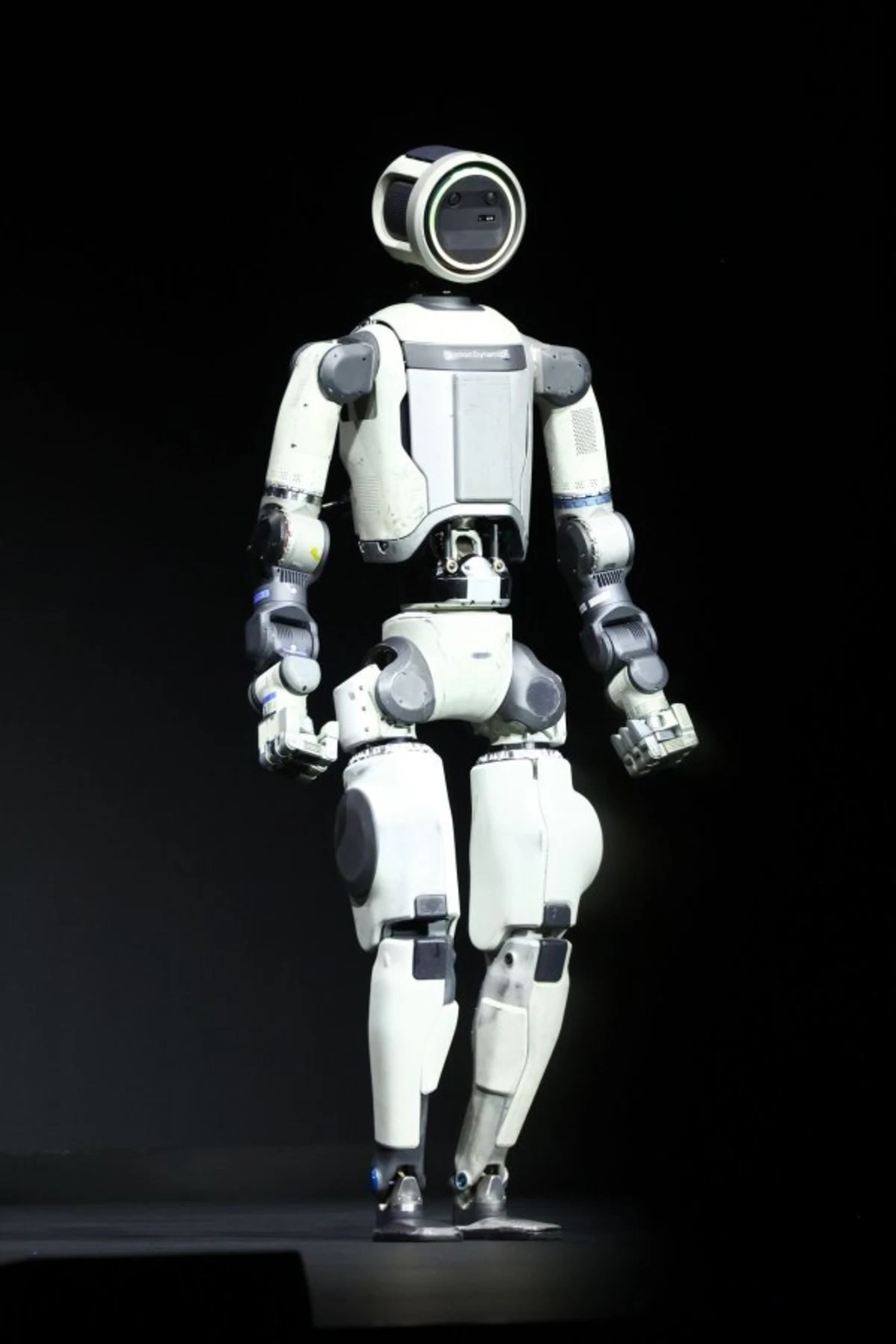
January 5 (UPI) — Hyundai Motor and Boston Dynamics on Monday unveiled a new version of a humanoid robot being tested at a Georgia factory that could be the future of manufacturing.
The 5-foot-tall, 9-inch, 200-pound Atlas humanoid robot was shown off publicly for the first time Monday at the Consumer Electronics Show in Las Vegas.
Hyundai Motor said it plans to deploy robots widely in its factories by 2028 and gradually increase the complexity of the tasks they can complete.
“Through this collaboration between Boston Dynamics, which owns the world’s most advanced robotics technology, and a global leader in artificial intelligence, Hyundai Motor Group will integrate cutting-edge artificial intelligence robotics technology at all HMG manufacturing sites around the world, and subsequently expand into logistics, energy, construction and facilities management,” Hyundai Motor said in a press release.
The robots are expected to perform industrial work alongside humans to assist with their workloads, including lifting heavy objects and completing physically demanding or repetitive tasks, the company said.
“With impressive strength and range of motion, precise operation, and intelligent adaptability, this enterprise-class humanoid robot is designed to power a new industrial revolution,” Boston Dynamics said in an article published on X.
Boston Dynamics, which is 88% owned by Hyundai, has devised several ways to train robots using artificial intelligence models or supervised learning, including using a virtual reality headset to control and guide Atlas, CBS News reported.
The two companies are also using Google DeepMind’s Gemini robot artificial intelligence base model to program the robots, which Hyundai Motor said will allow its robotics division to train robots to perform complex real-world tasks on a larger scale.
Atlas was tested at Hyundai’s Georgia factory in October, where it can automatically sort roof racks for the assembly line.
Hyundai, which said its robotic products are already used by DHL, Nestlé and Maersk, said it plans to test and train Atlas robots internally and eventually supply parts and mass-produce the robots as part of a “one-stop robot-as-a-service” offering to its customers.