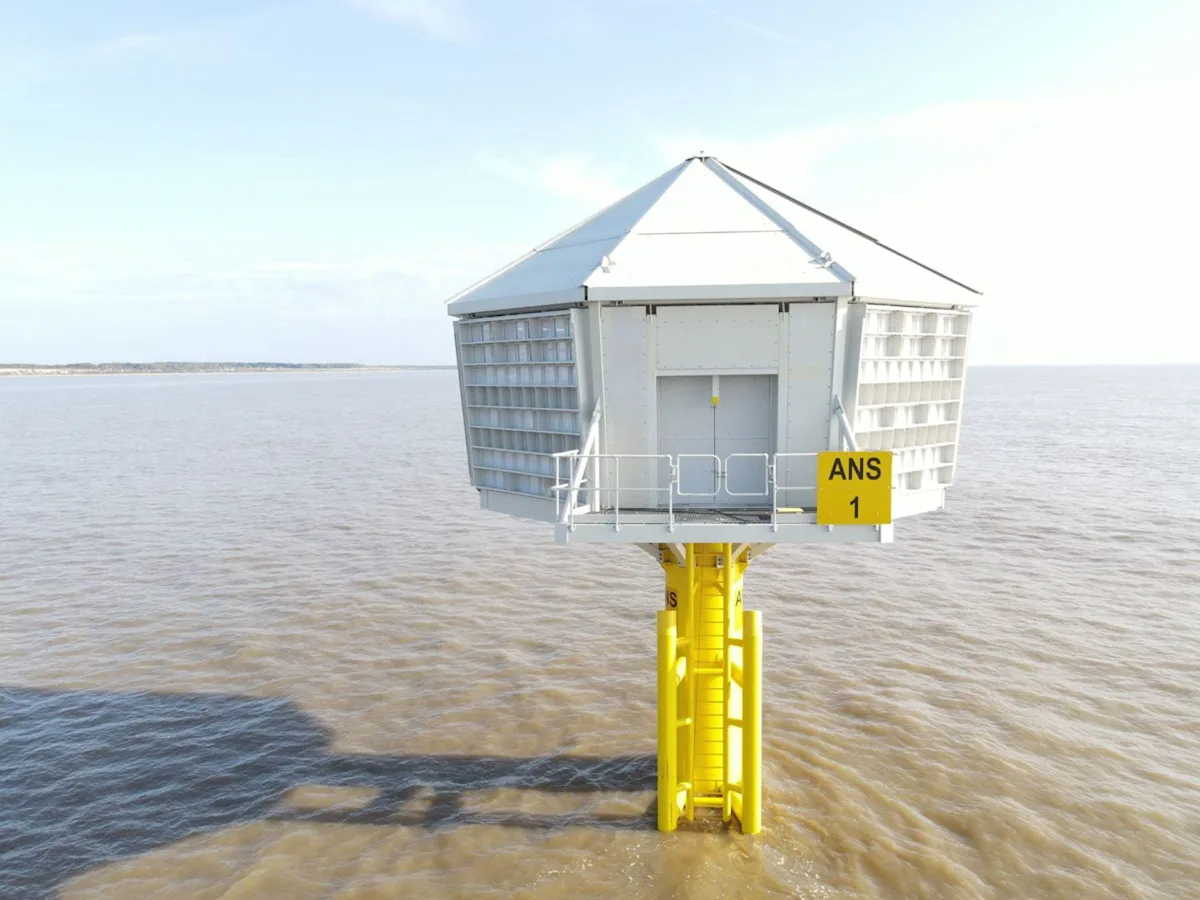
Danish wind farm company Ørsted and contractor Red7Marine have built three giant artificial bird’s nests off the UK coast. The buildings are designed to help support populations of kittiwakes, a seabird species that may be affected by wind farms near the company.
What is an artificial bird’s nest?
Ørsted’s nest was built about 0.6 miles (one kilometer) off the coast of Suffolk, England’s east coast. According to Electrek, each nest is an octagonal structure that holds about 500 individual nests and is raised above sea level on a large pole.
The interior of the building features whiteboards, chairs and tables for researchers to record information about bird studies. According to Electrek, sliding Plexiglas panels allow researchers to observe the nests without being seen by the occupants.
Why are artificial bird nests important?
Ørsted’s massive Hornsea 3 project is expected to be completed by 2025 and will power more than 3 million homes, according to Electrek. As green energy projects break ground around the world, it’s important to do so in a way that causes minimal damage to local ecosystems.
A 2013 study found that between 140,000 and 328,000 birds are killed by wind turbines in the United States each year. According to the U.S. Forest Service, man-made structures kill up to a billion birds each year, but that doesn’t mean the toll from turbines isn’t serious.
According to Electrek, any way agencies and organizations can mitigate impacts on local ecosystems is a positive step, and Ørsted needs to build structures that will help local bird populations in order for the Hornsea 3 project to be approved.
Eleni Antoniou, environmental manager at Ørsted, said: “Kittiwakes are listed as endangered and with climate change a key driver of their decline, switching to green energy systems could significantly contribute to the species’ long-term conservation.”
She concluded: “At the same time, the provision of these structures will provide a safe nesting space, allowing offspring to raise their young away from predators and away from urban centres.”
Join our free newsletter good news and cool tip This makes it easy help yourself And help the planet at the same time.

