Lithium is everywhere: It’s in the batteries that power the device you’re reading this article on. It powers electric vehicles (EVs). It’s in your headphones, power tools, and TV remote controls. Simply put, lithium powers modern life.
Because of this element’s ubiquity, the U.S. Geological Survey (USGS) deemed it a critical mineral in November. While the U.S. remains highly dependent on lithium imports, a new USGS report finds that Appalachia has an estimated 2.3 million tons of lithium oxide, enough to replace 328 of the U.S.’s imports last year.
“This study demonstrates that the Appalachian Mountains contain sufficient lithium to help meet the nation’s growing needs, a significant contribution to U.S. mineral security at a time when global demand for lithium is rapidly growing,” U.S. Geological Survey Director Ned Mamula said in a statement.
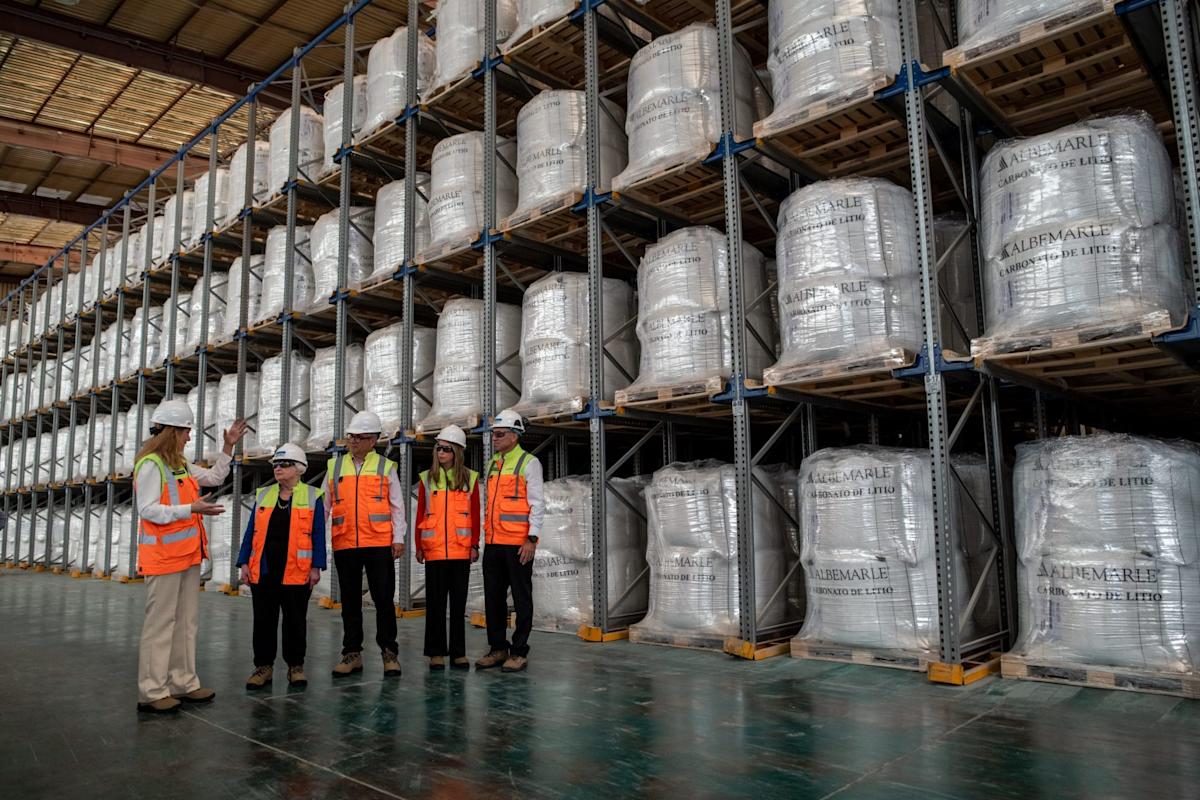
The discovery comes as demand for lithium continues to snowball as manufacturers abandon traditional lead-acid or alkaline batteries in favor of lithium-ion batteries. The U.S. Geological Survey expects global lithium production capacity to double by 2029 due to increased demand. While the U.S. imports most of its lithium carbonate, a compound critical to lithium-ion battery production, primarily from Chile and Argentina, China dominates the supply of finished lithium-ion batteries, which power everything from electric vehicles to cellphones and laptops. The United States imported nearly $85 million worth of lithium-ion batteries from China last year, according to the Observatory of Economic Complexity. Import costs for lithium-ion batteries are particularly high as both the Trump and Biden administrations have imposed tariffs on imports of lithium-ion battery products from China.
The scale of lithium discovered in the United States
The USGS estimates that 2.3 million tons of lithium oxide can be economically mined from Appalachian pegmatites (large-grained rocks similar to granite), with about 1.43 million tons estimated to be locked in the southern Appalachian Mountains, primarily in the Carolinas. An additional 900,000 tons are found in rural western Maine and in the forests of New Hampshire.
The United States has huge lithium resources. The U.S. Geological Survey estimates it’s enough to power 130 million electric vehicles, or enough for more than a third of the U.S. population to own an electric car. That’s enough to hold 3 billion tablets and laptops, 500 billion mobile phones or 1.6 million grid batteries.
Lithium is also critical for building artificial intelligence infrastructure. Lithium-ion batteries last two to three times longer than conventional batteries. They charge faster than regular batteries, making them a top choice for data centers. Batteries are an important backup energy source during data center outages. Hyperscalers are buying into this belief. Last year, Google announced that it had deployed 100 million lithium-ion batteries in its data centers.