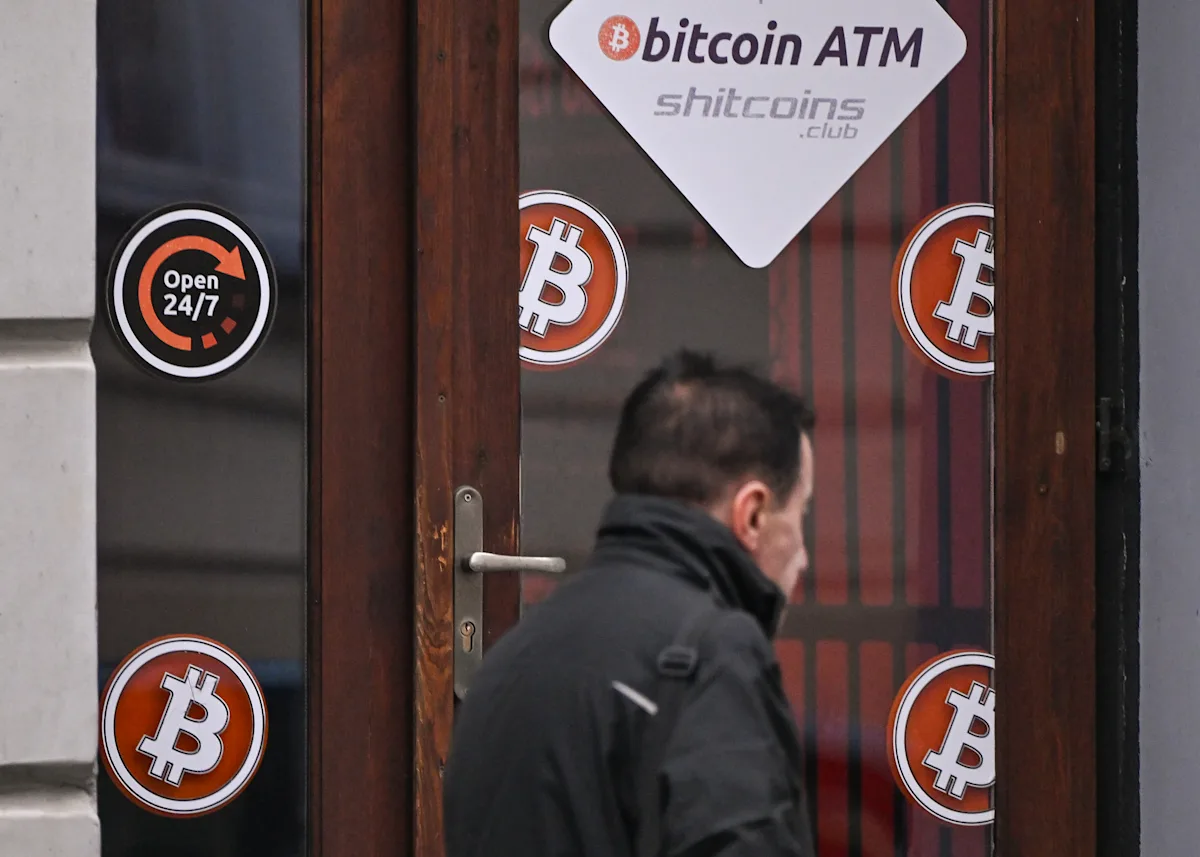
Bitcoin (BTC-USD) retreated from recent highs on Thursday as institutional investors locked in profits after a strong start to the year. Over the past 24 hours, prices have fallen from around $93,000 (£69,175) to just over $90,000, a correction of around 2.5%, while major US spot Bitcoin exchange-traded funds (ETFs) have seen significant outflows.
Read more: Crypto real-time prices
Data from SoSoValue showed that the U.S. Spot Bitcoin (BTC-USD) ETF had a net outflow of $486 million on Wednesday. Outflows also hit the Ethereum (ETH-USD) ($98.45 million) and XRP (XRP-USD) ($40.8 million) spot ETFs.
BlackRock’s (BLK) IBIT and Fidelity’s FBTC products saw the largest redemptions, with outflows of approximately $129 million and $247 million respectively.
Despite the setback, Bitcoin (BTC-USD) is still up more than 3% over the past week, while Ethereum (ETH-USD) is still up 6% over seven days despite falling 3% on the day, according to CoinGecko data.
As of publication, the Bitcoin (BTC-USD) spot ETF held a total of $118.36 billion in net assets, accounting for approximately 6.5% of Bitcoin’s total market capitalization.
Read more: Will Bitcoin price drop to $50,000 or surge to $125,000 in 2026?
Analysts believe that the recent decline is more due to positioning and profit-taking than a deterioration in the underlying trend of Bitcoin (BTC-USD).
Bitcoin (BTC-USD) has entered 2026 with “a more complex set-up for BTC/USD than in previous cycles” as the asset recovers from the turmoil of late 2025, SynFutures COO Wenny Cai told Yahoo Finance UK. She noted that price action in early January showed “new momentum” with market strength on major exchanges after falling from October’s highs of nearly $126,000.
Cai said recent conditions indicate that the market is range-bound, with resistance in the $95,000 to $98,000 range. She said this reflected profit-taking and selective risk-taking as investors waited for clearer catalysts.
Read more: Aave CEO says new UK tax rules could spark crypto boom
She also believes that structural forces such as ETF development, corporate finance strategies for digital assets, and the rise of real-world asset-related products mean that Bitcoin’s (BTC-USD) trajectory is increasingly tied to macroeconomic dynamics rather than pure speculation.
She added that even if volatility persists, institutional interest remains a “continuing source of demand” that can support more stable capital flows.
Longer term, Tsai believes the digital asset’s fundamentals remain intact, citing Bitcoin’s (BTC-USD) limited supply, rising institutional adoption, and claims of “digital scarcity.” However, she warned that risks such as changes in the macro environment, regulation and risk appetite could exacerbate volatility. Market participants should balance optimism with “rigorous risk management,” she said.