Author: Matt Spetalnik and Andrea Shalal
WASHINGTON (Reuters) – The U.S.-Israeli war against Iran has plunged the Middle East into chaos, with President Donald Trump facing mounting risks and challenges, raising questions about whether he can translate military success into clear geopolitical victories.
Even after the killing of Supreme Leader Ayatollah Ali Khamenei and devastating attacks on Iranian forces on land, sea and air, the crisis quickly expanded into a regional conflict that threatened longer-term U.S. military engagement and had consequences beyond Trump’s control.
Trump has avoided such scenarios during his two terms in the White House, preferring quick, limited action, such as a January 3 lightning strike on Venezuela and a one-time strike on Iran’s nuclear facilities in June.
“Iran is engaged in a chaotic and potentially protracted military campaign,” said Laura Blumenfeld of the Johns Hopkins School of Advanced International Studies in Washington. “Trump is risking the global economy, regional stability and his own Republican Party’s performance in the U.S. midterm elections.”
Trump came into office promising to distance the United States from “stupid” military intervention, but now he is pursuing what many experts believe is an endless war of options that will not be prompted by any looming Iranian threat to the United States, despite claims to the contrary by the president and his aides.
In doing so, analysts say, he has struggled to articulate a detailed set of goals or a clear endgame for Operation Fury, the largest U.S. military campaign since the 2003 invasion of Iraq, providing an ever-changing rationale for the war and a definition of victory.
White House spokesperson Anna Kelly rejected that assessment, saying Trump has clearly outlined his goals to “destroy Iran’s ballistic missile and production capabilities, destroy their navy, end their ability to arm their proxies, and prevent them from obtaining a nuclear weapon.”
Yet if the war drags on, American casualties mount and the economic costs of disrupted Gulf oil supplies multiply, Trump’s biggest foreign policy gamble could also damage his Republican Party politically.
MAGA currently supports holdings
While some of Trump’s supporters have criticized opposition to military intervention, members of his Make America Great Again movement have so far largely supported him on Iran.
But given that polls show a broader base of voters, including key independents, opposed to the war, any softening in their support could jeopardize Republican control of Congress in November’s midterm elections.
“The American people are not interested in repeating the mistakes of Iraq and Afghanistan,” said Brian Darling, a Republican strategist. “MAGA supporters are divided between those who rely on a pledge not to start new wars and those who are loyal to Trump’s judgment.”
What worries analysts most is the mixed messaging from Trump and his aides about whether he seeks “regime change” in Tehran.
From the beginning of the conflict, he said the goal was to overthrow Iran’s rulers or at least foment internal rebellion. Two days later, he didn’t mention it was a priority.
But on Thursday, Trump told Reuters he would play a role in selecting Iran’s next leader and encouraged Iran’s Kurdish rebels to launch attacks. He then posted on social media on Friday calling for Iran’s “unconditional surrender.”
Danger continues to escalate across the region, with Iran carrying out retaliatory strikes against Israel and other neighbors in an effort to sow chaos and increase costs for Israel, the United States and their allies.
The Lebanese Hezbollah militia has renewed hostilities with Israel, expanding the war into another country and suggesting Iran may still be able to activate proxy groups.
American casualties have been low so far, with six service members killed, and Trump has largely dismissed the prospect of more casualties while refusing to completely rule out the deployment of U.S. ground troops.
Asked whether Americans should worry about domestic attacks triggered by Iran, Trump said in an interview with Time magazine published Friday: “I think … like I said, some people are going to die.”
But Jonathan Panikoff, the former US deputy national intelligence officer for the Middle East, said: “Nothing can accelerate the early end of the war more than American casualties… This is what Iran is counting on.”
Venezuela miscalculated?
Many analysts believe Trump, who has shown an increasing interest in military action during his second term, miscalculated that an Iranian operation would unfold like the one in Venezuela earlier this year.
U.S. special forces have captured Venezuelan President Nicolás Maduro, opening the way for Trump to coerce more compliant former loyalists into giving him considerable influence over the country’s vast oil reserves without any long-term U.S. military action.
By contrast, Iran has proven to be a tougher and better-equipped enemy, with an entrenched clerical and security apparatus.
Even joint U.S.-Israeli “decapitation” attacks that killed Khamenei and a number of other senior leaders have so far failed to prevent Iran from responding militarily and raised questions about whether they can be replaced by tougher figures.
One concern about the conflict, however, is whether Iran could descend into chaos and break apart if its current rulers fell, further destabilizing the Middle East.
Mark Dubowitz, CEO of the Foundation for Defense of Democracies, a nonprofit research group considered hard-line on Iran, praised Trump’s overall war strategy but said the president needed to make it clear publicly that he did not want to see the country disintegrate.
oil choke point
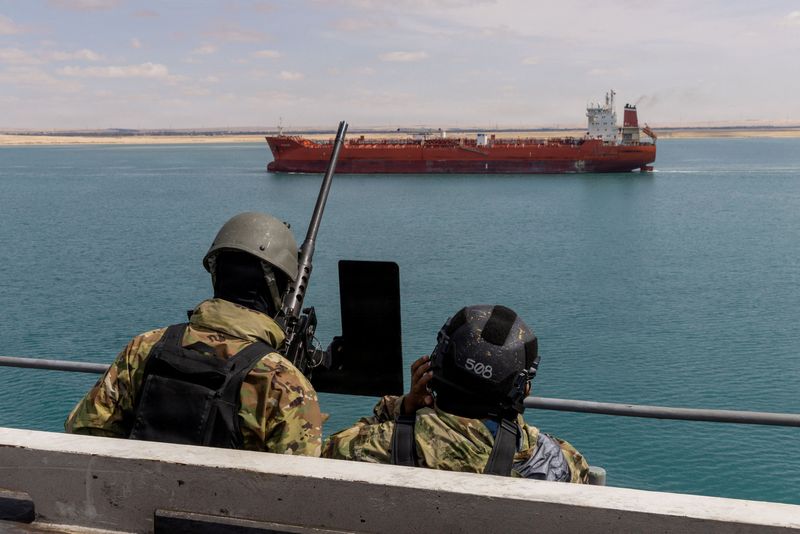
However, one of the most pressing concerns right now is the Iranian threat to the Strait of Hormuz, the narrow chokepoint through which a fifth of the world’s oil passes. Tanker traffic has stopped, and if this continues, there could be serious economic consequences.
Although Trump has publicly denied any concerns about already rising gas prices in the United States, he and his aides are still working to find ways to mitigate the war’s impact on energy supplies as voters tell pollsters that the cost of living is their top concern.
“This is an economic sore point in the U.S. economy that doesn’t appear to have been fully anticipated,” said Josh Lipsky of the Atlantic Council think tank in Washington.
A former U.S. military official close to the U.S. government said the expanded economic impact of the war took the Trump team by surprise, in part because those familiar with the oil market were not consulted before the attack on Iran.
White House Kelly said the “Iranian regime is being completely destroyed” but did not specifically address concerns about war preparations.
Trump decides to continue air strikes
Two White House officials and a Republican close to the administration said that despite warnings from some senior aides that the escalation could be difficult to contain.
Some traditional allies of the United States were caught off guard. “This is a one-person decision-making circle,” one Western diplomat said.
The duration of the war is a major unknown that will likely determine the extent of its impact. With the cost of Iran’s actions growing day by day, Trump said the operation could last four to five weeks or “whatever it takes,” but gave little explanation of what he expected to happen next.
Retired U.S. Army Lieutenant General Ben Hodges, who served in Iraq and Afghanistan and commanded U.S. forces in Europe, praised U.S. military tactics in Iran. But he told Reuters: “It doesn’t appear to have been well thought out from a political, strategic and diplomatic point of view.”
Trump will also need to help Gulf Arab oil-producing countries through the Iran crisis because they have long hosted U.S. bases and have promised him significant new U.S. investment.
While Gulf allies appear to be supportive of the campaign, especially after Tehran attacked them with missiles and drones, not everyone in the region supports Trump’s war.
In an open letter to Trump published on Thursday, Emirati billionaire Khalaf Al Habtor, a frequent visitor to Trump’s Mar-a-Lago resort in Florida, asked: “Who gave you the right to turn our region into a battlefield?”
(Reporting by Matt Spetalnick and Andrea Shalal; Additional reporting by Nathan Layne and Samia Nakhoul; Writing by Matt Spetalnick; Editing by Don Durfee and Cynthia Osterman)