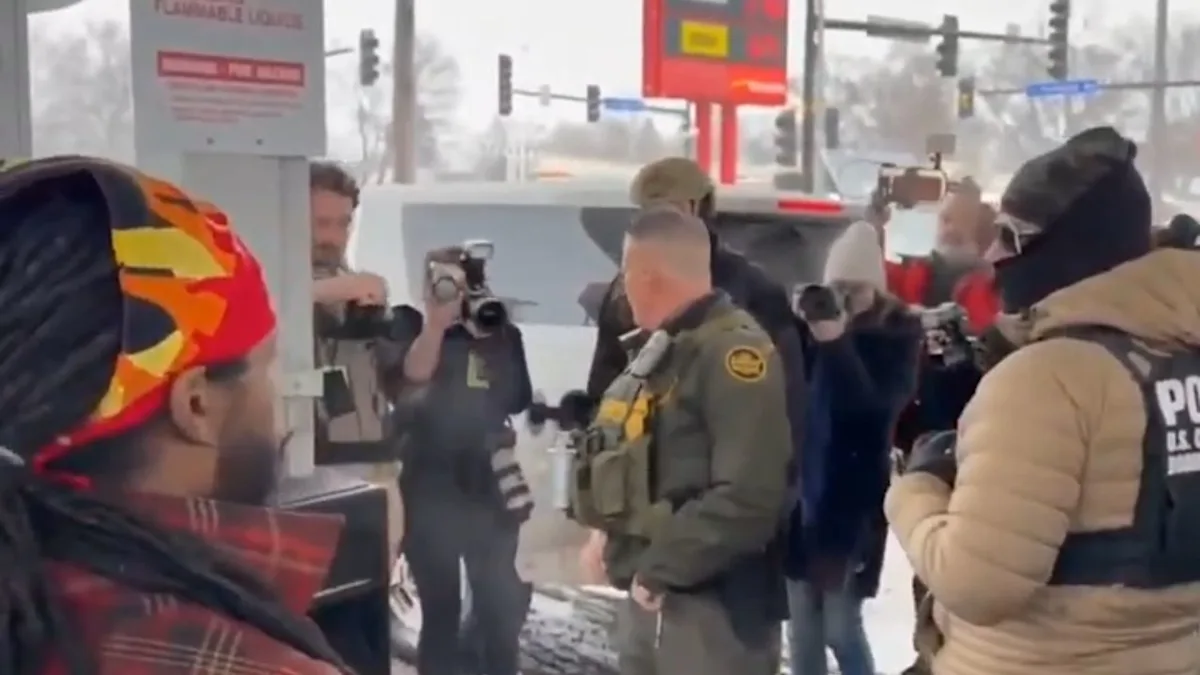

A routine gas station turned into a national political flashpoint after a gas station employee refused to serve federal immigration agents, sparking a debate that stretched far beyond politics and directly into the world of automobiles and fuel retail.
The incident occurred at a Speedway gas station in Minneapolis when Border Patrol agents attempted to refuel a government vehicle during an official operation.
According to video footage that quickly circulated online, a man who identified himself as the store manager refused service and bluntly stated that he did not support ICE, adding that no one in the store did either. Agents were told to leave but were not allowed to purchase fuel.

Within hours, the encounter became a lightning rod. Critics accuse the business of politicizing an essential business service, while supporters see the rejection as a form of protest.
But for the auto and fuel industries, the incident raises deeper questions about neutrality, safety and the changing role of gas stations in an increasingly polarized environment.
Gas stations occupy a unique place in America’s infrastructure because they are more than just retail stores. They are critical service points relied upon by private motorists, commercial fleets, emergency responders, and government agencies like ICE.
Saying no to gas is not the same as saying no to a cup of coffee or retail merchandise. Vehicles cannot run without fuel, a reality that has serious implications for law enforcement or emergency services.
Industry experts note that while private companies often reserve the right to deny service, gas stations have historically operated with expectations of political neutrality. Fleet contracts, fuel cards and government supply agreements are all based on reliability, not ideology.
Once a station is perceived to be selectively serving customers based on political or professional identity, its reliability is called into question.
The impact on Speedway and its parent company was swift. Calls for a boycott surfaced almost immediately, with critics warning the brand could alienate daily drivers who view fuel use as non-partisan.
Others warn that reputational damage could ripple throughout the franchise network, with decisions at individual stores affecting the national brand regardless of company policy.
Automotive analysts also pay close attention to safety concerns. Federal agents often refuel during active operations or long-distance deployments. Forcing vehicles to reroute in search of fuel can lead to delays and unpredictability.