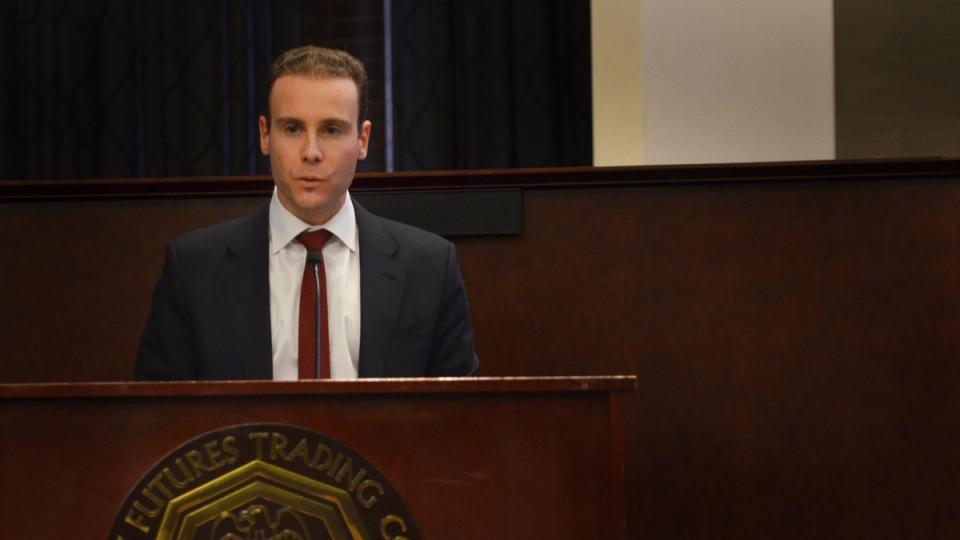
The U.S. Commodity Futures Trading Commission is leaning toward artificial intelligence and automation as it faces huge new oversight responsibilities, even as the agency’s staff has been significantly reduced under President Donald Trump, according to congressional testimony from Chairman Mike Selig.
About a quarter of the U.S. Commodity Futures Trading Commission (CFTC) employees have left since 2025 amid Trump’s call for deep cuts to the federal workforce, according to agency records. But the CFTC is also being asked to regulate the new, fast-growing areas of cryptocurrencies and prediction markets.
“Tools such as artificial intelligence will be very helpful for surveillance and investigations, and we are incorporating them into various workflows,” Selig told lawmakers on the House Agriculture Committee during a hearing on Thursday. He noted that Microsoft’s Copilot artificial intelligence tool is widely used as a productivity aid. When asked about his agency’s reduced staff, Selig said, “We are operating more efficiently and effectively.”
“We’ve put a lot of effort into digital assets, and we’re clearly going down that path with prediction markets,” Commission Chairman Glenn “GT” Thompson noted. He sought assurances from the Commodity Futures Trading Commission chairman that he would seek help from the Commission if he found himself “in a situation where additional qualified staff are needed.”
“Of course,” Selig replied.
Proper market enforcement is his “top priority,” he claimed, although the CFTC’s budget request for next year only calls for three more enforcement officers, bringing its headcount to 108, which is still about 23% less than the 140 the department will have in 2025.
The Digital Asset Market Clarity Act, which is continuing work in the Senate, would elevate the CFTC to a central role in the trading of non-security cryptocurrencies, including trading of leading assets such as Bitcoin and Ethereum’s ether (ETH). The agency also claims dominant legal jurisdiction over prediction markets such as leading companies Polymarket and Kalshi, which have surged in size from millions of dollars a year ago to billions today.
Selig’s Democratic predecessor, former Chairman Rostin Behnam, often argued that the agency needed more people to oversee cryptocurrencies, but with the depth of prediction markets and the near-limitless breadth of contract topics, the agency didn’t have the resources to police the world. During Selig’s brief tenure, prediction markets erupted with accusations of insider trading, some of which have been addressed by the company itself. But markets have drawn intense scrutiny on certain trades surrounding U.S. military operations and government statements that suggest a handful of anonymous traders made big money by making the right bets, suggesting possible insider trading by people with government insights.
The chairman acknowledged that “there is a lot of investigation going on” in prediction markets, but he would not quantify specific numbers or discuss its focus. He said regulated platforms are the first line of defense against insider trading, fraud and market manipulation in the hundreds of new markets (binary event issues) that appear on the platform every day, while the CFTC itself is the second line of defense.
“We often reject contracts,” Selig noted. “We are actively reviewing the situation,” he said, adding that his agency has a “zero tolerance” policy against illegal market activity.
“Anyone who engages in this type of behavior will face the full force of the law,” he said.
But Rep. Angie Craig, the committee’s top Democrat, believes “the agency’s workforce is too stretched,” especially given the agency’s role as “the primary regulator of two of the fastest-growing and most volatile markets.”
“We must provide the CFTC with the staff, funding and clear legal authority it needs to do its job,” Craig said.
The staff reductions at the watchdog include the commission itself, which by law is supposed to have five members, including two commissioners from the minority party, but the White House has left that as a separate post for Selig. The chairman was asked about the issue several times during Thursday’s oversight hearing, including whether he would enforce key rules as a one-person committee.
“We cannot slow down rulemaking for the sake of the American people,” he said, suggesting he would push for new regulations alone. Selig has also pushed for policy initiatives in the cryptocurrency space as the CFTC pursues a preliminary rule process to set up guardrails for prediction markets in the United States.
Thompson said he and Craig will send a letter to the White House “encouraging them to immediately fill these commissioner positions with bipartisan CFTC nominees.”
Read more: CFTC sues Illinois, Arizona and Connecticut over state sports prediction market efforts
Update (April 16, 2022 18:07 UTC): Plans were added to send committee letters regarding committee vacancies to the White House.