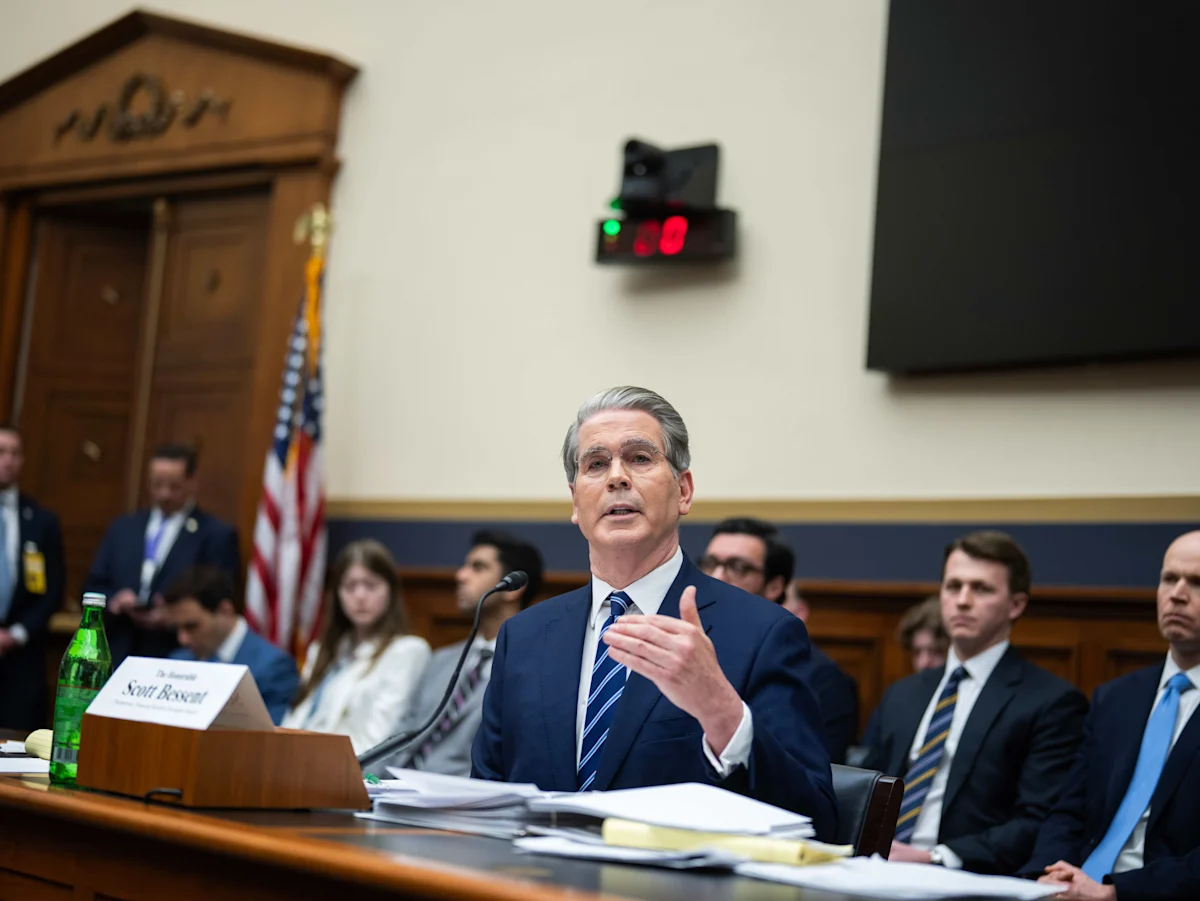
Bitcoin (BTC-USD) briefly fell below $70,000 on Thursday after Treasury Secretary Scott Bessant said the U.S. government would not bail out the cryptocurrency.
During a heated debate on Wednesday before the House Financial Services Committee, Bessant was asked whether the U.S. Treasury Department has the authority to purchase Bitcoin or other cryptocurrencies.
“I don’t have the authority to do that, and I don’t have the authority as FSOC president,” Bessant said.
Bitcoin prices fell to $69,525 per share early Thursday, extending losses seen on Wednesday following Bessant’s comments.
The decline in Bitcoin prices has also been exacerbated by broader selling pressure in the market and warnings from prominent investor Michael Burry that a continued decline in Bitcoin prices could “trigger a death spiral leading to massive value destruction.”
“Bitcoin is considered a purely speculative asset and does not act as a trade hedge against depreciation like gold and other precious metals,” Burry wrote in his Substack. Burry rose to fame after predicting the 2008 financial crisis.
Thursday’s decline only exacerbated Bitcoin’s recent plunge. The world’s largest cryptocurrency is down nearly 20% so far this year.
Bitcoin fell sharply over the weekend, marking its fourth straight monthly decline.
The decline coincided with President Trump’s announcement on Friday of his choice of Kevin Warsh to lead the Federal Reserve when Jerome Powell’s term ends in May, a nomination that markets viewed as hawkish.
Ethereum (ETH-USD) and other digital tokens also fell.
Read more: How to Cope with a Cryptocurrency Crash
After Bitcoin earlier broke through key support at $73,000, 10X Research strategists wrote that “current flows suggest there has been a meaningful shift in sentiment.”
The firm’s strategists noted that flow and positioning data suggest “investors are not yet ready to buy the dip.”
“While sentiment and technical indicators are approaching extreme levels, the broader downtrend remains intact,” the researchers wrote. “In the absence of a clear catalyst, the urgency to intervene is not high.”
The firm noted that traders remain focused on deleveraging and liquidating positions rather than preparing for a typical rally rally.
The pressure on digital assets reflects broader vulnerabilities across the cryptocurrency market. Aside from a brief rally last month, Bitcoin has been struggling since whale selling and forced liquidations swept the industry in October.


