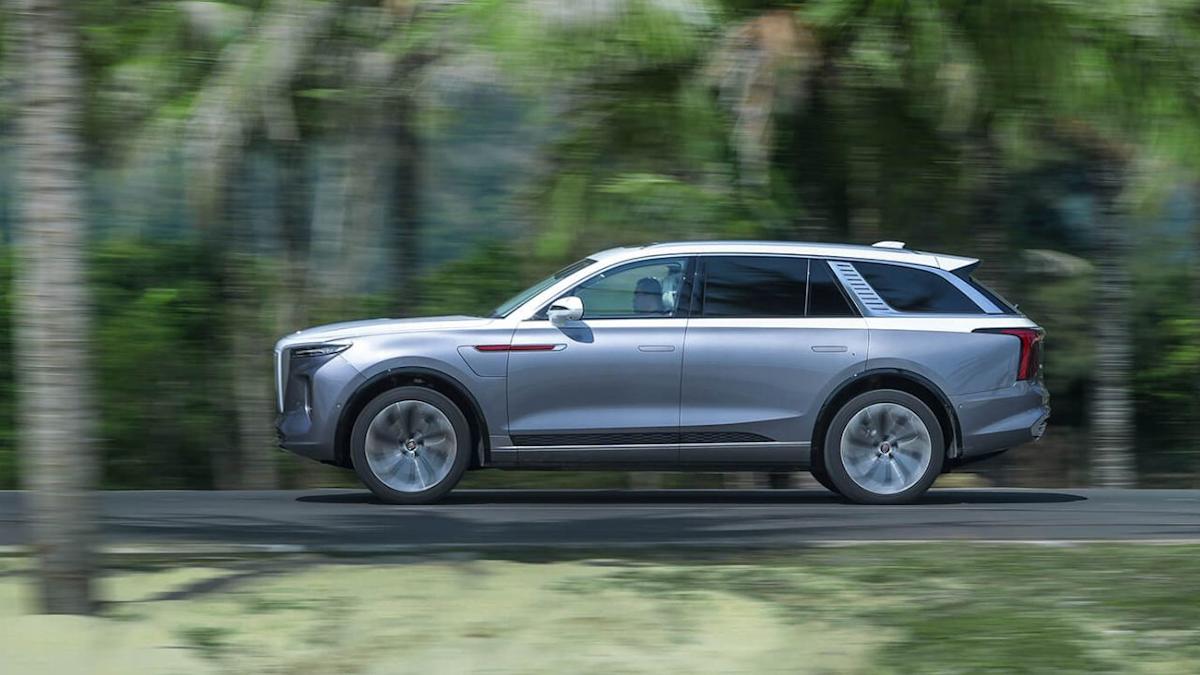
Think Chinese-made cars are all about budget builds and uninspired styling? Not anymore. While most of these vehicles aren’t available in the U.S. just yet, they’re making waves across Europe, Asia, and emerging markets with sleek aesthetics, cutting-edge tech, and luxury-level features, often at a fraction of the price of Western competitors.
From electric sedans that rival Tesla to SUVs with interiors fit for royalty, China’s auto industry is redefining what “good-looking” means on the road. These aren’t just copycats, they’re contenders.
Not long ago, Chinese automakers were known more for imitation than innovation. But over the past decade, that narrative has shifted dramatically. By recruiting top design talent from global hubs like Munich and Milan, these brands have infused their vehicles with personality, sophistication, and originality.
Gone are the days of playing “spot the knockoff.” Today’s Chinese-manufactured cars speak their own design language, blending international flair with fresh, forward-thinking details. It’s a transformation you can see from three lanes away.
As someone who’s spent years politely describing questionable automotive styling, I can finally say this: Chinese cars are starting to impress, earning a place in any serious automotive conversation.
Hongqi H9

Image Credit: Hongqi.
Engine Options: 2.0T (around 252 hp), 3.0T V6 (333 hp / 248 kW on the 2024 facelift)
Price Range: $35,000-55,000 USD equivalent
Key Tech: ADAS features (varies by market/trim), 12.3″ infotainment; air suspension available on some trims/markets
The Hongqi H9 is what happens when China decides it’s tired of watching German sedans have all the fun. This isn’t subtle transportation: it’s 5.1 meters of “we’ve arrived, and yes, we know you noticed.” The chrome work alone probably supports a small mining operation, but somehow it all works together without looking like a rapper’s first car purchase.
Inside, you’ll find enough leather to upholster a small apartment, plus dual 12.3-inch screens that handle everything from navigation to climate control. The rear seats recline enough to make first-class passengers jealous, complete with massage functions and individual entertainment screens. It’s the kind of place where important decisions get made, or at least where people like to think they’re essential.
The 3.0-liter supercharged V6 is commonly listed at 248 kW, paired with an 8-speed automatic on the facelifted model. The H9 proves that when Chinese engineers put their minds to luxury, they don’t mess around with half-measures.
BYD Han EV

Image Credit: Byd.
Range: 602 km (NEDC) (~374 miles) or 521 km (WLTP) (~324 miles), depending on market/cycle
Power (AWD): 380 kW (≈510 hp)
0–100 km/h: 3.9 s (AWD)
Price: ~$35,000 USD equivalent
Remember when BYD stood for “Build Your Dreams?” Well, someone clearly dreamed of making Tesla sweat a little. The Han EV doesn’t just compete with the Model S, in some ways, it outright embarrasses it. That rotating 15.6-inch touchscreen isn’t just a party trick; it’s genuinely useful for both portrait and landscape orientations, something Tesla still can’t figure out.
The Blade Battery technology isn’t just marketing speak: these lithium iron phosphate cells have been subjected to extreme conditions, nail-gunned, crushed, and overcharged, without catching fire, which is more than some premium EVs can claim. Plus, Range is quoted as 521 km WLTP (~324 miles) in Europe-spec listings; higher numbers like ~602 km are from other test cycles/markets.
The dual-motor AWD version is quoted at 0–100 km/h in 3.9 seconds (market/version dependent), making it quicker than most sports cars your neighbors drive. The regenerative braking system is so smooth you’ll forget it exists, and the adaptive electronic suspension keeps things comfortable even when you’re testing those acceleration figures.
At roughly half the price of a comparable Model S, the Han EV makes you wonder what exactly you’re paying extra for with other brands. Spoiler alert: it’s mostly the badge.
NIO ET7

Image Credit: Nio.
Range: varies widely by battery and test cycle; NIO markets very high figures for the 150 kWh pack in some test contexts
Battery options: 75 kWh, 100 kWh, and 150 kWh (semi-solid-state)
Power: 480 kW (≈644 hp) dual-motor
Battery swap: about 3 minutes at Power Swap stations
NIO took one look at the “charging anxiety” problem and said, “What if we just swapped the entire battery instead?” The ET7 can get a fresh battery pack in under three minutes at NIO’s Power Swap stations, which is faster than most people can grab coffee. It’s brilliantly simple, assuming you live in China, where these stations actually exist.
The interior looks like Apple designed a living room. The 12.8-inch OLED display runs on a Snapdragon 8155 chip that’s more powerful than some laptops. At the same time, the NOMI AI assistant actually responds to natural conversation instead of making you talk like a robot from 1995.
Four-zone climate control, 23-speaker sound system, and seats that massage you while the car drives itself in traffic: the ET7 is basically a spa on wheels. The air suspension reads the road ahead using cameras and adjusts accordingly, so you’ll glide over potholes that would rattle other cars’ fillings loose.
The 150 kWh semi-solid-state battery option is marketed with very high range figures depending on test cycle, but real-world range will vary significantly with speed, temperature, and route, which should finally put to rest any remaining arguments about EVs being impractical for road trips.
Geely Preface

Image Credit: Geely.
Engine:2.0T turbo (around 190 hp in commonly published specs; varies by market/trim), 48V mild-hybrid on some versions
Platform: CMA (shared with Volvo XC40)
Safety: high C-NCAP rating (varies by year/trim)
Price: ~$20,000 USD equivalent
When Geely bought Volvo, skeptics worried about Chinese ownership ruining Swedish engineering. The Preface suggests the influence went the other way. Built on Volvo’s CMA platform, this sedan drives with a composure that would make Gothenburg proud.
The 2.0-liter turbo four-cylinder produces 190 horsepower, which isn’t earth-shattering but feels perfectly adequate thanks to the 48-volt mild hybrid system filling in torque gaps. The 7-speed dual-clutch transmission shifts with Germanic precision, and the ride quality strikes that sweet spot between comfortable and controlled.
Inside, you’ll find an infotainment system that actually works without requiring an engineering degree to operate. The 12.3-inch touchscreen responds quickly, the voice commands understand actual human speech, and the Smartphone integration is finally seamless, no rituals, no headaches
The Preface proves that platform sharing can work both ways: Chinese brands get proven engineering, while Swedish brands get access to massive manufacturing scale. Everybody wins, except maybe the people who insisted Chinese cars would always be inferior.
XPeng P7

Image Credit: Xpeng.
Range: 706 km NEDC (439 miles)
Power: 196-473 hp depending on configuration
Autopilot: XPILOT 3.5 with dual Nvidia Drive Xavier chips
Notable: XPeng brought LiDAR to mass production on the XPeng P5 (not the P7)
The XPeng P7 looks like someone asked AI to design the perfect electric sedan, then actually built the result. The coefficient of drag is just 0.236 Cd, which helps explain how it posts very high range figures under test cycles like NEDC, but those numbers don’t translate directly to real-world miles. That’s the efficiency that makes Tesla engineers check their calculations twice.
The XPILOT system uses dual Nvidia Xavier chips processing inputs from 31 sensors, including millimeter-wave radar, ultrasonic sensors, and cameras. LiDAR “first” credit in XPeng’s lineup goes to the XPeng P5, not the P7, giving it capabilities that won’t arrive in other brands for years.
The interior minimalism isn’t just aesthetic; it’s functional. The 14.96-inch touchscreen handles most controls with logic that actually makes sense, while the 10.25-inch instrument cluster shows precisely what you need without information overload. Physical buttons remain for climate control and hazards, because some traditions shouldn’t be touchscreen-ified.
With over-the-air updates that actually add meaningful features instead of just moving menu items around, the P7 gets better with age. It’s the forward thinking that established brands are still figuring out.
Chery Arrizo 8

Image Credit: Chery.
Engine: 1.6T turbo (197 hp), 1.5T turbo (156 hp)
Transmission: varies by engine and market (many 1.6T versions use a 7-speed DCT)
Platform: T1X global platform
Chery used to be the automotive equivalent of store-brand cereal: it’ll do the job, but nobody’s excited about it. The Arrizo 8 changes that conversation entirely. With 197 hp from a 1.6-liter turbo four, it’s got more grunt than most mid-size sedans, delivered through a 7-speed dual-clutch that shifts like it means business.
The interior quality rivals cars costing twice as much, with soft-touch materials where your hands actually go and fake leather that’s convincing enough to fool most passengers. The 12.3-inch touchscreen runs Chery’s Lion 5.0 system, which manages to be both feature-rich and intuitive: a combination many luxury brands still struggle with.
Sony’s 8-speaker sound system delivers audio quality that’ll make you rediscover songs you thought you knew. At the same time, the panoramic sunroof creates an airy cabin feel that makes the space seem larger than its dimensions suggest.
Warranty coverage varies by market (some offer unusually long coverage), which suggests Chery’s confidence.
BYD Seal

Image Credit: Byd.
Range: up to 354 miles (WLTP) in UK/Europe-spec listings (varies by version)
Power (AWD): 390 kW
0–100 km/h: 3.8 s
Drag coefficient: 0.219 Cd
The BYD Seal looks like it was styled in a wind tunnel and finished by artists. The drag coefficient of 0.219 Cd isn’t just impressive, it’s class-leading, helping efficiency; Europe-spec listings quote up to ~570 km WLTP (~354 miles) depending on version.
Many versions include a heat pump (market/version dependent), which can help reduce cold-weather range loss, so your range won’t disappear the moment temperatures drop below freezing. DC fast charging is commonly quoted up to ~150 kW for Europe-spec versions (charger and trim dependent), meaning 10-80% charges in under 30 minutes when you find the right charger.
Inside, the rotating 15.6-inch screen can flip between portrait and landscape modes depending on what you’re doing. The 12-speaker Dynaudio sound system delivers concert-quality audio, while the seats offer heating, cooling, and massage functions that work better than most spa chairs.
The Performance variant’s dual-motor setup produces 390 kW (AWD) and 670 Nm of torque, launching this sedan to 100 km/h in just 3.8 seconds. That’s faster than most sports cars, achieved in near-silence and with zero emissions. The future is already here, and it’s surprisingly fun.
Lynk & Co 01

Image Credit: Lynk&Co.
Engine:Powertrains vary by market and model year (including hybrid/PHEV versions); it’s built on Volvo/Geely’s CMA platform
Platform: CMA (shared with Volvo)
Unique Features: Subscription model available in Europe
Target: “Digital natives who see cars as smartphones”
Lynk & Co designed the 01 for people who grew up with smartphones and expect their cars to be just as connected. The infotainment system receives regular over-the-air updates that add new features instead of just fixing bugs, while the app lets you share your car with friends or even rent it out when you’re not using it.
The design deliberately breaks conventional SUV rules: those split headlights aren’t an accident, they’re a statement. The floating roof, contrasting side mirrors, and bold color options (including a lime green that’s visible from space) appeal to buyers who want their vehicle to reflect their personality rather than blend into traffic.
Built on Volvo’s CMA platform with Swedish safety engineering and Chinese manufacturing efficiency, the 01 offers premium features at mainstream prices. Powertrains vary by market and model year; some 2.0T versions are listed around 254 hp, while Europe has often focused on hybrid/PHEV configurations through an 8-speed automatic that’s been tuned for responsiveness rather than just fuel economy.
In Europe, Lynk & Co offers a subscription model where you can essentially rent the car month-to-month with insurance, maintenance, and roadside assistance included. It’s the kind of innovative thinking that makes traditional dealers nervous and customers interested.
MG4 EV

Image Credit: MG.
Range: varies by battery/trim (manufacturer claims up to 323 miles in some versions)
Battery: multiple sizes (e.g., ~51/64/77 kWh depending on market)
Charging: commonly quoted ~10–80% ~35 min (charger/trim dependent)
The MG4 EV wears a historic British badge but benefits from Chinese investment, engineering, and manufacturing scale. The result is an electric hatchback that costs less than most premium golf equipment while delivering performance that embarrasses hot hatches costing twice as much.
Battery chemistry varies by version: the commonly sold 64 kWh MG4 is typically equipped with an NMC battery, while some smaller-capacity packs use LFP, depending on market and trim. WLTP range figures vary accordingly, with certain versions quoted at up to around 450 km WLTP. DC fast-charging capability is commonly listed at up to approximately 135 kW, depending on charger and specification. Thermal management is designed to maintain battery performance and longevity, while the skateboard-style EV layout helps maximize interior space.
Many rear-wheel-drive versions produce around 150 kW (204 PS), with higher-output variants available depending on trim. Power is delivered directly to the rear wheels, giving the car a more engaging, driver-focused feel than many efficiency-oriented EVs. Its low center of gravity and balanced weight distribution contribute to confident, enjoyable handling rather than just economical transportation.
Inside, the 10.25-inch touchscreen runs SAIC’s iSmart system with Apple CarPlay, Android Auto, and over-the-air update capability. The fit and finish rivals European competitors, while the warranty coverage exceeds what most premium brands offer.
Neta S

Image Credit: Neta.
Range: around 520 km (test cycle varies by source/trim); battery up to 91 kWh depending on version
Power: 170-462 hp (single/dual motor)
Features: LiDAR, 8155 chip, 21-speaker audio
Price: ~$30,000 USD equivalent
The Neta S is positioned as a technology-forward electric sedan aimed at the upper end of the mainstream EV market. Battery capacity, drivetrain configuration, and output vary by version, with both single- and dual-motor setups offered. Published power figures range from roughly 170 hp to over 400 hp, depending on trim. Quoted range figures typically exceed 500 km under Chinese test cycles, though real-world range varies significantly based on configuration, driving conditions, and standards used.
Interior design centers on digital integration rather than traditional luxury cues. A large central display powered by a Qualcomm Snapdragon 8155 chipset supports fast responses and multitasking. Advanced driver-assistance features are offered, including LiDAR-based systems on select trims, enabling enhanced Level 2+ functionality where regulations permit.
Frameless doors, flush handles, and clean exterior surfacing give the Neta S a premium appearance, signaling the brand’s intent to compete on technology and design rather than price alone.
Hongqi E-HS9

Image Credit: Hongqi.
Range: ≥ 441 km (WLTP) for the 99 kWh version (market/version dependent)
Power: 435 hp dual motor
Interior: 6 or 7-seat configurations
Price: ~$80,000 USD equivalent
The Hongqi E-HS9 is a full-size luxury electric SUV designed to showcase the brand’s flagship ambitions. Battery size, power output, and range vary by market and version, with higher-capacity models offering WLTP-rated ranges of roughly 400–440 km, depending on specification. Dual-motor all-wheel-drive configurations are common, emphasizing smooth, effortless acceleration rather than outright performance.
Inside, the E-HS9 prioritizes comfort and presence. Six- and seven-seat configurations are available, along with premium leather upholstery, extensive ambient lighting, and a multi-screen dashboard layout.
Higher trims offer features such as air suspension, seat heating and ventilation, and rear-seat entertainment, reinforcing its positioning as a luxury-focused SUV rather than a sporty one. The E-HS9 competes less on efficiency metrics and more on space, refinement, and visual impact.
Aiways U5

Image Credit: Aiways.
Range: up to 410 km (WLTP) (~255 miles)
Power: ~150 kW (≈204 hp) (market/version dependent)
Charging: 20–80% ~35 min (quoted)
The Aiways U5 focuses on practicality and efficiency rather than headline-grabbing performance. Battery capacity and range vary by market, with a commonly cited WLTP range of up to around 410 km, depending on version.
Power output is typically listed at around 150 kW (≈200 hp), delivering adequate performance for everyday driving rather than aggressive acceleration. Charging times and speeds depend on charger type and vehicle specification, with DC fast charging supporting typical 20–80% sessions in competitive timeframes.
The interior emphasizes space efficiency, aided by a flat-floor EV layout and a cargo area suitable for family use. A centrally mounted touchscreen controls most vehicle functions through a straightforward interface designed for ease of use rather than visual flair.
The U5 was among the earlier Chinese EVs to be sold in European markets, requiring compliance with EU safety and regulatory standards, which contributed to a more mature, conservative overall execution. It’s positioned as a sensible, globally oriented electric SUV rather than a luxury or performance statement.
Looking at a Fresh Future

Image Credit: Lynk&Co.
Chinese cars have completed their transformation from automotive punchlines to legitimate alternatives faster than anyone predicted. These vehicles offer genuine innovation, compelling design, and features that established brands charge premium prices for, often at half the cost.
The best part? This is just the beginning. With massive investments in battery technology, autonomous driving, and manufacturing capacity, Chinese brands are positioning themselves not just to compete with traditional automakers but to define what cars will become next.
For enthusiasts who remember when “driving dynamics” meant choosing between German precision and Japanese reliability, the idea that compelling cars might come from China seemed impossible. Today, that impossibility is parked in driveways around the world, quietly delivering everything their owners wanted without the badge premium they couldn’t afford.
The automotive world has room for more good cars, regardless of where they’re built. These Chinese models have earned their place in that world, not through copying or cutting corners, but by doing the work and delivering the goods. Sometimes, the best revenge against skepticism is simply building something undeniably good.
Your move, Detroit.