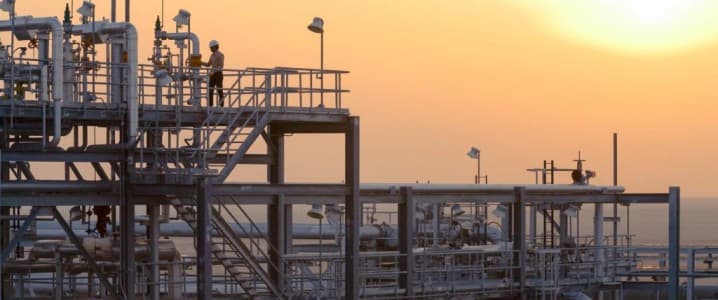
Saudi Arabia’s sudden enthusiasm for developing its vast shale resources, led by the giant Jafra basin, is rooted in a stubborn mix of energy security, export optimization and geopolitical positioning. Riyadh wants to cut the crude it still uses to generate electricity, free up more oil for exports amid tight OPEC+ regulations and secure new feedstock for its expanding petrochemical and industrial base. At the same time, the Saudis are acutely aware that the U.S. shale boom is reshaping global energy markets and eroding OPEC’s pricing power, and are determined not to be left behind in the next phase of unconventional development. Jafurah has one of the largest unconventional gas resources in the world, and Saudi Arabia recently announced it will export its first condensate from the Jafurah gas plant in February, viewing the field as the cornerstone of a new era of domestic supply growth and future export potential. That said, there are often huge discrepancies between Saudi Arabia’s forecasts of key figures, including oil reserves and production, and reality, and a thorough analysis of the Jafurah project reveals deep flaws in the forecasts.
The $100 billion Jafurah project, which holds approximately 229 trillion standard cubic feet (Tscf) of gas and 75 billion barrels of condensate, is expected to produce 200 million standard cubic feet per day (Mscfd) of gas in the first phase, rising to 2 billion standard cubic feet per day (Bscfd) by 2030. Production is expected to increase by around 60%. Saudi Aramco’s natural gas production, and the company’s ultimate goal is to increase natural gas production by 80% by 2030. Much of this will be used to meet domestic electricity demand, which is growing at about 3-4% annually and is expected to reach at least 2.5 times current levels by 2050. This number is likely to be higher, consistent with predictions that power demand driven by artificial intelligence, cloud and heat waves will drive 40-50%. By the end of 2040, global natural gas demand will increase at least slightly. In addition, according to industry forecasts, by then, global data center-related demand may increase by 150-200 billion cubic meters per year, an increase of 3.6-4.9% over the current global natural gas demand forecast. Saudi Arabia intends to position itself as a key player in the high-growth, geopolitically critical sector of the Middle East. Overall, Aramco said its unconventional gas program is expected to generate the equivalent of displacing 500,000 barrels of oil per day at peak production. Another positive for Saudi Arabia in this equation is that since Jafurah is primarily a gas project, it should not count towards Saudi Arabia’s OPEC production quotas.
RELATED: Market prices in disarray as oil regains footing
It all looks great on paper, as do all of Saudi Arabia’s key projections related to its oil and gas industry. But as always, the reality is a little different. The most important reason for this is that Saudi Arabia’s influence in the world is almost entirely determined by its oil and gas reserves and related production – the greater these productions, the greater its geopolitical influence. So, as I analyze in detail in my latest book on the new order in global oil markets, exaggerating these key figures is in any country’s best interest. For example, from the beginning, in 1989, Saudi Arabia claimed proven oil reserves of 170 billion barrels. But just a year later, without the discovery of any major new fields or a significant reassessment of existing field reserves, official estimates have somehow grown by 51.2% to 257 billion barrels. Shortly thereafter, without any major new discoveries, Saudi Arabia’s proven reserves increased to just over 266 billion barrels, and increased again in 2017 to 268.5 billion barrels. During the period in which these increases were announced, the country’s average extraction volume was 8.162 million barrels per day. So, from 1990 (the year Saudi Arabia claimed proven oil reserves jumped from 170 billion barrels to 257 billion barrels) to 2017 (the year Saudi Arabia claimed proven oil reserves were 268.5 billion barrels), the Kingdom permanently extracted an average of just over 2.979 billion barrels of crude oil from the ground each year. Therefore, the total volume of crude oil permanently removed from the beginning of 1990 to the beginning of 2017 is 80.43 billion barrels. In short, from 1990 to 2017, Saudi Arabia’s official crude oil reserves increased by 98.5 billion barrels, despite the discovery of no new oil, and permanently decreased by 80.43 billion barrels.
Also questionable are Saudi production figures and its claims about spare capacity. A case in point was the attack on the Abqaiq and Khurais facilities on September 14, 2019, when Energy Minister Prince Abdulaziz bin Salman stated that “Saudi Arabia plans to restore production capacity to 11 million barrels per day by the end of September and restore full capacity of 12 million barrels per day two months later.” Both figures are far from accurate. In fact, from 1973 to September 14, 2019, Saudi Arabia’s average crude oil production was only 8.151 million barrels per day. Production at that time never approached 12 million bpd, and only briefly averaged over 11 million bpd, in November 2018, at 11.093 million bpd. Little has changed since then. From 1973 to yesterday’s close, Saudi Arabia’s average crude oil production was 8,297,440 barrels per day. Along with this, although the company has often reiterated a maximum sustainable crude oil production capacity of 12 million barrels per day, this number has only been achieved once (April 2020) and cannot be sustained. Equally important, the U.S. Energy Information Administration (EIA) defines spare capacity as “production that can be started within 30 days and sustained for at least 90 days.” After the attacks on September 14, 2019, it became clear that Saudi Arabia had quietly redefined “spare capacity” to include not only crude that met the EIA definition, but also crude that was stored, crude that could be purchased from elsewhere, and crude that could be withheld from contracts and moved into storage.
This grand strategic pattern also appears to be at play in Jafurah’s numbers – unsurprising as it is a key part of the Kingdom’s flagship shale energy drive and is therefore influenced by the same motivations as the other two key industries. In early 2024, it was suddenly announced that an additional 15 Tscf of natural gas reserves had been discovered, bringing the official total to 229 Tscf. Even assuming this is accurate, the question remains: Will it be enough to reduce crude oil flaring to the levels predicted by the Saudis while allowing the kingdom to become a significant natural gas exporter by 2030? EIA data shows that the country’s crude oil consumption in the second half of 2024 is well over 500,000 barrels per day, and industry estimates indicate that the country’s crude oil consumption by 2025 will be about 470,000 barrels per day. Jafurah aims to produce 2 billion standard cubic feet of gas per day, equivalent to 334,000 barrels of oil equivalent, by 2030, or 334,000 barrels of gas per day (equivalent to 167,000 barrels of oil equivalent based on 1 billion cubic feet of gas). As a result, total new gas additions at Jafurah are expected to be approximately 334,000 barrels per day by 2030, which is not even enough to meet the amount of crude oil currently burned for power generation, let alone any increase in demand between now and 2030.
By Simon Watkins, Oilprice.com
More top reads from Oilprice.com
Oil Price Intelligence provides you with these signals before they become front page news. It’s the same expert analysis read by veteran traders and political consultants. Get it for free twice a week and you’ll always know why the market is moving before anyone else.
You get geopolitical intel, hidden inventory data, and market whispers affecting billions – and we’re giving you $389 of premium energy intelligence when you subscribe. Join over 400,000 readers today. Click here for immediate access.