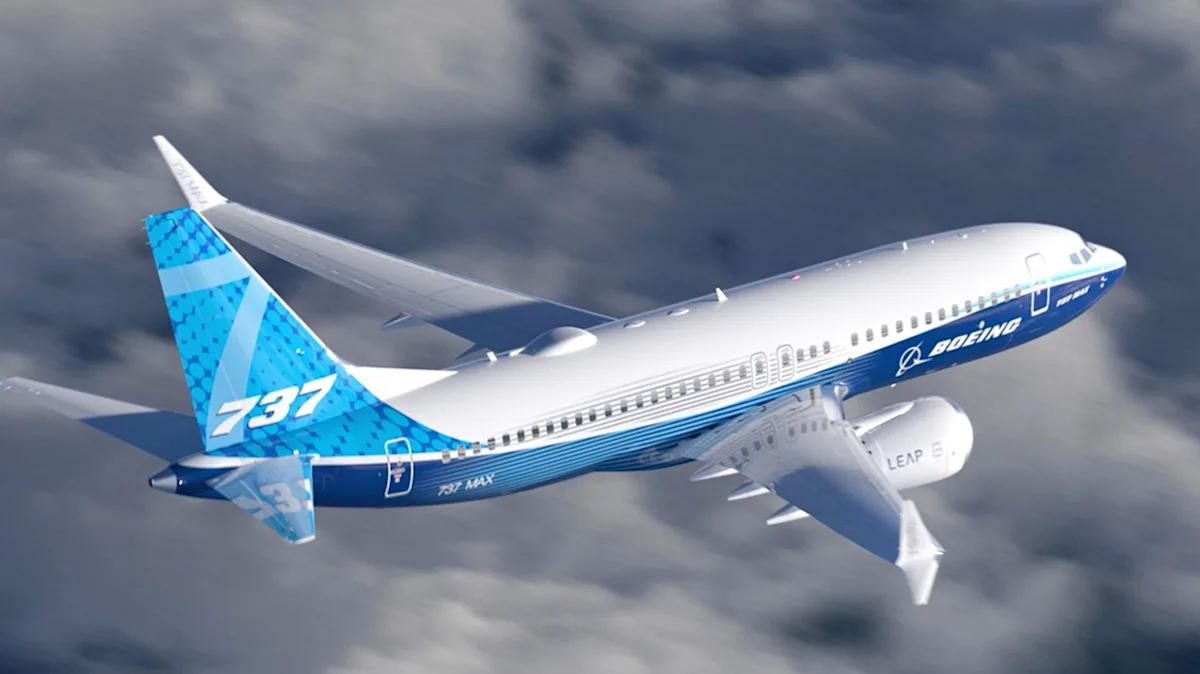
Boeing has been in the aerospace industry for more than a century and has gone through many iterations. The company began building original seaplanes in the early 20th century as Pacific Aero Products Co. and later changed its name to Boeing Airplane Co. In 1961, the company gave up qualifying and changed its name to Boeing, in part because it had expanded into other areas beyond aerospace.
Today, Boeing manufactures military aircraft, helicopters, spacecraft, missiles and more. Boeing also built the Lunar Rover (lunar rover), which was flown by astronauts on the lunar surface during the last three Apollo missions. Boeing is also, and has long been, the world’s largest commercial aircraft manufacturer.
Boeing is best known for designing and manufacturing aircraft, and the name is almost synonymous with aircraft, but it is also a large company with hundreds of subsidiaries. Some are R&D operations, some make parts or process software for navigation or defense, and still others make rockets and spacecraft. Of course, some of Boeing’s subsidiaries are exactly what you’d expect an aerospace company to do aerospace things. Here are five airlines you may not know are owned by Boeing.
Read More: 13 of the Most Beautiful World War II Planes
Insitu drone with wide-area maritime search capability – Insitu
Autonomous or remote-controlled aircraft, often called drones or UAVs (short for unmanned aerial vehicles), have become commonplace in toy and hobby stores. You can buy simple and affordable drones to fly in your backyard, or you can purchase more sophisticated drones for racing, filmmaking, and other activities. Meanwhile, there is another category of drones used for scientific research and military applications. These are the types of drones produced by Insitu.
The company was founded in 1994 with the goal of developing small robotic aircraft and achieved early milestones such as the first unmanned transatlantic flight in 1998. Insitu was acquired by Boeing in 2008 and today is a wholly owned subsidiary of Boeing headquartered in Bingen, Washington.
While Boeing is primarily known for its passenger aircraft, Insitu offers a range of drones, including the Integrator VTOL (vertical takeoff and landing), Integrator Extended Range, Integrator, ScanEagle VTOL, ScanEagle and the RQ-21A. These can also supplement payloads including cameras, laser guidance, wide-area search instruments and more.
Aircraft fuselage parts from aviation factory – Spirit AeroSystems
Spirit AeroSystems (not to be confused with Spirit Airlines) was originally the Stearman Aircraft Company founded by Lloyd Stearman in the early 20th century. It was later acquired by United Aircraft Corporation (later Boeing) in 1929.
The company produces fuselages and other structures for passenger aircraft such as the Boeing 737 and 787. Spirit has a complicated history with Boeing, initially being part of the company, later splitting and then remerging. Spirit AeroSystems was founded in 2005 when Boeing sold its plants in Wichita, Tulsa and McAlester to Onex.
After splitting from Boeing in 2005, the company acquired some parts from BAE Systems and supplies parts to Airbus, Mitsubishi, Rolls-Royce, Boeing, Northrop Grumman, etc. In 2024, Boeing reacquired the company, bringing it back under the Boeing umbrella. Since its founding, Spirit has expanded from Kansas to Europe, Asia and other parts of the world. Meanwhile, Spirit’s Northern Ireland operations were spun off into an independent subsidiary called Short Brothers, which is also owned by Boeing.
Wisk Aero 6th generation air taxi – Wisk Aero
Wisk was founded in 2010 as Zee Aero with the goal of developing air taxis that can fly autonomously with ground support. In 2019, Zee Aero merged with Boeing and changed its name to Wisk Aero, but the company’s goals remain the same. “We are laying the foundations for the aviation industry to become even safer than it is today.” Promotional video from Wisk CEO Sébastien Vigneron. “By developing, testing and certifying entirely new classes of aircraft and systems, we firmly believe autonomy will make aviation safer, more efficient and more accessible to everyone.”
The company’s vision is to create a fleet of four-passenger air taxis that would function similarly to shared air rides. Using the app, you can book a flight on Wisk’s four-passenger air taxi. Your information will then be sent to a central facility where you will be added to the passenger list for your scheduled flight.
Once you arrive at the airport, ground staff will conduct a security check on your aircraft to protect the safety of passengers and luggage, and then you’re ready to go. Ground staff monitor the flight from takeoff to landing to ensure everything goes smoothly. Wisk’s sixth-generation aircraft has a cruising altitude of 2,500 feet or more and a range of 90 miles. Wisk also combines sensors, cameras, radar, software and more to automate air traffic management, which will benefit traditional air travel as well as Wisk’s air taxis.
Aurora Flight Sciences (AFS) was founded by John S. Langford, an MIT graduate and the university’s Daedalus project manager. The Daedalus was an experimental human-powered flying machine propelled by pedals. Since then, the company has developed a range of experimental and functional crafts.
AFS’s first aircraft after Daedalus was the Perseus proof-of-concept aircraft, which made its first flight in 1991. It is remotely piloted and designed to carry large scientific payloads for atmospheric research. A later iteration, known as the Perseus B, set a record for the highest altitude flown by a single-engine propeller-driven aircraft, with a maximum altitude of 60,620 feet.
Aurora also developed DARPA’s ultra-high altitude, ultra-durable, loitering theater unmanned reconnaissance unit (VULTURE). VULTURE is designed to be a solar-powered aircraft capable of staying aloft for up to five years, with an articulated Z-shaped wing structure that keeps solar cells pointed toward the sun. AFS also designs and builds experimental spacecraft for use in space and Mars. Boeing acquired AFS in 2017 and the company is now part of Boeing’s Engineering, Test and Technology division.
McDonnell Douglas DC-9 Series 30 – Boeing
As a company, McDonnell Douglas is the result of more than a century of various mergers and realignments. Before Boeing, what would eventually become McDonnell Douglas began as two separate aircraft companies: McDonnell Douglas Aircraft Company and Douglas Aircraft Company.
Founded in 1921, Douglas initially built a number of commercial airliners and military aircraft, eventually delivering about one-sixth of the U.S. fleet during World War II. After the war ended and the switch to commercial aircraft occurred, Douglas ran into financial difficulties and merged with McDonnell. Meanwhile, McDonnell Douglas Aircraft Company, founded in 1939, developed early fighter aircraft such as the F-4 Phantom and A-4 Skyhawk.
The two companies merged in 1967 to become McDonnell Douglas, which had combined expertise in manufacturing aircraft, launch vehicles, missiles and more. Eventually, as the Cold War ended and demand for defense aircraft declined, McDonnell Douglas was acquired and merged into Boeing in 1997.
Want to stay up to date on the latest tech and automotive trends? Sign up for our free newsletter to get the latest headlines, expert guidance and how-to tips, one email at a time. You can also add us as your preferred search source on Google.