The post Why Missouri’s Economy Hitched Its Fate to a Hybrid Animal That Refused to Quit appeared first on A-Z Animals.
Quick Take
-
Missouri monopolized 60,000 mule sales annually, defining the 19th-century westward expansion.
-
Experts navigated biological sterility by refining Jack donkey lineages for specialized farm labor.
-
Uncovered how George Washington utilized Spanish imports to transform the struggling Missouri agricultural landscape.
-
Breeders confronted the 1904 World’s Fair standard to validate the Missouri Mule as a superior hybrid.
Picture a long wagon train creaking across Missouri’s rolling hills, each wagon pulled by a pair of big-boned, long-eared mules that refuse to quit. These hybrid animals, born from horse and donkey parents, powered farms, freight wagons, and military supply lines for generations. When Missouri lawmakers named the mule the official state animal in 1995, they were honoring more than muscle. They were recognizing an animal that helped build the state’s economy, supported families through hard labor, and shaped Missouri’s public image at home and abroad.

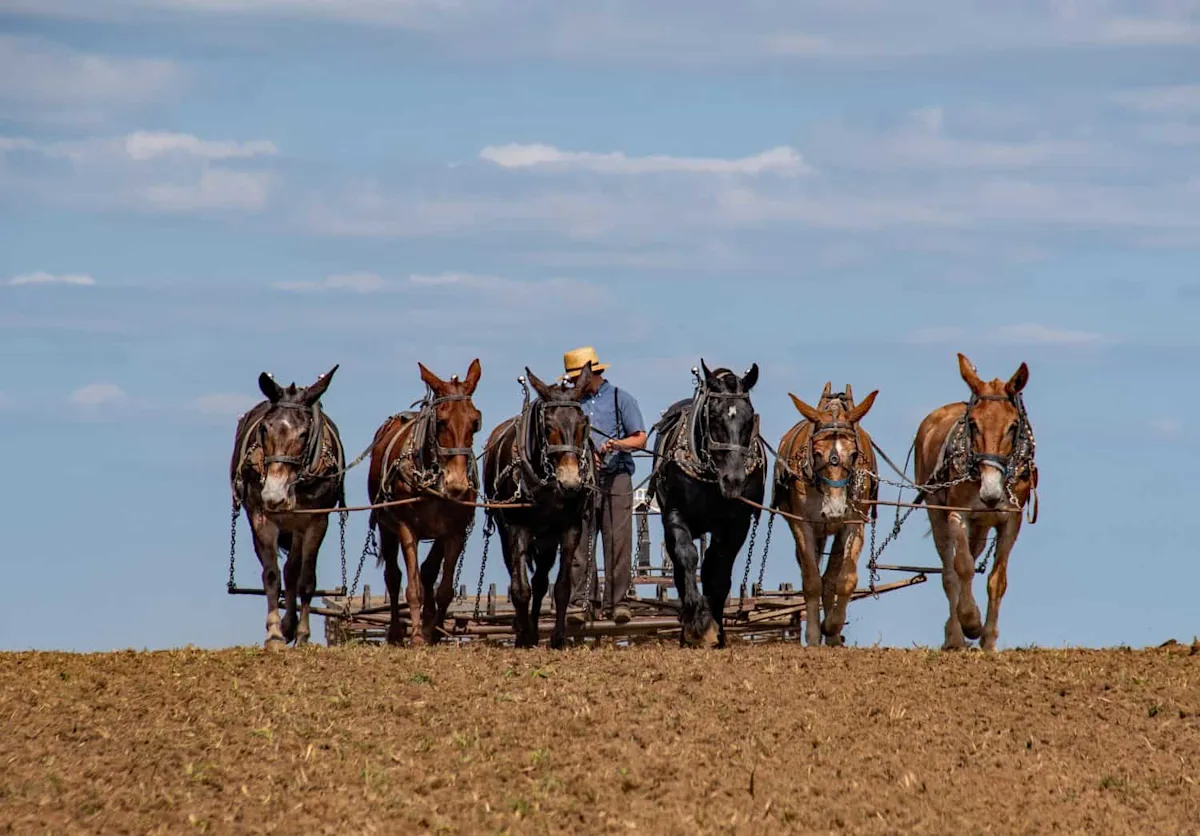
Before Missouri claimed its iconic ‘Show-Me’ spirit, a unique hybrid animal battled biological odds and transformed the state—powering everything from farms to armies. © A-Z Animals
No other animal played such a consistent role across farming, transportation, and war. The mule became closely linked to the Show-Me State through everyday work rather than display. Its steady pace and endurance matched the values many Missourians admired. Long before any law was passed, this species already represented Missouri in popular culture, politics, and trade. The 1995 designation simply made official what history had already decided.
What a Mule Is and Why It Matters
A mule is the offspring of a male donkey, known as a jack, and a female horse, called a mare. Most working breeds like this were bred from large draft horses such as Belgians or Percherons. This pairing produced an animal with the strength and size of a horse combined with the endurance, caution, and hardiness of a donkey. The result was well suited to demanding labor and rough terrain.

Mules combine the strength of horses with the endurance and caution of donkeys, making them well suited for demanding work.
©BlackDorianstock/Shutterstock.com
Mules are known for long ears, strong legs, and dense bone structure. They can pull heavy loads for long hours while requiring less feed than horses. Their reputation for stubbornness comes from intelligence rather than defiance. When this animal refuses to move, it is often not laziness but a response to unsafe conditions. This trait saved wagons, equipment, and lives. For farmers and freighters, a powerful and hardworking animal that thought before acting was an advantage, not a flaw.
Early Arrival in Missouri
Mules arrived in Missouri in the early nineteenth century as settlement expanded westward. Farmers quickly discovered that mules handled rocky soil, steep slopes, and uneven roads better than horses. These traits made them ideal for plowing fields in the Ozarks and hauling timber and crops to market. As trade increased, so did demand for reliable draft animals.
German immigrants played a key role in Missouri’s mule industry. By crossing strong European draft horses with large donkeys, breeders produced animals known for size and power. These animals soon gained a national reputation. By the mid-1800s, mule breeding and trading had become a major part of Missouri’s rural economy. Buyers traveled long distances to purchase teams, helping the state earn nicknames tied directly to mule production.
Hauling Freight on the Santa Fe Trail
The animal’s reputation grew along major trade routes such as the Santa Fe Trail, which began in Missouri towns including Franklin and Independence. Freighters learned that mule teams handled long distances better than oxen and reacted more calmly than horses. Mules required less water, recovered faster after long days, and remained steady under pressure.

Mule teams hauled goods along major trade routes such as the Santa Fe Trail, supporting long-distance commerce across the Great Plains.
©Ezequiel Laprida/Shutterstock.com
These traits made them valuable for hauling goods across the Great Plains. Teams carried tools, manufactured items, and military supplies between Missouri and the Southwest. Each successful journey reinforced the animal’s image as dependable and tough. Missouri’s position as a transportation center depended in part on mule labor. The animal became linked not only to farming, but also to long-distance commerce that connected the state to national markets.
Backbone of Missouri Agriculture
On farms, mules became essential to daily work during the late nineteenth and early twentieth centuries. They plowed heavy soils, cultivated crops such as corn and cotton, and hauled produce to town. Farmers valued them for their long working lives and ability to stay healthy longer than many horses.
A strong team represented a serious investment. With proper care, the same animals could serve a family for decades. This reliability shaped rural life across Missouri. After the Civil War, the phrase “forty acres and a mule” reflected how central the animal’s labor had become to agricultural success. For many households, progress and stability depended directly on the steady pull of mule teams.
Military Service and Wartime Demand
Mules also played a major role in American wars, and Missouri became a leading supplier of these animals. During World War I, the state shipped thousands of horses and mules overseas. These animals hauled artillery, ammunition, food, and medical supplies through terrain vehicles could not cross. Mud, shell damage, and narrow paths made animal power essential.

Mules carried military supplies through difficult terrain, making them essential to wartime logistics.
©w:User:Dario u / User:Dario urruty, Public domain, via Wikimedia Commons – Original / License
Military leaders preferred mules for their sure footing and calm response to noise. They could work on limited rations and survive harsh conditions. Many animals died in service, but their contribution remained widely recognized by soldiers. Veterans often described them as dependable partners during exhausting campaigns. Their wartime service strengthened the argument that the animal deserved lasting recognition.
Public Displays and National Reputation
By the late 1800s, Missouri had become nationally known for mule breeding. Breeders promoted their animals at fairs and exhibitions. At the 1904 World’s Fair in St. Louis, large teams of Missouri mules attracted attention from visitors across the country and overseas. These events helped turn the phrase “Missouri mule” into a widely recognized label.
Public figures reinforced the image. Photographs show President Harry S. Truman posing with mule teams at fairs, linking political identity with agricultural tradition. Newspapers and advertising materials repeated the association. Long before legal recognition, the mule had become a symbol many Americans connected directly to Missouri.
Decline During Mechanization
The introduction of tractors and trucks in the mid-twentieth century reduced the need for working mules. As farms changed and machinery replaced animal labor, mule populations dropped. Younger generations began to associate mules with the past rather than daily work.

Mules continued to be used for recreation and work in rugged terrain even as farming became mechanized.
©Shaiekkhan/Shutterstock.com
Despite this shift, mule culture did not disappear. Rural festivals, auctions, and trail-riding events kept traditions alive. Owners continued breeding and training mules for recreation and work on difficult terrain. These communities preserved knowledge and bloodlines that later supported efforts to honor the mule officially. The animal remained visible, even as its role evolved.
Efforts to Gain Official Recognition
Although many people assumed the mule was already Missouri’s state animal, no law supported that belief until the 1990s. The push for recognition began with Charles “Woody” Woodford, a World War II Navy veteran. While organizing a Missouri Day event, he discovered the mule lacked formal status.
Woodford worked with American Legion posts, mule owners, and editors of mule publications to raise awareness. Supporters wrote letters, published articles, and organized public events. Their argument was simple. The mule had served Missouri in peace and war and already represented the state in the public mind. Making it official would align law with history.
Passage of House Bill 84
The campaign reached the Missouri General Assembly as House Bill 84, often called the Mule Bill.

In 1995, Missouri officially designated the mule as its state animal through House Bill 84.
©slowmotiongli/Shutterstock.com
Representatives Jerry McBride and Mary Kasten sponsored the proposal. During hearings, experts such as University of Missouri professor C. Melvin Bradley testified about the state’s mule industry and its national importance.
Some lawmakers raised concerns about political symbolism, noting the donkey’s use as a symbol of the Democratic Party. Supporters responded that the mule belonged to Missouri’s history, not partisan politics. After debate and minor amendments, the bill passed both chambers. Governor Mel Carnahan signed it into law on May 31, 1995, officially naming the mule Missouri’s state animal.
Values Behind the Symbol
Lawmakers chose the mule to represent more than agriculture. Supporters highlighted traits such as patience, strength, intelligence, and steady effort under pressure. Veterans emphasized its wartime service, calling the animal a fellow contributor to national defense. Rural families saw the designation as recognition of generations who depended on mule labor. The symbol honored work done quietly and consistently rather than through display or speed.

The mule came to symbolize patience, reliability, and quiet strength rather than speed or display.
©Ellen Lynch / Equine Advocates
The Mule in Modern Missouri
Today, mules appear more often on trails, at festivals, and in historical reenactments than in fields. Trail riders, hobby breeders, and Amish communities continue working with them. The University of Missouri maintains a Mule Collection that preserves photographs, documents, and artifacts related to mule history.
The phrase “stubborn as a Missouri mule” remains common, though many now understand the intelligence behind that reputation. School lessons, museum exhibits, and local celebrations keep the story alive. The mule remains a reminder of how effort and endurance shaped the state.
Where to See Missouri Mules Today
Visitors can still encounter Missouri mules in several parts of the state. Ozark trail systems host riders who favor mules for their balance and calm behavior on rocky paths. Agricultural fairs and heritage festivals often include mule demonstrations that show traditional harnessing and driving techniques.

Mules remain visible in Missouri through trails, fairs, and heritage events.
©Einar Faanes / Creative Commons – Original
Historical sites and museums also highlight mule history. Events tied to Missouri Day sometimes feature live animals or educational displays. These opportunities allow residents and visitors to see firsthand how the mule continues to connect modern Missouri with its working past.
What About a Mule as a Pet?
A mule can be a surprisingly good backyard pet for the right kind of owner, but it is definitely not a casual, low-maintenance animal. Mules are intelligent, curious, and often very affectionate once they trust someone. Many people who keep them describe them as more thoughtful than horses and less impulsive, which makes them feel almost like a very large, opinionated dog with hooves. They can form strong bonds, enjoy routine, and seem to genuinely enjoy human interaction, especially if they are handled calmly and consistently from a young age.
That said, mules demand space, patience, and respect. They need secure fencing, regular hoof care, proper nutrition, and mental stimulation or they will invent their own hobbies, which usually involve creative problem-solving that frustrates humans. Because they are so smart, they do not respond well to harsh training or being rushed. A backyard mule works best for someone who has land, time, and a sense of humor about negotiating with an animal that absolutely knows when something does not make sense. In the right setting, a mule can be a loyal, entertaining, and deeply rewarding companion. In the wrong one, it will outthink you by Tuesday.

Mules can be intelligent and willful creatures. They can be good pets, but they aren’t for everyone.
©Pak Lang/Shutterstock.com
More Than a Work Animal
Thinking of the mule just as a labor tool overlooks its deeper role. From early breeding efforts to frontier freighting and wartime service, the animal shaped Missouri’s development. The campaign behind House Bill 84 reflected decades of shared memory rather than sudden interest.
By naming the mule the state symbol, Missouri honored an animal that was instrumental in building the state. The hardworking mammal reflects a heritage built on persistence and reliability. Long after tractors largely replaced teams (except in communities like the Amish), the mule remains integral to the identity of the state of Missouri.
The post Why Missouri’s Economy Hitched Its Fate to a Hybrid Animal That Refused to Quit appeared first on A-Z Animals.