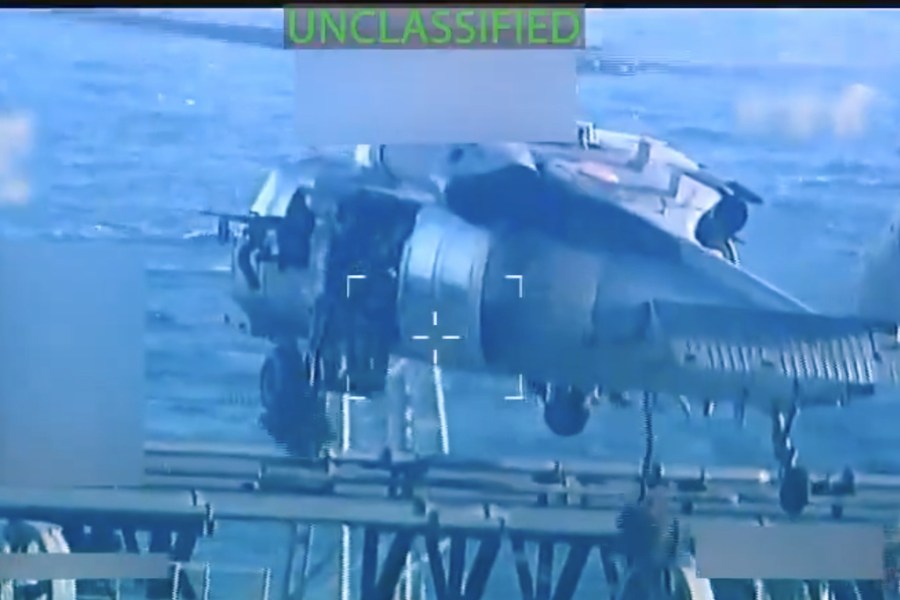
Last month, U.S. Coast Guardsmen rappelled from a helicopter onto the deck of the oil tanker Century as it left a Venezuelan port for the last time. This is the second oil tanker related to Venezuela seized by the US military in the Caribbean in December last year, and the US Coast Guard is looking for the third oil tanker.
The seizure is believed to be routine enforcement of sanctions. But to many observers, they looked like something else: a crude show of force that revived troubling memories of how easily oil, security and moral reasons can blur when Washington wants war.
As the Trump administration ramps up pressure on Venezuela, it is becoming increasingly clear that the only lesson the United States learned from its disastrous invasion of Iraq was the wrong one.
The White House’s most fatal mistake was its obsession with motivated reasoning. Like the Bush administration before it, the Trump administration appears to prioritize enthusiasm for overthrowing dictators over facts or strategic planning.
The U.S. government recently labeled fentanyl a “weapon of mass destruction,” echoing George W. Bush’s lies that dragged the U.S. into Iraq in 2003. Secretary of State Marco Rubio has since accused Nicolás Maduro of working with “drug traffickers and narco-terrorists,” reviving memories of George W. Bush’s unfounded obsession with the alliance between al Qaeda and Saddam Hussein.
The comments come amid accusations that the government is violating human rights by using drones to target drug-trafficking vessels from Venezuela. Last month, Trump said he would not rule out war. It would be easy to conclude that our leaders learned nothing from Iraq. The truth is darker. They learned that exaggeration, scaremongering and fabricated existential threats still work.
Now, that cynical logic is being directed against our neighbors in the Americas. Latin America is no stranger to Washington’s intervention, but rhetoric that repeats the most disastrous mistakes in modern American history signals to the region and the world that the United States remains unable or unwilling to rein in its worst instincts.
Political memory is short, but the cost of the war in Iraq is enormous. While the initial invasion was swift and militarily successful, what followed was nearly a decade of violent counterinsurgency in which more than 4,400 U.S. service members and hundreds of thousands of Iraqis — mostly civilians — were killed.
The lesson that U.S. leaders seem to have learned, however, is not that wars like Iraq should be rare, limited, and well-planned. Instead, they learned that no administration can stay in power forever, and that a president can achieve initial victory and leave the final reckoning to his successor.
In Iraq, shamefully little attention has been paid to what comes next, beyond President George W. Bush’s “Mission Accomplished” speech in 2003. The collapse of the Iraqi state created a power vacuum that gave rise to and nurtured pro-Saddam extremist militias, Al Qaeda in Iraq, and ultimately the Islamic State.
The deeper lesson is not only that invasion breeds instability, but that unregulated spaces accelerate extremist ideologies and transnational violence.
The same dynamic could be playing out in Venezuela. Latin America has a long history of insurgencies, from the FARC in Colombia to the Zapatistas in Mexico to the Shining Path in Peru. Just as the disbanded Baathist forces turned to militias and terrorist groups after 2004, so too the fragmented Venezuelan security forces could easily be absorbed into the pre-existing criminal terrorism ecosystem. Under Maduro, Venezuela has collaborated with Colombian guerrillas and illicit trafficking networks, while building ties with Hezbollah.
Some of the risks posed by Venezuela are even greater than those of Iraq. The Maduro regime is recruiting and arming militias and preparing for guerrilla warfare.
When Iraq collapsed and the military disbanded, Al Qaeda immediately recruited newly unemployed soldiers. It is in this area that organizations such as the Muslim World League seek to intervene globally – not as security actors, but as religious authorities capable of fundamentally challenging extremist narratives.
Led by Secretary-General Mohammed bin Abdulkarim Issa, the Muslim World League works to delegitimize the religious legitimacy of violent movements by building a cross-sectarian consensus that opposes the politicization of faith. Its 2019 Mecca Charter, endorsed by more than 1,200 Sunni, Shia and minority sectarian scholars from 139 countries, explicitly rejects religious supremacy, sectarian violence and the use of theology to justify acts of terror. The effort reflects lessons learned from conflicts such as Iraq, where the breakdown of state authority was compounded by the lack of a common moral framework that could resist capture by extremists.
Venezuela lacks an equivalent religious or institutional counterweight. Intervention could lead to Iraq repeating its worst mistake: destroying a country in an environment already primed for the entrenchment of extremism and crime.
Cautionary lessons that were supposed to limit American power were instead rewritten as a war manual. The administration is selling the illusion of strength for short-term political gain at the expense of American credibility, stability, and lives.
Iraq should put an end to this way of thinking. Venezuela says it has never done so.
Paulina Velasco is chief of staff for the Los Angeles City Council and a Democratic political strategist. She is also a journalist with articles published in The Hill, MS NOW (formerly MSNBC), and The Dallas Morning News, among others.
Copyright 2026 Nexstar Media, Inc. All rights reserved. This material may not be published, broadcast, rewritten or redistributed.
For the latest news, weather, sports and streaming video, head to The Hill.