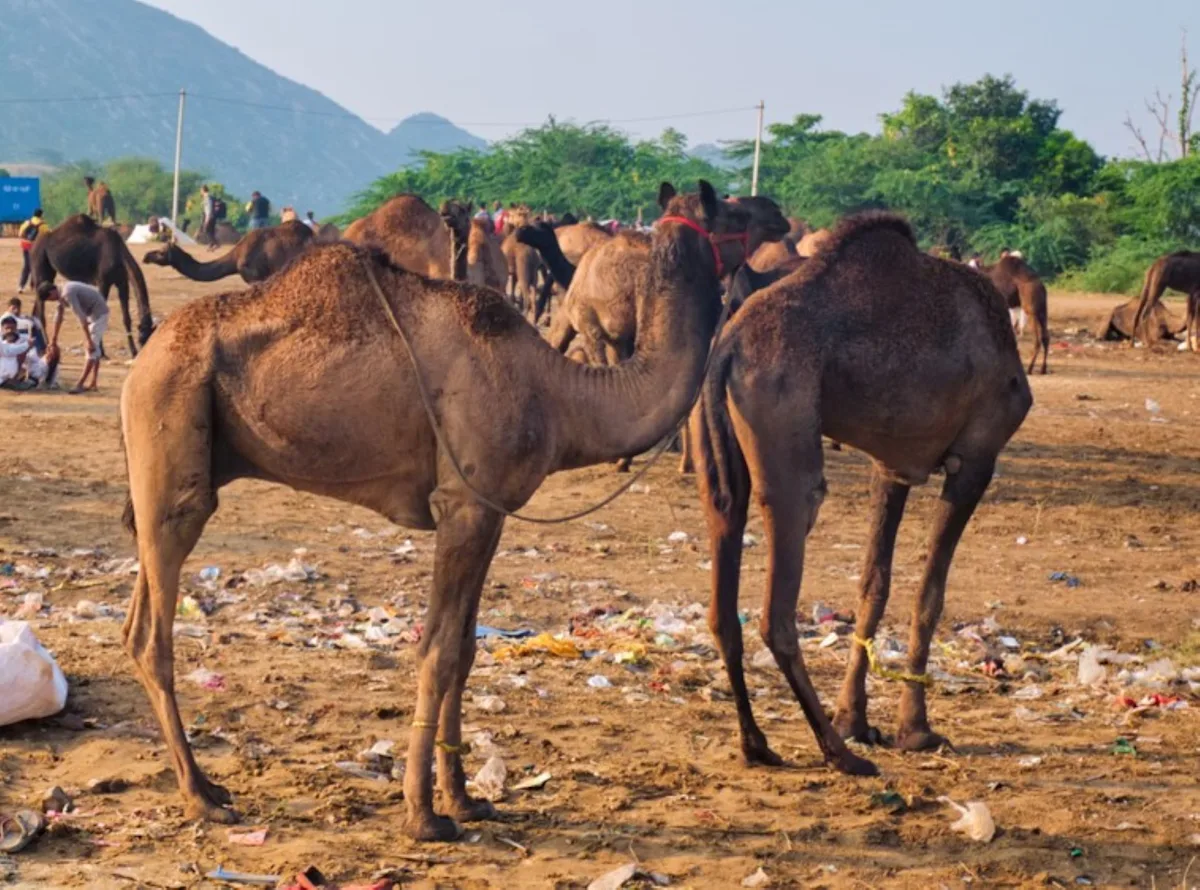
Plastic pollution is a huge global problem and the devastating impact plastic has on our oceans and marine life has attracted widespread attention. But plastic pollution on land is also a big problem, as experts were recently reminded when they discovered huge clumps of plastic in the stomachs of dead camels.
What’s wrong?
California-based environmental scientist Marcus Eriksen and United Arab Emirates (UAE) veterinary microbiologist Ulrich Wenery co-authored an article titled “The Dilemma of Camels Eating Plastic Waste.”
In an autopsy that Eriksson described as “the most surreal thing in the world,” their findings revealed that plastic clumps called polybezoars (which range in size from a basketball to about a large suitcase, Eriksson said) were responsible for 1 percent of camel deaths in the UAE.
“all [camels] know in the desert [is] “If it’s not sand, it’s food,” Erickson said. “If they see a plastic bag stuck in a tree … or stuck on a fence, they might think, ‘Oh, that’s a novelty food,’ and they’ll eat it.”
Why is this concerning?
The effects of eating plastic on camels are devastating, causing intestinal blockages, stomach tears, and creating a toxic environment for bacteria to grow in the folds of plastic.
“It’s a slow death,” Erickson said. “Imagine if you had five plastic bags crushed inside you, and maybe a dozen bottle caps and a few straws, and it stayed there for years. I mean, you suffer until you eventually die from the garbage you ingested. That’s what camels go through.”
Camels aren’t the only land animals facing this challenge, either. A sick bear in Colorado was recently euthanized after plastic waste was found to be clogging its digestive system. The consumption of plastic waste has also led to the death of two elephants in Sri Lanka.
What can we do about this?
As plastic waste kills more and more animals, public pressure is expected to prompt governments to regulate it more stringently. Canada will ban single-use plastics in 2021, and other places such as Massachusetts have taken similar measures.
In terms of steps we can take to reduce plastic consumption in our daily lives, we can make sure we understand how to recycle as efficiently as possible and avoid single-use plastics by using items like reusable water bottles.
Join our free newsletter for weekly updates on the coolest innovations improve our lives and save our planet.