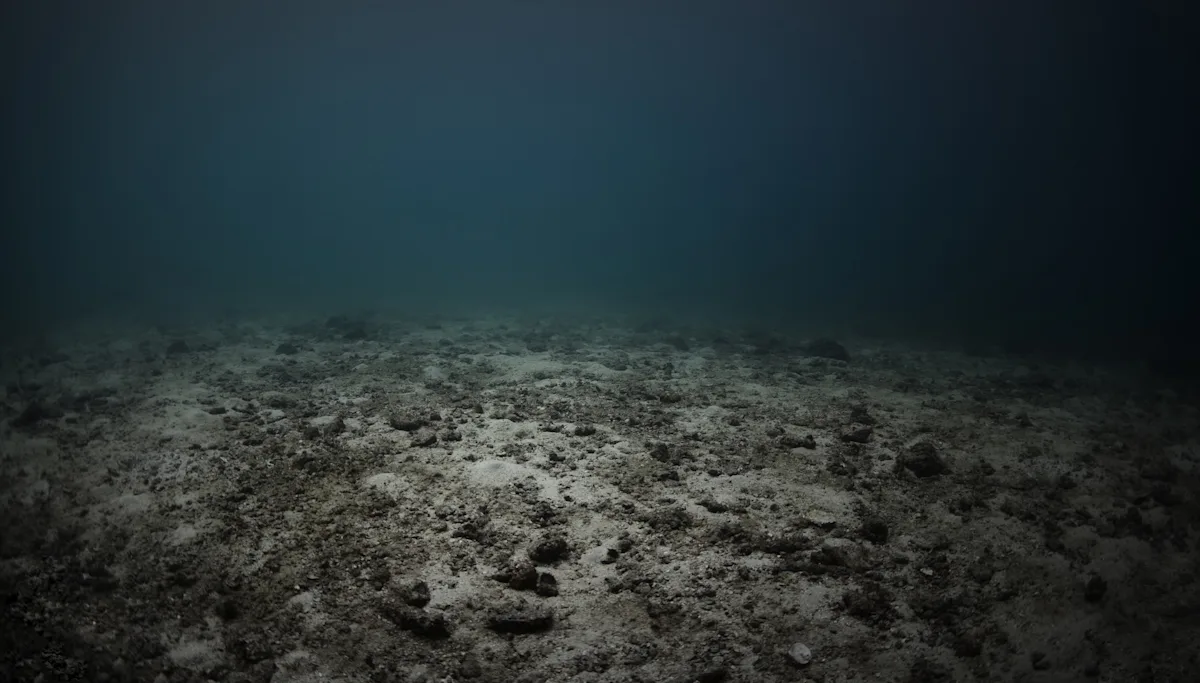
A new study shows that tens of thousands of years ago, a warming event caused the release of carbon dioxide deep in the Southern Ocean. Now, scientists say the findings could shed light on the potential impacts of Antarctica’s continued warming.
What happened?
The study, led by scientists from the Laoshan Laboratory in Qingdao, China, and the GEOMAR Helmholtz Center for Ocean Research in Kiel, Germany, examined sediment cores from the Southern Ocean to understand the behavior of Antarctic Bottom Water (AABW).
Huang Huang, who led the study, said in a GEOMAR press release: “We wanted to understand how the influence of Antarctic bottom water (the coldest and densest water mass in the global ocean) changed during the last deglaciation and what role it played in the global carbon cycle.”
The researchers’ findings, recently published in the journal Nature Geoscience , suggest that the expansion of the AABW helped end the last ice age.
“About 18,000 to 10,000 years ago, as the Earth warmed and the ice caps melted, the volume of Antarctic bottom water expanded in two distinct phases,” the release said.
“These phases coincide with known warming events in Antarctica. As vertical mixing in the Southern Ocean increases, carbon stored in the deep ocean is able to return to the atmosphere.”
The team found that until the Earth began to warm, the deepest waters remained fairly stagnant and lost contact with shallower waters. When expansion caused by Earth’s warming stirs up water, stored carbon is released into Earth’s atmosphere, forcing temperatures to rise.
Why is this research important?
The team’s research stretches back tens of thousands of years and thousands of meters into the ocean. But its insights may be relevant today and in a land where countless communities are vulnerable to rising global temperatures.
“Comparisons to the past are always imperfect, but ultimately depend on how much energy is in the system,” GEOMAR geochemist Marcus Gutjahr said in the release. “If we understand how the ocean responded to warming in the past, we can better understand what is happening today as the Antarctic ice shelves continue to melt.”
Over the past half century, waters deep in the Southern Ocean have warmed faster than most other bodies of water. If warming seawater and melting ice repeat past patterns, large amounts of carbon could again be released into the atmosphere and contribute to subsequent increases in temperatures.
“I wanted to properly understand the modern ocean in order to interpret signals from the past,” Guteyar said. “If we can track changes in the Antarctic bottom water over the past few thousand years, we can more accurately assess how quickly the Antarctic ice sheet may continue to lose mass in the future.”
Other studies show that sea ice levels have dropped dramatically over the past 50 years.
What can be done?
Advances in this area could help world leaders and global organizations prepare for the potentially catastrophic consequences of continued global warming. Evidence on threats from rising sea levels, disruption to food systems and the spread of disease can inform adaptation strategies.
But these alarming findings may also help inspire meaningful public action to mitigate rising temperatures, such as shifting to cleaner home energy systems and transportation options.
Get TCD’s free newsletter for simple tips to save more, reduce waste and make smarter choices, and earn up to $5,000 toward clean upgrades in TCD’s exclusive Rewards Club.