


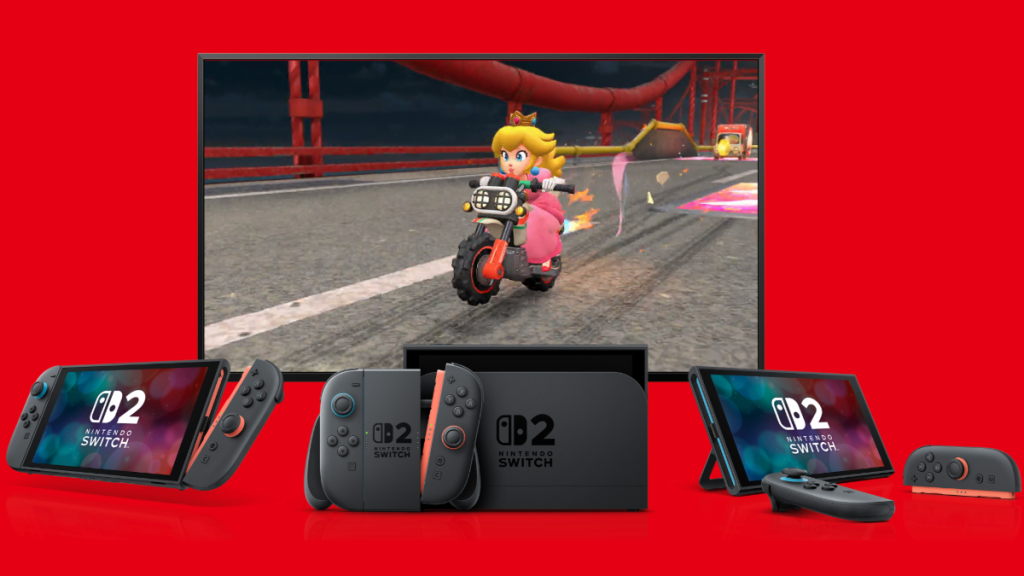
Nintendo Co has turned to Samsung Electronics Co to help make the main chip for the Switch 2, a move that could help the Japanese company boost production of the console to exceed an expected sales of 20 million units by March 2026.
The decision marks a key victory for Samsung, which is trying to compete with Taiwan Semiconductor Manufacturing Co. in global chipmaking for electronics, people familiar with the matter said. Winning a contract for one of summer’s hottest new products could help boost utilization or business at the South Korean conglomerate’s chip foundry.
The South Korean company is currently developing a custom chip or processor designed by Nvidia for the Switch 2 using its 8nm node, people familiar with the matter said. The person spoke on condition of anonymity because the matter has not been made public. People familiar with the matter said the production rate should be enough for Nintendo to ship more than 20 million units by March next year. Samsung can further increase production if needed, although much depends on the capacity of hardware assemblers including Foxconn Technology Group.
Samsung already supplies memory chips and displays to Nintendo but has struggled to compete with TSMC in contract chip manufacturing. The latest deal, reported earlier by Chosun Biz, is validation for Samsung’s contract chip manufacturing unit, which had hoped to grow into another pillar of the group’s chip business in addition to memory.
Instead, TSMC has steadily expanded its lead, attracting customers like Apple and Nvidia through continued upgrades and reliable high-volume manufacturing. The two companies are racing to increase production capabilities for ever-shrinking geometries and to increase output in 2-nanometer technology to improve profitability and product quality.
A Nintendo spokesman said the company does not reveal its suppliers or provide production information beyond comments made by President Shuntaro Furukawa during the company’s earnings announcement. The company projected sales of 15 million units, factoring in the tens of billions of yen impact of tariffs on profits this year, but Furukawa stressed at the time that the number did not reflect supply constraints. Representatives for Samsung and Nvidia declined to comment.
Samsung has long been a major supplier to Nintendo, providing NAND flash memory and OLED screens for the Switch. Another source said the Korean company is also pushing Nintendo to use OLED panels for future Switch 2 updates.
The chipset for Nintendo’s 2017 Switch is manufactured at TSMC using its more mature process technology. But the Kyoto-based company is turning to Samsung because the Nvidia-based chipsets used in the new devices are optimized for the South Korean company’s manufacturing systems, one of the people said.
In hindsight, this may have worked in Nintendo’s favor because it didn’t have to compete with other companies to secure TSMC’s production capacity, the person said.
It’s a challenge for Nintendo to ensure it can produce enough devices to meet demand for what is expected to be the fastest-selling console in history. The company is counting on the Switch 2 to spark a once-in-a-decade transition away from the eight-year-old original product and reignite growth after years of tepid profits.
This year, the company has apologized for being unable to accept more Switch 2 pre-orders. The company said it received 2.2 million applications in Japan alone. Nintendo has been working to increase production of the Switch 2 even before it began taking pre-orders, and asked suppliers to speed up production to meet strong demand, people familiar with the matter said.
Earlier this month, Nintendo said it expected to ship 15 million Switch 2 units in the year to March, below the average analyst estimate of 16.8 million units compiled by Bloomberg. Furukawa told reporters that the company’s first goal is to catch up with sales of the original Switch in 2017, when it sold about 15 million units in the first 10 months. This suggests to analysts that there is room to rise from this level.
© 2025 Bloomberg
(This story has not been edited by NDTV staff and is auto-generated from a syndicated feed.)