NASA on Friday announced major changes to its Artemis return to the moon program, a “course correction” that will add missions and speed up launches ahead of a targeted lunar landing attempt in 2028.
NASA Administrator Jared Isaacman said the Artemis III mission, originally scheduled to send astronauts to the moon in 2028, will no longer go to the lunar surface. Instead, Isaacman said NASA will attempt to launch Artemis III in mid-2027 to demonstrate key technologies in low-Earth orbit, and then launch Artemis IV to the moon in 2028.
The space agency will also standardize the manufacturing process for Space Launch System rockets, with the goal of launching boosters about every 10 months instead of every three years.
“Everyone agrees this is the only way forward,” Isaacman told a news conference. “I will say that I’ve had similar conversations with all the stakeholders in Congress and they fully support this approach. I know this is how NASA changes the world and this is how NASA will do it again.”

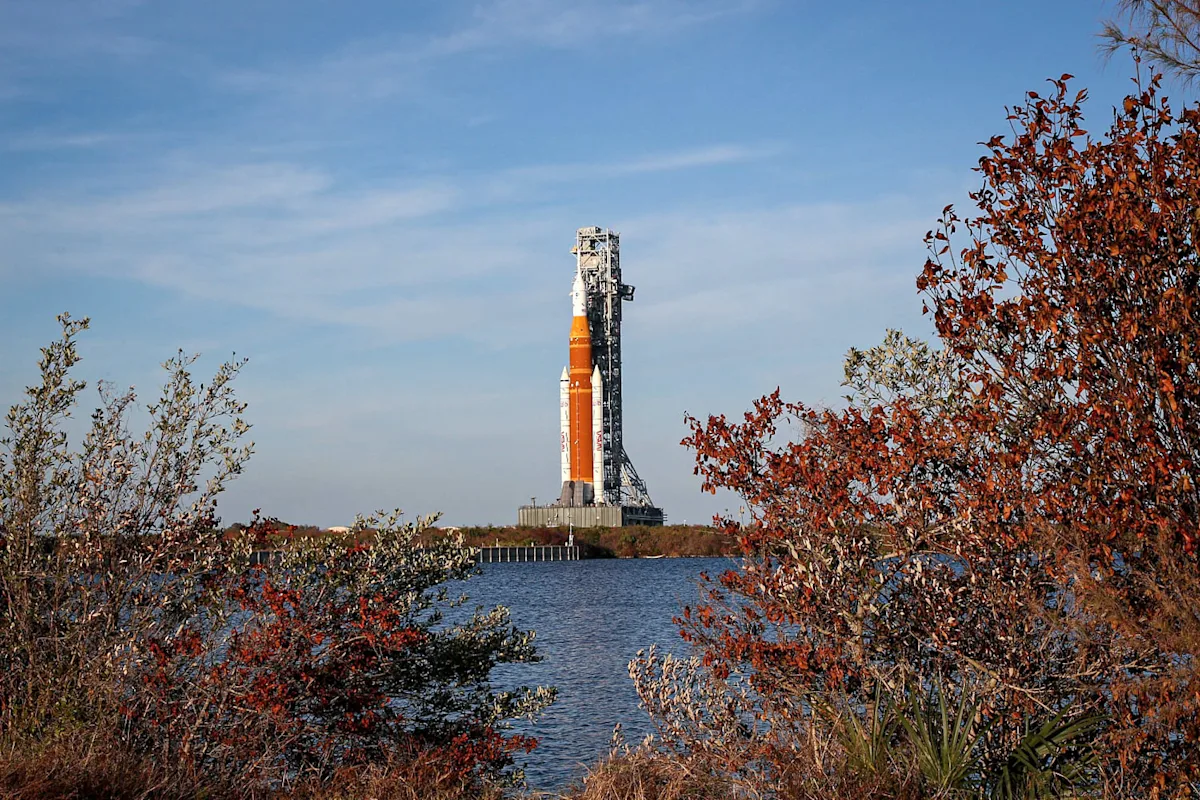
NASA’s Artemis II SLS. (NASA)
(NASA)
The overhaul comes after another delay to the Artemis 2 mission, which was intended to send four astronauts on a 10-day mission around the moon. A hydrogen gas leak from the bottom of a Space Launch System rocket has been discovered during a critical fuel test, forcing NASA to abandon all available launch opportunities this month. A second fuel test last week went well, but engineers later discovered a blockage in the flow of helium in the upper section of the booster, ruling out a launch attempt in March.
NASA moved the rocket from its launch pad at Florida’s Kennedy Space Center back to its hangar Thursday for repairs. If the work goes as planned, Artemis 2 could launch in early April, officials said.
This article originally appeared on NBCNews.com