


Author: Obayashi Yuka
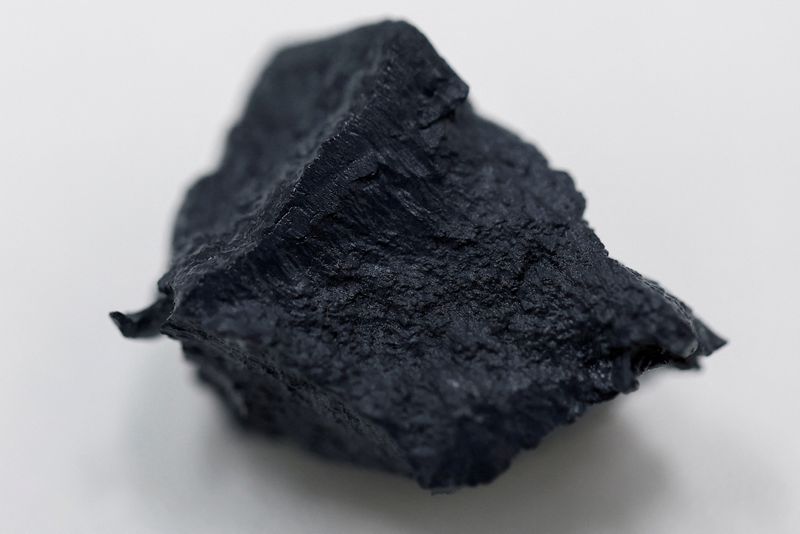
Shizuoka, Japan, Jan 12 (Reuters) – A Japanese mining ship set off on Monday to a remote coral atoll to explore for mud rich in rare earths, part of Tokyo’s move to curb its reliance on China for key minerals as Beijing tightens supplies.
The month-long mission of the test vessel Chikyu near Minamitorishima, about 1,900 kilometers (1,200 miles) southeast of Tokyo, will mark the world’s first attempt to continuously lift rare earth seafloor sludge onto a ship from a depth of 6 kilometers (4 miles).
Japan, like its Western allies, has been reducing its reliance on China for minerals vital to the production of cars, smartphones and military equipment, an effort that has taken on new urgency amid a major diplomatic spat with Beijing.
“One of our missions is to establish a supply chain for domestically produced rare earths to ensure a stable supply of minerals vital to industry,” Shoichi Ishii, head of the government-backed project, told reporters last month as the ship departed from the port city of Shizuoka on a sunny day with snow-capped Mount Fuji in the background.
Reducing dependence on China is not easy
China last week banned the export of civilian and military items destined for Japan’s military, including some critical minerals. Beijing has also begun imposing broader restrictions on rare earth exports to Japan, the Wall Street Journal reported.
Japan has condemned China’s dual-use ban but declined to comment on reports of a wider ban, which China has not confirmed or denied. However, Chinese state media said Beijing was considering such a measure.
Finance ministers from the Group of Seven industrialized nations will discuss rare earth supply issues at a meeting in Washington on Monday, people familiar with the matter told Reuters.
Japan is no stranger to China’s anger over rare earths. In 2010, China restricted exports after incidents near disputed islands in the East China Sea.
Japan has since dropped its dependence on China from 90% to 60% by investing in overseas projects such as trading company Sojitz’s partnership with Australia’s Lynas Rare Earths and by promoting rare earth recycling and manufacturing processes that reduce reliance on minerals.
However, the Minami Torishima project is the first attempt to procure rare earths domestically.
“The fundamental solution is to be able to produce rare earths within Japan,” said Takahide Kiuchi, executive economist at Nomura Research Institute.
“If the new round of export controls ends up covering large amounts of rare earths, Japanese companies will again try to get out of China, but I don’t think it will be easy,” he said.
Analysts say Japan’s almost total dependence on China for some heavy rare earths, such as those used in magnets for electric and hybrid car motors, is a significant risk for its main auto industry.
long term project
Since the 2010 panic, the Japanese government and private companies have built up stockpiles of minerals but have not disclosed the quantities.
At a New Year’s gathering for Japan’s mining industry on Wednesday, several executives said they were better prepared than before to deal with potential disruptions, citing Japan’s diversification efforts and inventory.
But Kazumi Saikawa, chief minister for economic security at the Ministry of Economy, Trade and Industry, said the government must constantly remind companies to diversify their supply chains.
“Sometimes, you know, some incidents happen and companies react, but the incident is over and the companies forget about it. We have to maintain sustained efforts,” Saikawa said this week on the China Talk podcast.
The Minamitorishima project, into which the government has invested 40 billion yen ($250 million) since 2018, is also a long-term project.
Its estimated reserves have not been disclosed and no production target has been set. But if successful, full-scale mining trials will take place in February 2027.
Mining the mud was previously considered uneconomical due to its high cost. But if supply disruptions in China persist and buyers are willing to pay higher prices, the project could become feasible in the next few years, said Kotaro Shimizu, chief analyst at Mitsubishi UFJ Research & Consulting.
China is watching closely. Ishii said that when the ship was conducting surveys around the island in June last year, a formation of Chinese naval vessels sailed nearby.
“We feel a strong sense of crisis about taking this intimidating action,” he said. China said its actions complied with international law and called on Japan to “stop hyping up threats.”
(Reporting by Yuka Obayashi in Shizuoka; Katya Golubkova and Tim Kelly in Tokyo; Writing by John Geddie; Editing by William Mallard)