Samia Nakul
DUBAI, March 5 (Reuters) – With its supreme leader killed and its war machine under relentless pressure from the United States, Iran is now largely isolated – with nothing from its long-time partners Russia and China except diplomatic condemnations and expressions of concern.
Tehran has responded to U.S. and Israeli attacks by expanding the conflict beyond the Middle East, launching missiles and drones that have rippled through global energy markets, disrupting capitals from Washington to Beijing and paralyzing shipping that carries 20% of the world’s oil supplies through the Strait of Hormuz.
Iran’s missiles reach as far away as Cyprus, Azerbaijan, Turkey and the Gulf states, targeting critical businesses, energy infrastructure and U.S. bases, bringing the war to its doorstep. Oil facilities, refineries and key supply routes have come under attack, causing severe disruptions to crude oil and natural gas supplies.
Restraint reflects ‘cold calculation’
With the Strait of Hormuz already closed, the attack sent energy prices soaring, destabilizing global markets and forcing major economies into trouble, underscoring the fallout the world faces from Tehran’s response to the war.
Analysts say Russia and China’s restraint reflects a sober calculation: Intervening as Iran faces Israel and the United States would come with high costs, limited benefits and unpredictable risks — burdens neither country appears willing to bear.
“Putin has other priorities, chief among them Ukraine,” said Anna Borshchevskaya, a Russia expert at the Washington Institute. “It would be foolish for Russia to engage in direct military confrontation with the United States.”
A senior Russian source said, “The escalation in and around Iran and the Gulf has diverted attention from the war in Ukraine. That’s just a fact. Everything else is just sentiment about ‘fallen allies,'” the source said.
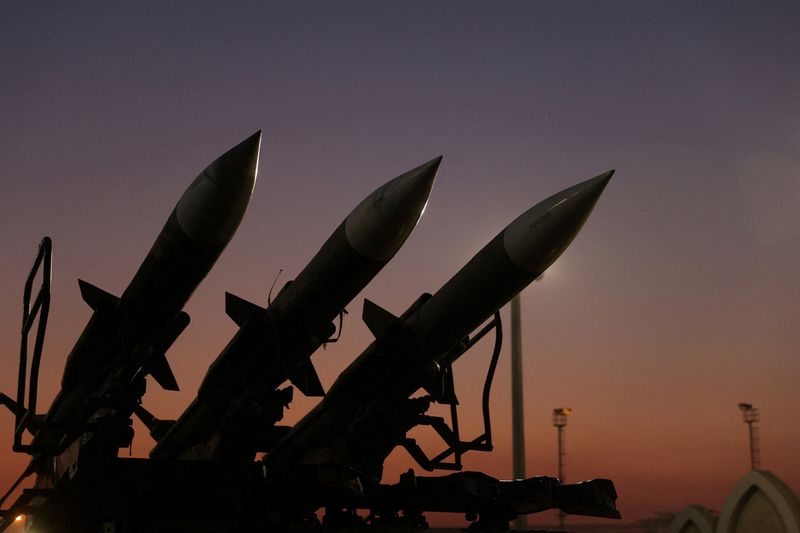
Both Beijing and Moscow have helped Iran build military capabilities in response to U.S. and Israeli pressure, providing missiles, air defense systems and technology designed to bolster deterrence, complicate U.S. operations and increase the cost of attacks. However, this support now appears to be limited.
naked paradox
China has been engaged in Middle East diplomacy for years, while Russia sees Iran as a pillar of its anti-Western alliance.
However, as the conflict unfolds, both powers are constrained – China’s dependence on Gulf energy and trade and security priorities in Asia, while Russia is reeling from a raging war in Ukraine that has reduced its ability to protect its partners and heightened the need to maintain ties with oil-rich Gulf states.
The result is a stark paradox: Iran remains strategically useful to both sides, but not enough to fight for.
With Russia’s military, diplomatic bandwidth and economic resources still absorbed by the war in Ukraine, Russian President Vladimir Putin’s top priority is to avoid escalating the conflict with Washington and safeguard Russian interests in the Middle East rather than betting on the battlefield in Iran.
“If Russia directly supports Iran, it will alienate the Gulf states and Israel,” Borshchevskaya said. “This is not what Putin wants.”
Beijing’s restrained response reflects a long-term strategy: to avoid making binding security commitments that are far removed from its core interests.
China Alliance focuses on trade and investment
Evan A. Feigenbaum of the Carnegie Endowment for International Peace said that while the alliance with the United States is based on mutual defense obligations, China prefers partnerships based on trade, investment and arms sales that do not drag China into costly conflicts beyond East Asia.
Beijing, one of the world’s largest trading powers and energy buyers with ties to Iran and its Sunni rivals in the Gulf, has never placed all its bets on Venezuela in Latin America.
Henry Tugendhat of the Washington Institute believes that “if Beijing wants to take more action, it will not divert strategic attention or military assets away from core security.” “It only cares about its reputation abroad. It cares about Taiwan, the South China Sea, and threats from the United States and Japan.”
The conflict may even bring benefits to Beijing. China can watch from the sidelines as U.S. forces are stranded far away from East Asia and military inventories are depleted, while gaining real-time insights into U.S. capabilities and operations, insights that could inform Chinese thinking about the future situation in Taiwan.
China’s main vulnerability remains energy flows through the Strait of Hormuz, which carries about 45% of China’s oil imports. But experts say Beijing has built strategic reserves and large quantities of Iranian oil are already stored in tankers or warehouses.
They say the crisis has repositioned Moscow and Beijing as mediators. China said Foreign Minister Wang Yi had spoken with European and Arab ministers to urge dialogue, while Putin had made similar calls with Gulf leaders and Iranian officials.
Rising oil prices benefit Russia
Russia also sees concrete benefits: rising oil prices strengthen its war economy, while the U.S. government’s stranglehold on the Middle East reduces its leverage over Ukraine.
Borshchevskaya said Russia did not benefit from the collapse of the Iranian regime, but it also did not tie its fate to Tehran’s survival. Regardless of the outcome of the conflict, Moscow is hedging its bets, remaining flexible, and will build relations with any new administration, even one aligned with Washington.
Russian sources pointed to Syria as a precedent. Despite years of support for ousted President Bashar al-Assad, Moscow has retained its Mediterranean base and quickly established ties with Syria’s new leader, Ahmed al-Shala, underscoring its willingness to trade loyalty for long-term influence.
(Additional reporting by Guy Faulconbridge in Moscow and Liz Lee in Hong Kong; Reporting and writing by Samia Nakhoul; Editing by Sharon Singleton)