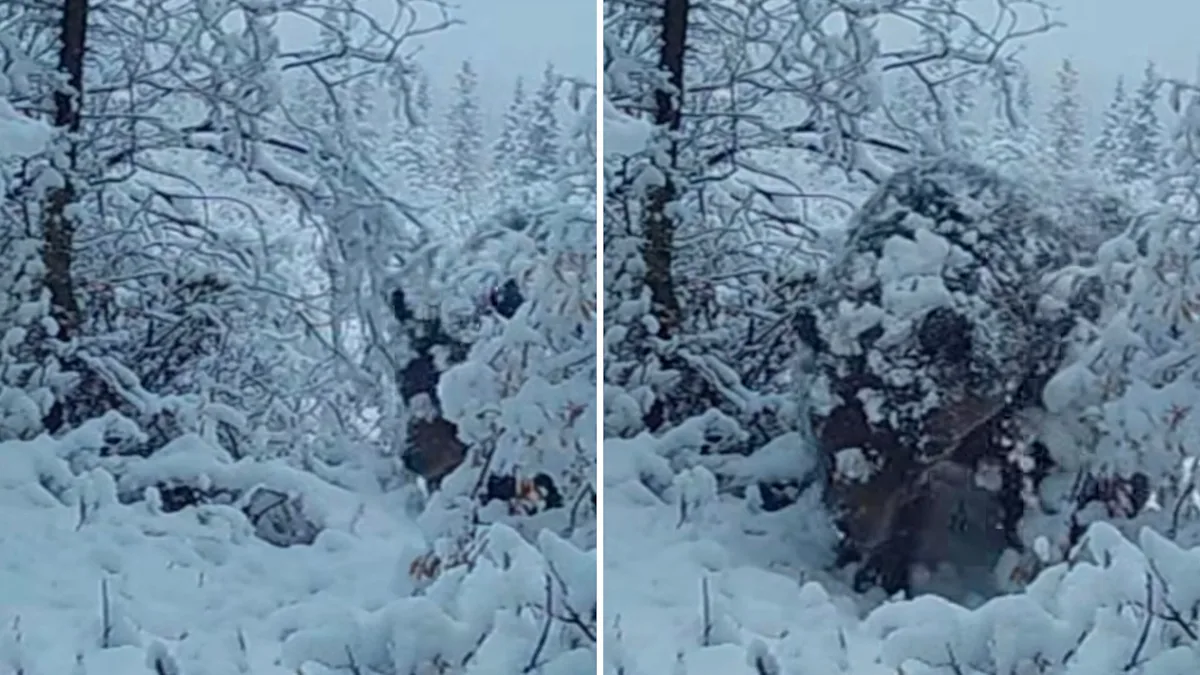
Social media users marveled at a repost of a giant carnivore roaming the frozen wilderness of northern Canada.
This trail camera footage was originally captured in 2021 and was reposted on Facebook by Yukon Wildlife Cams. It shows a huge, snow-covered grizzly bear giving the viewer an extreme close-up as it looks directly into the camera. The caption provides more context about the striking footage:
“While I’ve shared this before, I’m guessing many of you have never seen this awesome snow-covered grizzly bear after the late September 2021 snowfall,” the post read.
The Yukon is home to as many as 7,000 grizzly bears. Grizzly bears are a type of brown bear that are smaller and live further inland than their coastal cousins. Their smaller stature is due to their diet relying more on roots, berries and small prey. They play a key role in the ecosystem as predators and foragers. They control prey populations, and the bears’ nutrient-rich droppings are key to forest health.
They are considered “vulnerable” in the Yukon due to habitat loss and conflicts with humans. Grizzly bears are also threatened by warming global temperatures caused by human activities, disrupting their food supply. For example, whitebark pine’s caloric-rich seeds, which need to be fattened in the fall, are under threat, according to a University of Colorado study.
Since they only reproduce every three or four years after they are eight years old, it will take time for their numbers to recover.
One of the biggest challenges facing the province’s conservation program is the difficulty of tracking grizzly bear populations. This is where trail cameras can provide a valuable service.
Cameras can be an unobtrusive and cost-effective way to monitor threatened wildlife. Furthermore, they can play a key role in raising public awareness and support for conservation measures.
As the comments on the clip show, viewers were very pleased with the video.
“Made my heart beat faster,” one comment read.
Another joked: “They’re all fattened up and ready for winter… just like me.”
One viewer commented: “Wow, he really put on weight during his long hibernation.” Although technically, bears enter a state of torpor during the winter, sleeping lightly and occasionally waking up to look for food.
Get TCD’s free newsletter for simple tips to save more, reduce waste and make smarter choices, and earn up to $5,000 toward clean upgrades in TCD’s exclusive Rewards Club.