


News
This morning’s U.S. and Israeli attacks on Iran marked the end of an era in which Gulf states have long avoided direct confrontation with America’s main adversaries despite hosting U.S. military bases.
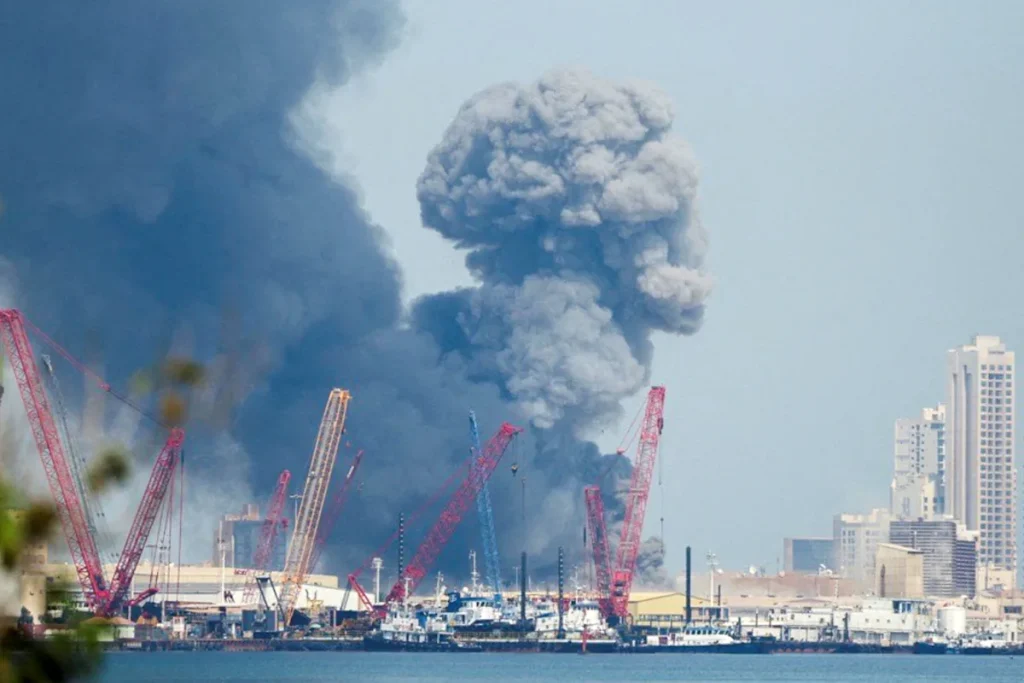
Tehran launched missiles and drones targeting U.S. facilities in Bahrain, Kuwait, Qatar, Saudi Arabia and the United Arab Emirates, as well as civilian facilities such as Dubai’s Palm Jumeirah and Kuwait airports, hours after the United States and Israel began what President Donald Trump said was a “major combat operation” aimed at overthrowing the Islamic republic.
Gulf governments have pressed for de-escalation for more than a decade, arguing that diplomacy is the only way to stop Iran from targeting the region’s wealthy cities and advanced energy infrastructure that it has spent trillions of dollars building. Now that all but Oman, which has long been Tehran’s mediator and back channel, have launched an attack, the question is how they will respond. Abu Dhabi and Riyadh officially condemned the attacks, while reserving the right to retaliate.
The Gulf region has more to lose economically than Iran, but the dynamic still points to restraint. Abu Dhabi, Dubai and Doha have become global centers for aviation, logistics, tourism, technology, real estate and finance. All of these industries are vulnerable to disruption and reputational damage. Flights operated by Emirates, Etihad and Qatar Airways were grounded, leaving tens of thousands of travelers stranded and airlines losing millions of dollars. Travelers have begun to reconsider flying over an area that could light up at any time.
Saudi Arabia started an early push to diversify from oil, but it is investing heavily to transform its economy and create jobs for young people. Even if the Gulf states retaliate, they won’t have many targets in Iran to strike to deter the leaders of the Islamic Republic.
Iran’s plans for an attack in the Gulf are not entirely clear. Some analysts believe Tehran is trying to inflict pain on Arab Gulf states to force Washington to return to talks. Gulf governments have refused to allow the United States to launch attacks from their territory. But the attacks on the Gulf capitals showed that such neutrality offers little protection in a conflict that Trump has defined — and Tehran sees as one — as being at stake for the regime’s survival.
Muhammad’s perspective
Trump justified the war by laying out Iran’s decades-long record of violence. This argument resonates with many people in the region and around the world. Iranian government-backed forces have killed hundreds of thousands of Syrians, assassinated the Lebanese prime minister, and shot down Ukraine International Airlines Flight 752 in 2020 (and sent Shahed drones to kill more Ukrainians). Today, its attack in Abu Dhabi killed a Pakistani national and injured many more.
The regime has its reasons and its dissatisfactions, and it is meaningless to adjudicate the debate here. This bloody day in the Gulf has long felt inevitable: Risks are embedded in stock markets, and even sovereign wealth funds serve as a sort of insurance policy against a long period of conflict and destruction in the region.
Most people I spoke to were shocked and never imagined that the safety bubble could actually be punctured. My colleague Kelsey Warner in Abu Dhabi said residents in her neighborhood were considering sheltering in parking lots, and beaches that were crowded Saturday morning were deserted by the afternoon. “I’m constantly haunted by a woman wandering the grocery store aisle with two limes, probably for the Corona she bought when she got home,” she told me. Others still kept their dinner plans as usual.
Authorities urge everyone to remain calm and not hoard. However, with flights grounded, supply chains have become fragile. My supermarket still has peaches and nectarines imported from Argentina and Australia, but if this continues into a prolonged conflict, it will test the resilience of the Gulf countries that import most of their food.
As for what will happen in the coming days, it’s hard to say. Life will resume, and Iran does not possess unlimited firepower to overwhelm the Gulf. But this is a precedent. As Trump targets regime change and Tehran attacks the Gulf, the region is no longer a bystander.
noteworthy
-
Gulf states’ strategy towards Iran – focused on de-escalating tensions This hinders their ability to influence Tehran and shape a new security environment, Badr Al-Seif, an assistant professor of history at Kuwait University, and Sanan Wakil of Chatham House, writing in the journal Rock Wars.
-
The Gulf is one of the busiest air traffic corridors in the world. The flight was grounded on Saturday, leaving passengers stranded and hundreds of flights rerouted in the region, Bloomberg reported.