


It feels as though nearly all childhood necessities are slowly disappearing, and years of shared memories are ending.
While every generation insists that its favorite nostalgic store is the best, one retail chain stands out and few others can match it.
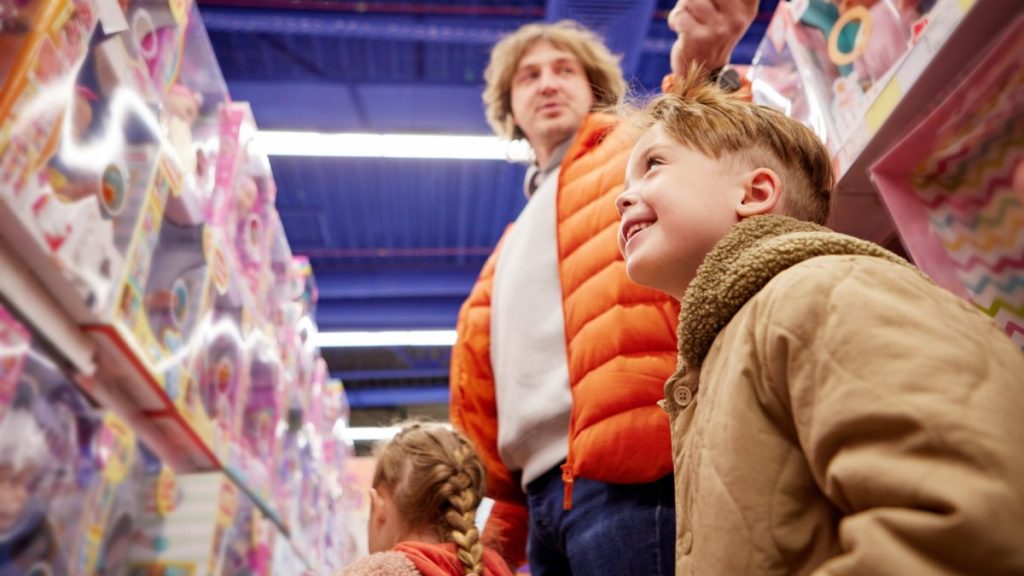
For decades, walking into any of its stores felt like entering wonderland. The colorful aisles are filled with toys in almost every category imaginable, attracting kids of all ages and interests. While shopping is usually a chore that most kids dread, here it becomes an exciting experience and every purchase feels like a special reward.
Many shoppers still remember the awe of their first visit and the excitement of leaving with a toy or toys they couldn’t stop thinking about, at least until the next must-have trend emerges.
Toys “R” Us was founded in 1948 in Washington, D.C., as a baby furniture store and has grown into a global retail giant of toys, apparel and baby products. At its peak, the company operated more than 1,500 stores and e-commerce operations in more than 35 countries.
However, mounting financial and operational challenges in recent years have left consumers wondering whether Toys “R” Us will fade into obscurity as just another beloved children’s institution. Now, a new development is bringing the brand back into the spotlight.
On February 3, Canadian consumers woke up to find that the Toys R Us Canadian website was closed. A message on the website said the company’s e-commerce platform was unavailable due to proceedings under the Companies’ Creditors Arrangement Act (CCAA), while encouraging customers to continue shopping at its physical stores.
On the same day, Toys R Us Canada, a subsidiary of Putnam Investments, officially applied for creditor protection under the CCAA. This Canadian federal law allows companies with more than $5 million in debt to reorganize under court supervision to avoid bankruptcy and continue operating.
Toys R Us Canada reported a net loss of C$170 million ($124.1 million) for the 10-month period ended Nov. 29, 2025, and had assets of approximately C$127 million ($92.7 million), according to court documents.
The retailer also owes about C$120 million ($87.6 million) to suppliers, as well as C$4.7 million ($3.43 million) in unpaid rent, property taxes and other liabilities related to its remaining stores. The filing also revealed more than C$36 million ($26.3 million) in outstanding gift card liabilities, as well as ongoing litigation related to business disputes over unpaid rent and vacant store locations.
Toys R Us Canada currently operates 22 stores, all of which are expected to remain open during the restructuring process. However, the company’s store locator still lists about 40 locations, a number that has yet to be updated after multiple closures and withdrawals from the market.
The retailer employs approximately 654 full- and part-time workers across Canada, none of whom are unionized or registered in a pension plan.


With $5 billion in debt, Toys R Us filed for Chapter 11 bankruptcy protection in September 2017 to restructure its U.S. and Canadian operations. At the time, the company operated about 1,600 stores worldwide under the Toys “R” Us and Babies “R” Us names and was owned by an investment group including Bain Capital Partners LLC, Kohlberg Kravis Roberts & Co. and Vornado Realty Trust.
The U.S. restructuring effort ultimately failed, forcing the liquidation of all remaining U.S. Toys R Us stores by June 2018.
Following liquidation, the brand’s U.S. intellectual property was sold to Tru Kids, Inc. in early 2019 before being acquired by WHP Global in March 2021.
More retail business news:
Canada’s story unfolds separately. The brand’s Canadian subsidiary applied for CCAA protection in 2017. Less than a year later, Fairfax Financial agreed to buy about 80 Canadian stores for C$300 million ($219), allowing the chain to continue operating as Toys “R” Us.
Putman Investments subsequently acquired Toys R Us Canada in August 2021, making the retailer fully independent of its U.S. peers and allowing it to expand across the country.
According to data from Grand View Research, the global toys and games market will be worth approximately US$324 billion in 2023 and is expected to reach US$439.91 billion by 2030, with an average annual growth rate of 4.3% between 2024 and 2030.
In 2023, video games will account for the largest share of industry revenue, accounting for more than 52% of total sales. While Toys R Us Canada does sell some electronics, such as children’s watches and handheld game consoles, the majority of its inventory is still focused on traditional toys, such as dolls, action figures and playsets.
Despite the shift in consumer preferences toward digital entertainment, recent data points to new growth momentum in the traditional toy industry.
After three consecutive years of decline, the global toy industry is set to rebound in 2025, driven by pop culture relevance, licensed products and increased youth and adult engagement, according to Circana.
In 12 global markets, including Canada, the United States, the United Kingdom, and several European and Latin American countries, sales increased by 7% year-on-year, unit sales increased by 3%, and average selling prices increased by 3%.
Frédérique Tutt, Circana’s global toy industry consultant with more than 20 years of experience in the industry, said: “This positive performance marks a key turning point for the industry and shows that toys have re-established their role as affordable entertainment and cultural touch points for consumers of all ages.”
Still, the industry faces new obstacles. Recent U.S. tariffs on foreign-made goods have raised costs, while broader economic uncertainty has slowed consumer spending.
“When tariffs hit us, it was a challenge because you don’t want to raise prices,” Doug Wadleigh, president of Spin Master’s toy division, told License Global. “Consumers are already under enough economic pressure and you don’t want to take away the magic of a toy.”
While the overall toy market is showing signs of recovery, analysts warn that rising operating costs, especially nationwide, could weigh heavily on underperforming retailers.
“At the end of the day, it doesn’t matter what your sales are, it’s how much you spend as a percentage of sales,” Alex Hennick, president and CEO of AD Hennick & Associates Inc., told Retail Insider. “If you have a lot of stores that are underperforming, then the business of the stronger stores will suffer.”
Others point out that Toys R Us’s woes reflect broader challenges facing brick-and-mortar retail.
“It’s always difficult to get to this point with an iconic brand like Toys R Us,” said Robert Newman, a business sales and operations expert on LinkedIn. “These moments rarely involve a single decision, but rather long-term shifts in strategy, cost structure and customer expectations.”
“I can’t help but wonder if, with the right leadership experience and timing, this story might still have ended differently,” Newman added.
Although the company has closed about 60 Canadian stores and exited several provinces since updating the “About Us” section of its website around 2024, some analysts believe the current restructuring does not necessarily mean the end of Toys “R” Us’ presence in Canada.
“I don’t think it’s a death story, but I think it’s just the reality of the market,” Jenna Jacobson, director of the Retail Leadership Institute and an associate professor at City University of Toronto, told the Edmonton Journal. “I hope this is a way to right-size.”
RELATED: Amazon CEO warns shoppers of big changes ahead
This article was originally published by TheStreet on February 6, 2026, and first appeared in the Economics section. Click here to add TheStreet as your preferred source.