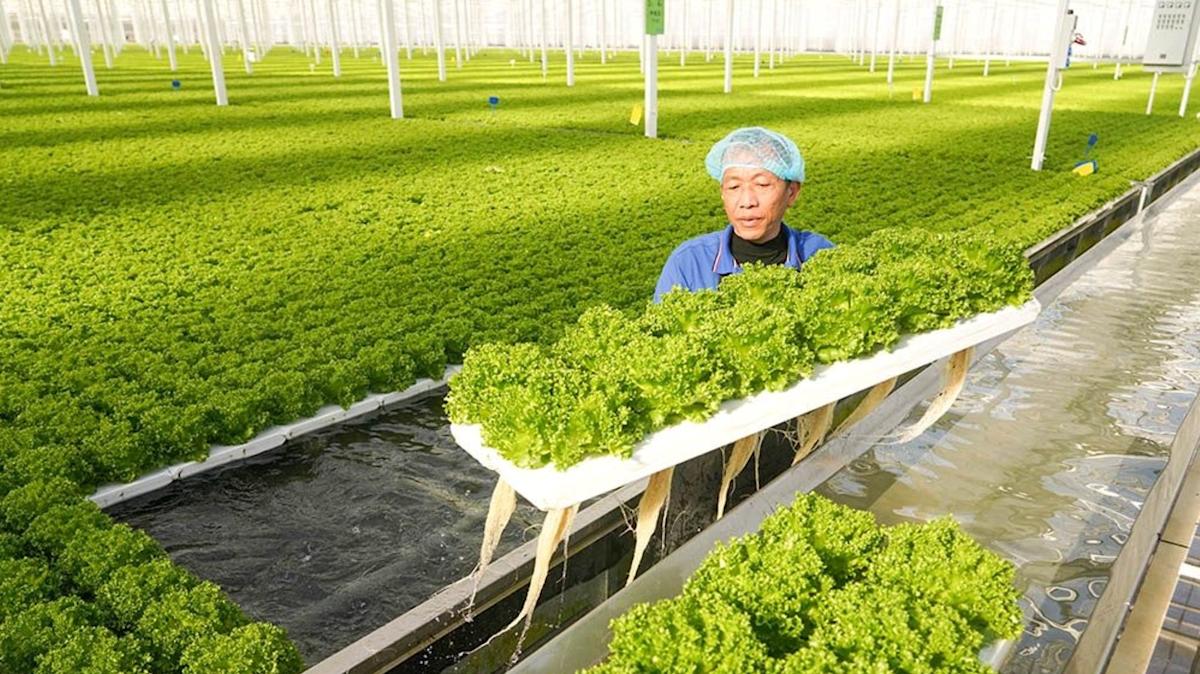
The race for artificial intelligence between the United States and China has come a long way, with both countries vying for leadership in the world’s fastest-growing industry. For some Western observers, China’s progress in autonomous robotics is worrying. But the nation’s robotics revolution extends far beyond surveillance and military use, existing at the intersection of increasingly powerful computing, manufacturing and industrialization capabilities. This convergence is perhaps the best example of China’s progress in smart agriculture, as engineers are bringing autonomous robots to the country’s crop growing, livestock and aquaculture industries. China has achieved several major milestones in its robotic agriculture program by developing autonomous robots to help grow and harvest crops, control pests, identify diseases, monitor livestock health, and even socially engineer fish behavior.
Beijing highlighted its ambition to promote AI agriculture in the Ministry of Agriculture and Rural Affairs’ National Smart Agriculture Action Plan. In the plan, the government outlines expectations that by 2026 more than 30% of agricultural production will be dominated by information-driven systems. The Chinese Academy of Sciences is spearheading this nationwide smart agriculture initiative, developing a national strategy to promote breakthrough advances in robot-assisted agriculture in several Chinese provinces. To accelerate these developments, Beijing has established 34 innovation laboratories and 35 IT laboratories specifically focused on smart agriculture. As a result, farms across the country have begun using LLMs and autonomous robots in their operations. This trend could usher in a new global agricultural landscape in which AI will drive advancements in efforts ranging from fighting potato blight to genetically modified crops.
Read more: Climate models can’t explain what’s happening to Earth now
Automation is becoming a fixture in Chinese agriculture

Two drones and a red tractor stand against a vast green farmland – Smart Industry China/X
Robotics plays an increasingly important role in China’s crop management systems. In China’s Sichuan province, for example, autonomous robots use blacklight cameras to inspect rice fields, collecting data through built-in artificial intelligence systems to flag pests and diseases. On another farm, a “smart brain” system monitors fields remotely, collecting data on soil quality, crop health and environmental trends to predict crop growth, yields and pest outbreaks. A set of agricultural robots controlled by WeChat can sow seeds, harvest crops, and weed.
According to the South China Morning Post, some projects are even applying AI-driven robotics to crop breeding, with a team of scientists using the technology to speed up crop development by 400%. This process is facilitated by “robot-friendly” crops, which are designed to be easier for robots to pollinate and harvest. By using these same autonomous robotic systems, some Chinese farms have been able to fully automate the crop-growing process.
However, Beijing’s use of robots in agriculture is not limited to crops. A robot developed by Muyuan Food Co., Ltd. uses smart sensors to monitor and analyze animal biometrics. The fisheries sector has also begun developing high-tech autonomous solutions to monitor fish behavior and growth patterns. For example, at the National Digital Fisheries Innovation Center in Beijing, robotic fish that mimic tuna and dolphins swim in breeding ponds to monitor fish morphology, environmental health, and network infrastructure; they accomplish this without disturbing their aquatic companions. Developers hope these robotic fish will eventually be able to guide schools of fish to designated fishing and feeding areas, in addition to potentially being used for deep-sea exploration.
Advances in robotics in China fit broader economic trends

Multiple nozzles on an AI-driven planter plant leafy greens into trays – China Science/X
China’s robotics revolution coincides with broader leaps in data analytics and agricultural machinery. Using data from autonomous robots, drones and other smart farming systems, Chinese engineers may be able to take the guesswork out of irrigation, pest control and planting plans. Farmers are already using smart agriculture to analyze factors that affect crop growth, including temperature, rainfall, soil moisture and mineral content, to better determine irrigation needs, plan drought responses and predict maturity. On a farm, autonomous drones collect crop maturity data to generate horticultural maps that can guide harvesting.
With the advancement of robotics technology, China’s domestic machinery production has also increased significantly. According to the Global Times, in the first half of 2025, China’s agricultural machinery exports reached US$9.3 billion, an increase of 26.5% from the previous year. Domestic smart harvesting technology, including artificial intelligence-assisted corn harvesters, marks a major shift in the agricultural industry, which has historically relied on imported high-end machinery. Xinjiang, a region in northwestern China, has been particularly successful in these advances, with a cotton planting mechanization rate reaching 97 percent, according to Xinhua News Agency’s English version of Seed Technology.
Some experts do question the scalability of smart automated farming systems, especially in countries with different climates, geography and crop yields. These variables pose significant challenges to building standardized, cost-effective autonomous farming systems—cost is an especially pressing consideration given the industry’s historically low profit margins. But combined with other technological leaps, such as “smart soil” that uses less water to grow bigger crops and insect drones that can pollinate crops, the global agriculture industry may be on the verge of the next technological revolution.
Like this article? Sign up for BGR’s free newsletter and add us as your go-to source for the latest technology and entertainment, as well as tips and advice you’ll actually use.
Read the original article about BGR.