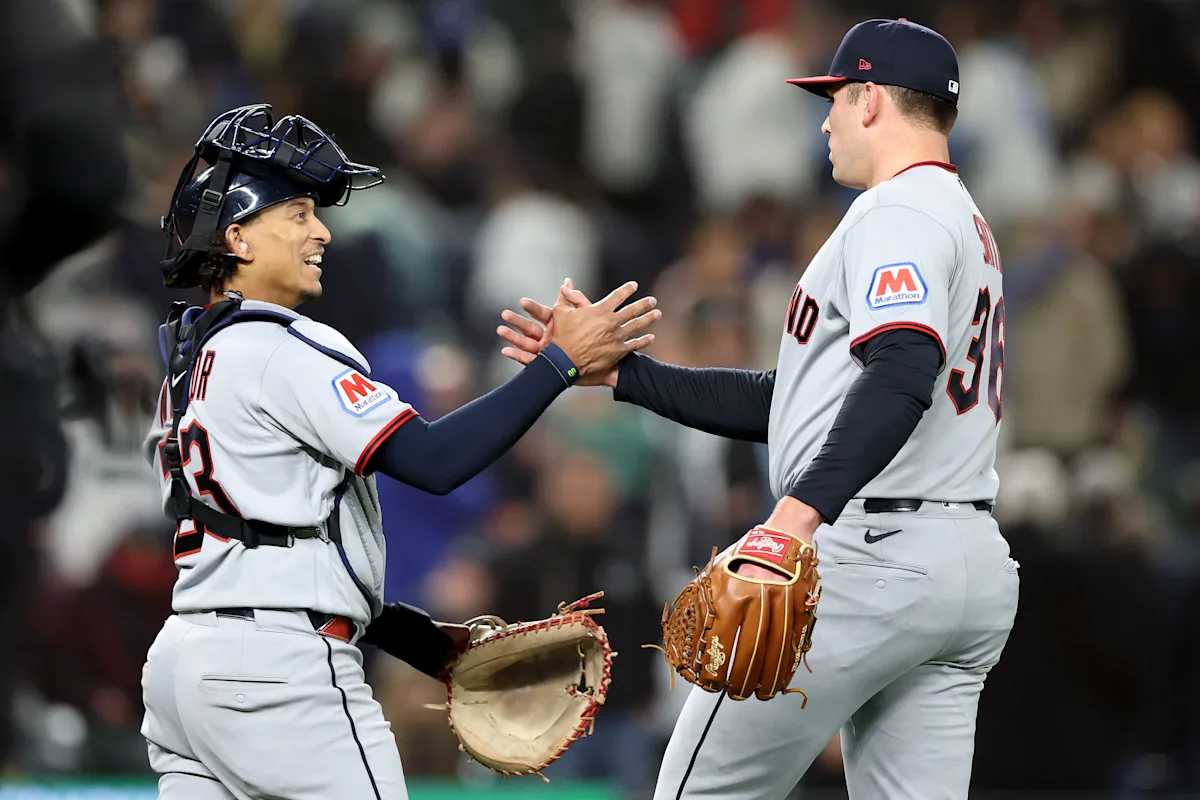
The introduction of automatic batting (ABS) systems has had an interesting side effect: the number of Major League Baseball (MLB) players appears to be decreasing.
When the team released official player measurements earlier this month before the season, fans noticed a significant difference between the heights of players this year and last year. Some players appeared to lose several inches over the course of a year, prompting questions and plenty of jokes.
advertise
The reason for the change comes down to ABS: as part of the introduction of the ABS challenge system, height measurements for players in 2026 are more stringent than in previous years. The system introduces a new strike zone based on a player's height percentage, meaning precise measurements are even more important.
How does ABS measurement work?
While the strike zone has changed over the years, previous versions ran from the middle of a player's torso to just below the kneecap. Now, the strike zone will be customized specifically for the player: the top of the zone will be at the 53% of the player's measured height, while the bottom will be at the 27%. In other words, the strike zone will be located around the top half of the player's bottom half.
In the past, official measurements were more flexible: Teams used to base players' heights on their physical stats, last year's height or just the player himself, according to The Athletic.
advertise
“As far as I can remember, it's always been like this. I feel like everybody's always grown an inch or two,” Los Angeles Angels catcher Travis d'Arnaud told The Athletic.
Now, the measuring process to ensure a player's height is accurate is comprehensive and standardized across the league: Players are measured three times, via laser and by hand, according to The Athletic.
All measurements were taken between 10 a.m. and noon, with players standing upright without shoes or baseball caps and holding measuring tools against the heads of those with thick hair. (The human body shrinks about half an inch throughout the day due to gravity, which means the time of day does affect the final measurement.)
So who has shrunk the most?
According to The Athletic, the vast majority of players who changed their height between this year and last year lost a few inches. 171 players are an inch shorter than last year; 48 are two inches shorter. Six players are three inches shorter than last season's measurements.
advertise
In order of height, the six players are: Phillies infielder Bryson Stott, who dropped from 6 feet 3 to 6 feet; Rene infielder Gavin Lux and Dodgers infielder Alex Freeland, both of whom increased from 6 feet 2 inches to 5 feet 11 inches; Tigers infielder Gleyber Torres and Red Sox catcher Connor Wong both dropped from 6 feet 1 to 5 feet 10; Guardians catcher Bo Naylor even dropped from 6 feet to 5 feet 9 inches.
Like many players, Lux has received some good-natured ridicule for his reduced height. Earlier this month, Lux's former teammate, free-agent infielder Justin Turner, posted a photo of the two being nearly the same height — even though Lux was previously listed at 6-foot-2 and Turner was always 5-foot-11.
“Don't bother me,” Lux replied, along with some laughing emojis.
According to The Athletic, only 47 lucky people gained height through the new measurements. Two of the players gained two inches; the remaining 45 gained one point.
advertise
That being said, while an increase in height may be better for a player's self-esteem, it's not necessarily better for their hitting. Since the ABS system uses a percentage of total height, taller players mean a larger strike zone compared to shorter players. For example, when comparing 5-foot-6 Jose Altuve to 6-foot-7 Aaron Judge, not only are their strike zones located differently, but Judge's overall area is larger.
Naylor, for example, seems to understand that his official height loss could be a benefit.
“If it allows me to have a smaller area, then I'll take it,” Naylor told The Athletic. “It’s fun to see all the memes.”