As fully expected, the Federal Reserve held its benchmark federal funds rate steady at 3.50%-3.75% on Wednesday, the fourth straight meeting to keep it unchanged as officials weighed ongoing inflation risks and signs of slowing economic growth.
“In considering the extent and timing of further adjustments to the federal funds rate target range, the Committee will carefully evaluate incoming data, the evolving outlook, and the balance of risks,” the Fed said in a policy statement.
There were four dissenters to the interest rate decision, including one dove and three hawks. Fed Governor Stephen Mirran wants to cut interest rates by 25 basis points, while Beth Hammack, Neel Kashkari and Lorie Logan want to keep rates steady while removing any easing bias.
Bitcoin under pressure after news It’s still down about 0.5% in the past 24 hours, trading just below $76,000. U.S. stocks continued to fall slightly, with the Nasdaq falling 0.35%. Yields surged, with the two-year Treasury yield rising 9 basis points to 3.93% and the 10-year Treasury yield rising 5 basis points to 4.40%.
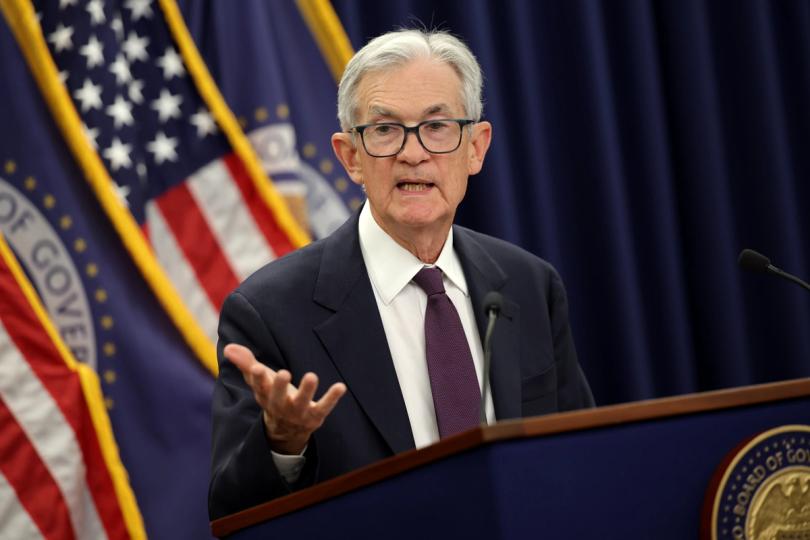
Today’s central bank meeting is likely to be the last central bank meeting chaired by Jerome Powell, whose term as chairman ends on May 15. His successor, Kevin Warsh, was cleared by the Senate Banking Committee earlier Wednesday, putting him on track to take over if Powell steps down. The trio of hawkish dissidents suggest Warsh will have a tough job pushing for a rate cut, even if that’s the direction he wants.
Attention will next turn to Powell’s post-meeting press conference as traders look for clues on the future path of monetary policy.
Oil prices retreated sharply earlier this month on hopes of a lasting peace between the United States and Iran before rebounding to near post-war highs, with WTI crude trading just below $105 a barrel.
Rising energy costs will naturally affect headline inflation figures, but can also slow economic activity. That leaves the U.S. central bank in a quandary: Which task should be prioritized—prices or economic growth?