The Trump administration’s position on returning all tariffs declared illegal by the Supreme Court is slowly taking shape. But a new court document filed last week appears to acknowledge that a range of tariffs will ultimately be eligible for refunds.
The issue is the difference between so-called cleared duties and uncleared duties.
This legal distinction is critical to importers and can be worth millions of dollars as companies seek to recoup duties illegally imposed under the International Emergency Economic Powers Act of 1977 (IEEPA).
The government’s filing last week also described ongoing progress on a four-step process that, once up and running, could take about 45 days to review and process applications.
Read more: What Trump’s tariffs mean for the economy and your wallet
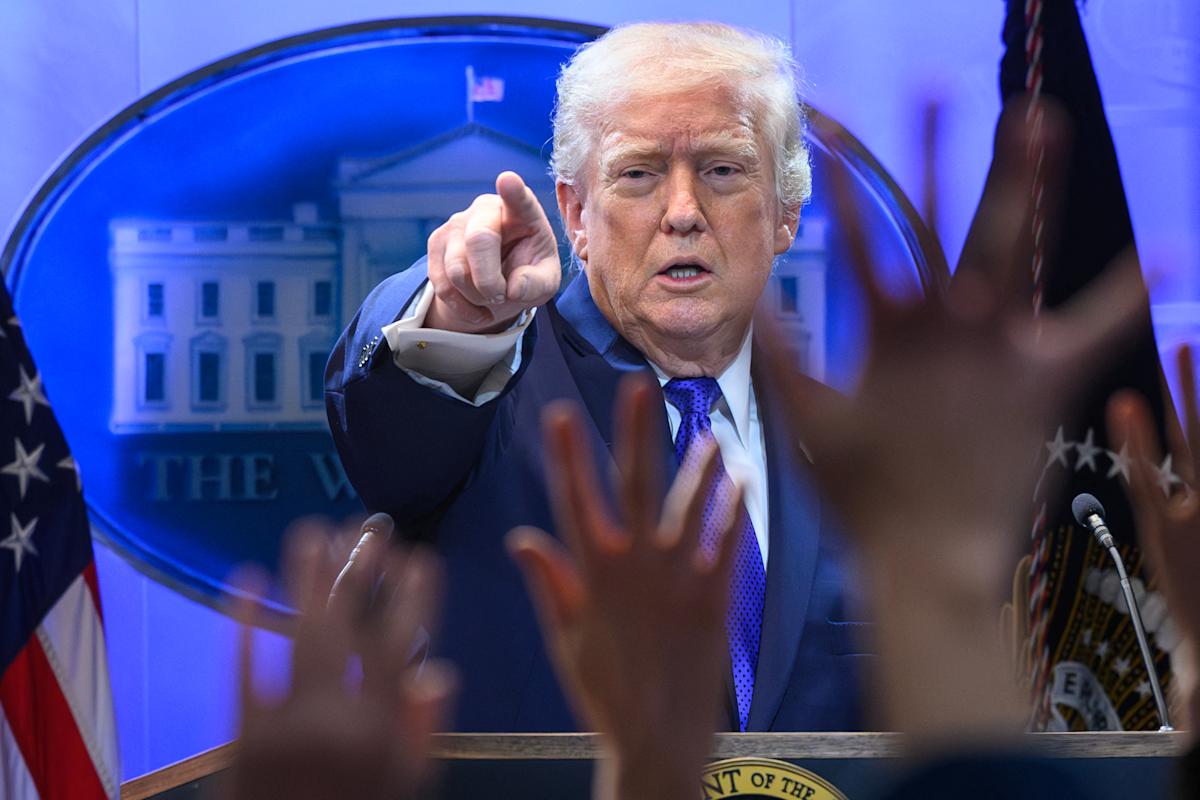
President Trump spoke at a press conference at the White House in February to discuss the Supreme Court’s ruling on his tariffs. (Mandelyan/AFP via Getty Images) ·MANDEL NGAN via Getty Images
“In theory, this development provides the answer that many importers are seeking,” Foley & Lardner’s Greg Husisian told Yahoo Finance. He said the government’s revised order “effectively brings all IEEPA entries within the court’s refund framework.”
In other words, this means that previously paid tariffs that are currently in three different statuses – not liquidated, liquidated but still within the protest window, and tariffs where liquidation has been deemed final – may ultimately be eligible for a refund.
In a trade context, “liquidation” refers to the final calculation of duties owed and is often seen as a final seal of sorts. The process must be completed within one year of the goods being imported and duties first being imposed, but it is usually earlier, in the range of 10 to 11 months.
The issue of liquidation led companies to preemptively file lawsuits as early as 2025, long before the Supreme Court struck down Trump’s sweeping IEEPA tariffs in February and confirmed that tariff refunds were possible.
This week’s filing is the latest concession from the Trump administration, cheering trade lawyers who have been bracing for a chaotic refund process on all fronts.
There is growing awareness that a wide range of refunds are possible, including fully liquidated tariffs.
“If the administration was going to fight on this issue, I would have expected them to say as much in this document,” Erik Smithweiss, a partner at GDLSK who focuses on trade issues, said in an interview.
He represents customers seeking refunds and said he was relieved by this latest wording, but warned that it “does not preclude the Department of Justice from one day saying ‘we did not establish this process and we do not believe it is authorized by law’ and forcing the issue to be litigated.”
President Trump told reporters immediately after the Supreme Court’s February ruling that he believed lawsuits over the refunds would be needed “in the next two years,” but he has not commented publicly on the refunds in recent weeks.
In January, a cargo ship showed up at the Port of Jersey Container Terminal in Jersey City, New Jersey. (Charlie Triballe/AFP via Getty Images) ·CHARLY TRIBALLEAU via Getty Images
This week’s government document was written by Brandon Lord, executive director of trade programs at U.S. Customs and Border Protection. It sets out how the upcoming first iteration of the portal for companies to apply for refunds will handle around 63% of all entries.
The remainder of the guidance, including that clearing tariffs have been treated as final and described as a “more complex refund scenario”, is expected to be released soon.
The document also states that the four elements of the “first phase” of the refund portal – the claims step, the processing step, the refund outcome review and the final payment step – are between 60% and 85% complete.
In a follow-up this week, the judge presiding over the case said the government was “on track” to start accepting refund applications before the April 20 deadline.
Asked for a further update on April 14, Senior Judge Richard K. Eaton of the U.S. Court of International Trade in Manhattan noted that “Customs continues to make satisfactory progress.”
The U.S. Court of International Trade in lower Manhattan is due to appear in May 2025. (Spencer Platt/Getty Images) ·Spencer Platt via Getty Images
Snell & Wilmer’s warning to customers struck an optimistic tone, noting that the apparent inclusion of clearing entries appears to ensure “importers will not be subject to time limits to recover IEEPA duty refunds on imports that have reached final clearing.”
“Uncertainty remains”
These developments come as consumers also look to get direct access to possible refunds.
The government estimates refunds total about $166 billion, and consumers have reportedly filed at least 17 lawsuits against companies including FedEx (FDX), Costco (COST) and UPS (UPS), saying the companies made a mistake by retaining refunds.
In March, Costco wholesale store signs were everywhere in San Diego, California. (Kevin Carter/Getty Images) ·Kevin Carter via Getty Images
But many questions remain unanswered.
Hussian noted in last week’s report that it’s unclear how the program will be rolled out across the country, as well as other questions such as whether preemptive prosecutions by companies will have an impact.
Other courts are also likely to weigh in on issues such as whether a company is required to file an administrative protest to obtain a refund.
“Look, there’s still some uncertainty going forward,” Smithwith said. He still recommended that companies consider a variety of measures — administrative protests or even litigation — “just to be sure.”
Ben Werschkul is Yahoo Finance’s Washington correspondent.
Click here to get political news related to business and monetary policy that will affect stock prices tomorrow
Read the latest financial and business news from Yahoo Finance