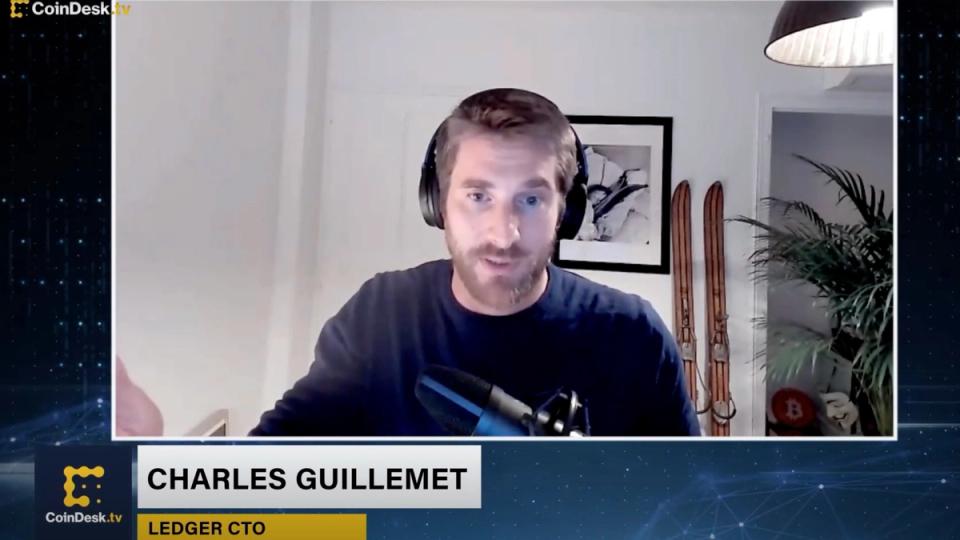
Cryptocurrency platforms and investors have long been subject to hackers and exploits. Now, artificial intelligence (AI) is making this threat even more serious.
That’s the view of Charles Guillemet, chief technology officer of crypto wallet provider Ledger, who says the economics of cybersecurity are collapsing as artificial intelligence tools make it faster and cheaper to attack systems.
“It becomes very, very easy to find vulnerabilities and exploit them,” Guillemet told CoinDesk. “The cost will drop to zero.”
His comments come as cryptocurrency thefts are once again making headlines. Just this week, Drift, a decentralized finance protocol based on Solana, was exploited and attackers stole $285 million worth of digital assets. This is one of the most serious breaches so far this year. A week ago, an attack on yield protocol Resolv resulted in a $25 million loss.
According to DefiLlama, a total of more than $1.4 billion in assets has been stolen or lost in crypto attacks over the past year.
From asymmetry to arms race
Security has long relied on an imbalance: attacking a system should be more difficult and expensive than the potential rewards.
But artificial intelligence is eroding this advantage. Tasks that once took skilled researchers months, such as reverse engineering software or linking vulnerabilities, can now be accomplished in seconds with the right prompts.
For cryptocurrencies, where code often controls large amounts of money, this shift increases risk.
“You need perfection,” Guillemé warned the team developing the blockchain protocol.
AI-generated code compounds the problem. As more developers rely on artificial intelligence tools, vulnerabilities are likely to spread faster.
“There’s no ‘keep it safe’ button,” he said. “We’re going to generate a lot of code that is unsafe by design.”
Raise the security bar
For cryptographic protocols, this means rethinking security from the ground up.
Guillemet points out that formal verification (using mathematical proofs to verify code) is a more powerful approach than traditional auditing, which can miss bugs.
Hardware-based security is another layer, he said. Devices such as hardware wallets isolate private keys from internet-connected systems, reducing exposure.
“When you have a dedicated device that’s not exposed to the internet, it’s more secure by design,” he said.
This approach becomes increasingly important as malware becomes more advanced. Guillemet described an attack that scanned wallet mnemonics in infected phones, allowing hackers to drain funds without user interaction.
To the average crypto user, Guillemet’s message is straightforward: Assume systems can and will fail.
“You can’t trust most systems you use,” Guillemé said.
This could lead to more users using cold storage, greater operational security, and keeping sensitive data offline. Even so, the risks extend beyond software and include physical attacks against cryptocurrency holders.
Guilleme expects divisions to arise in the future. Critical systems such as wallets and protocols will have significant investments in security and adaptability. But much of the broader software ecosystem may struggle to keep up.
“It’s definitely easier to hack everything,” he said.