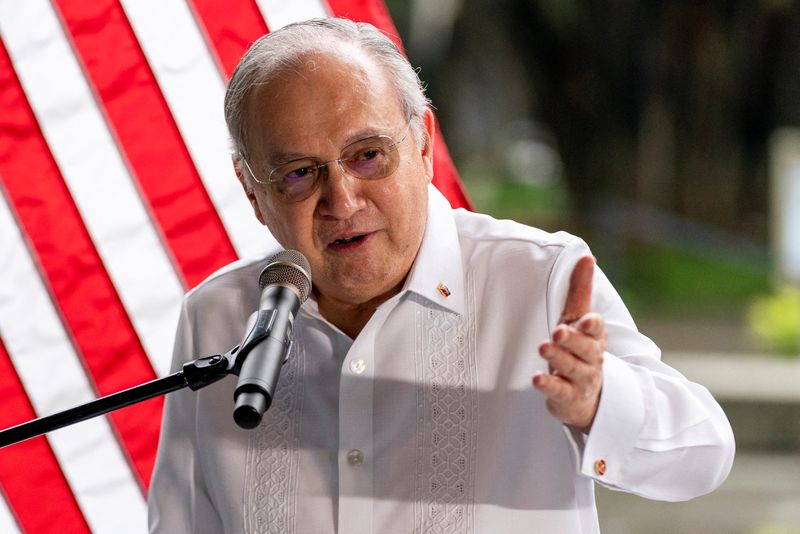
MANILA, Feb 10 (Reuters) – The Philippines’ ambassador to the United States stressed on Tuesday the need to “cool down” with China after both sides said they were willing to put aside tensions in the South China Sea and explore areas of economic cooperation.
Ambassador Jose Manuel Romualz said Manila’s relationship with Beijing should not be defined solely by maritime disputes, even as the Philippines continues to call out actions it considers illegal.
“We are in ongoing bilateral dialogue with them,” Romualdez told reporters. “We’re going to continue this and see how it works, especially on the economic side.”
“That’s what we want to do… there are some signs that our Chinese friends are also prepared to see some opportunities where we can cooperate, you know, and isolate this situation in the West Philippine Sea,” Romualz added, using the word Manila to refer to the waters within its exclusive economic zone.
The Philippines and China have been locked in a series of maritime confrontations in recent years, with the Philippines accusing China of aggressive actions within its exclusive economic zone, including dangerous drills, water cannons and interference with supply missions.
China, in turn, accuses the Philippines of invading territory it claims.
Exchanges between the Chinese embassy and Philippine officials have become more frequent in recent weeks, prompting Manila to reiterate that differences between the countries are best resolved through diplomacy rather than public rhetoric.
Romualdez said that with the Philippines assuming the rotating chair of ASEAN this year, easing friction is critical to ensuring China’s full participation in the eventual conclusion of the long-delayed code of conduct in the South China Sea.
“We are the chair of ASEAN and I hope China can actively participate, especially in terms of the Code of Conduct,” he said. “Who knows, more than 20 years later we may finally be able to finalize it.”
Manila said it would insist that the code of conduct explicitly reference the United Nations Convention on the Law of the Sea and work to finalize the document within the year.
The Philippine Department of Foreign Affairs said on Monday it remained the country’s “authoritative voice” on regional and international issues, and its newly appointed maritime affairs spokesperson reiterated that Philippine diplomacy will continue to be based on a “calm assessment of the facts.”
(Reporting by Karen Lema; Editing by David Stanway)