Authors: Ted Hesson, Christina Cook, and Jeff Mason
WASHINGTON (Reuters) – U.S. President Donald Trump is preparing for a tougher immigration crackdown in 2026 and spending billions of dollars in new funding, including raids on more workplaces, even as a backlash intensifies ahead of next year’s midterm elections.
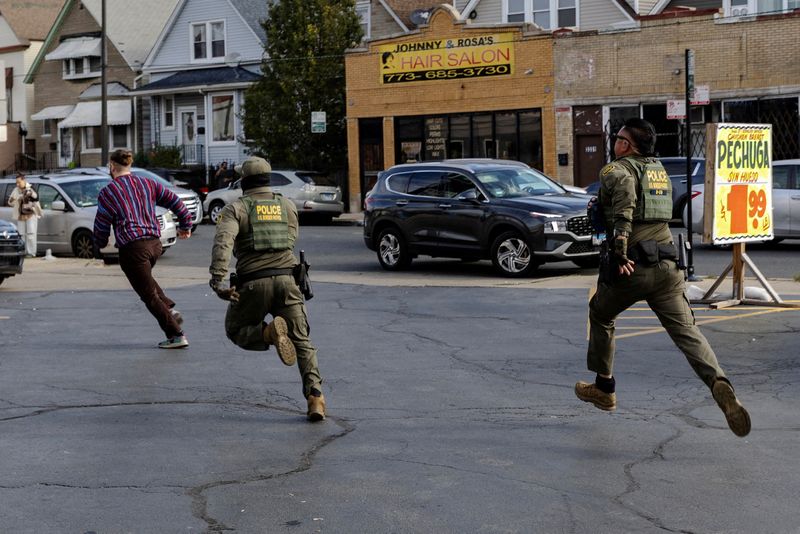
Trump has dispatched immigration agents to major U.S. cities, sweeping through neighborhoods and clashing with residents. While federal agents have conducted some high-profile raids on businesses this year, they have largely avoided raids on farms, factories and other businesses that are economically important but known to employ immigrants without legal status.
ICE and the Border Patrol will receive $170 billion in additional funding through September 2029, a significant increase from the existing annual budget of about $19 billion after the Republican-controlled Congress passed a massive spending package in July.
Administration officials say they plan to hire thousands more agents, open new detention centers, pick up more immigrants at local jails and work with outside companies to track down people without legal status.
The expanded deportation plan comes despite growing signs of a political backlash ahead of next year’s midterm elections.
Miami is one of the cities hardest hit by Trump’s crackdown because of its large immigrant population. Miami last week elected its first Democratic mayor in nearly three decades, and the mayor-elect said it was partly a reaction to the president. Other local elections and polls show voters are increasingly concerned about aggressive immigration tactics.
“People are starting to see this not as an immigration issue but as a violation of rights, a violation of due process and an unconstitutional militarization of communities,” said Mike Maddrid, a moderate Republican political strategist. “There’s no question that this is a problem for the president and the Republican Party.”
Trump’s overall approval rating for immigration policies, the issue he is most concerned about, fell from 50% in March (before he launched a crackdown in several major U.S. cities) to 41% in mid-December.
Growing public unease has focused on the use of aggressive tactics by masked federal agents, such as tear gas in residential areas and the detention of U.S. citizens.
‘The numbers are going to explode’
In addition to expanding enforcement, Trump has stripped hundreds of thousands of Haitian, Venezuelan and Afghan immigrants of their temporary legal status, expanding the number of people who could be deported as the president pledges to deport 1 million immigrants a year — a goal he is almost certain to miss this year. About 622,000 immigrants have been deported so far since Trump took office in January.
White House border czar Tom Homan told Reuters that Trump was following through on his promise to conduct historic deportations and deport criminals while closing the U.S.-Mexico border to illegal immigration. Homan said arrests will increase dramatically as ICE hires more officers and uses new funding to expand detention capacity.
“I think that number will grow significantly next year,” Homan said.
Homan said the plans “absolutely” include more enforcement in the workplace.
U.S. businesses have been reluctant to push back against Trump’s immigration crackdown over the past year but may be prompted to speak out if the focus turns to employers, said Sarah Pierce, social policy director at the center-left group Third Way.
Pierce said it would be interesting to see “whether businesses ultimately resist this administration.”
Trump, a Republican, has returned to the White House promising record deportations and saying they are necessary after years of high illegal immigration under his Democratic predecessor Joe Biden. He launched a campaign to send federal agents to U.S. cities to look for possible immigrant criminals, sparking protests and lawsuits over racial profiling and violent tactics.
Some businesses closed to avoid attacks or because of a lack of customers. Parents who are vulnerable to arrest keep their children home from school or let neighbors walk their children. Some U.S. citizens began carrying passports.
Despite public statements focused on criminal elements, government data shows that the Trump administration has arrested more people than previous administrations without being charged with any crime other than alleged violations of immigration laws.
About 41% of the roughly 54,000 people arrested and detained by ICE as of the end of November had no criminal record other than suspected immigration violations, the agency’s data shows. In the first weeks of January before Trump took office, only 6% of people arrested and detained by ICE did not face charges of other crimes or previous convictions.
The Trump administration has also targeted legal immigration. Agents have arrested spouses of U.S. citizens at green card interviews, pulled people from certain countries from naturalization ceremonies before they were about to become citizens, and revoked thousands of student visas.
Plans for employers
The administration plans to focus on workplaces in the coming year, which could lead to more arrests and impact the U.S. economy and Republican-leaning business owners.
Replacing immigrants captured in workplace raids could lead to higher labor costs, undermining Trump’s efforts to combat inflation, and analysts expect it to become a major issue in closely watched November elections that could decide control of Congress.
Administration officials exempted such companies from complying with Trump’s order earlier this year, but then quickly reversed course, Reuters reported at the time.
Some immigration hardliners have called for greater workplace enforcement.
“Eventually you’re going to have to go after these employers,” said Jessica Vaughn, policy director at the Center for Immigration Studies, which supports lowering immigration levels. “When that starts to happen, employers are going to start cleaning up their act themselves.”
(Reporting by Ted Hesson and Jeff Mason in Washington and Kristina Cooke in San Francisco; Editing by Craig Timberg and Aurora Ellis)