BEIRUT (AP) — A man who carried out attacks in Syria that killed three U.S. citizens joined Syria’s internal security forces two months ago as a base security guard and was recently reassigned amid suspicions he may have ties to the Islamic State group, a Syrian official told The Associated Press on Sunday.
Saturday’s attack in the Syrian desert near the historic city of Palmyra killed two U.S. service members and one U.S. civilian and wounded three others. Interior Ministry spokesman Nour al-Din Baba said three members of the Syrian security forces clashed with the gunmen, injuring three members.
Baba said Syria’s new government faced a shortage of security personnel and had to recruit quickly after an unexpectedly successful rebel offensive last year to seize the northern city of Aleppo that ousted the government of former President Bashar al-Assad.
“We were shocked that we captured the whole of Syria in 11 days, which gave us a huge responsibility in terms of security and administration,” he said.
The attacker was one of 5,000 members who recently joined a new unit of the internal security forces, which was formed in the desert region of Badia, one of the areas where remnants of the Islamic State extremist group are still active.
The attacker raised suspicions
Baba said the leadership of the internal security forces recently suspected an infiltrator of leaking information to the “Islamic State” and began an assessment of all members in the Badia region.
Baba said an investigation last week raised suspicions about the man who later carried out the attack, but officials decided to continue monitoring him for several days to determine whether he was an active member of the Islamic State and, if so, to identify the networks he was communicating with. He did not name the attacker.
In the meantime, he said, the man was reassigned as a “precautionary measure” to guard equipment at the base, which is further away from both leadership and U.S.-led coalition patrols.
Baba said the man burst into a meeting where U.S. and Syrian security officials were having lunch together on Saturday and opened fire after clashing with Syrian guards. The attacker was shot dead on the spot.
Baba acknowledged the incident as a “major security breach” but said security forces had “succeeded far more often than they failed” since Assad’s fall.
He said that after the shooting, the Syrian army and internal security forces “launched a large-scale sweep in the Badia area” and destroyed some so-called “Islamic State” groups.
a delicate partnership
The incident comes as the U.S. military is expanding cooperation with Syrian security forces.
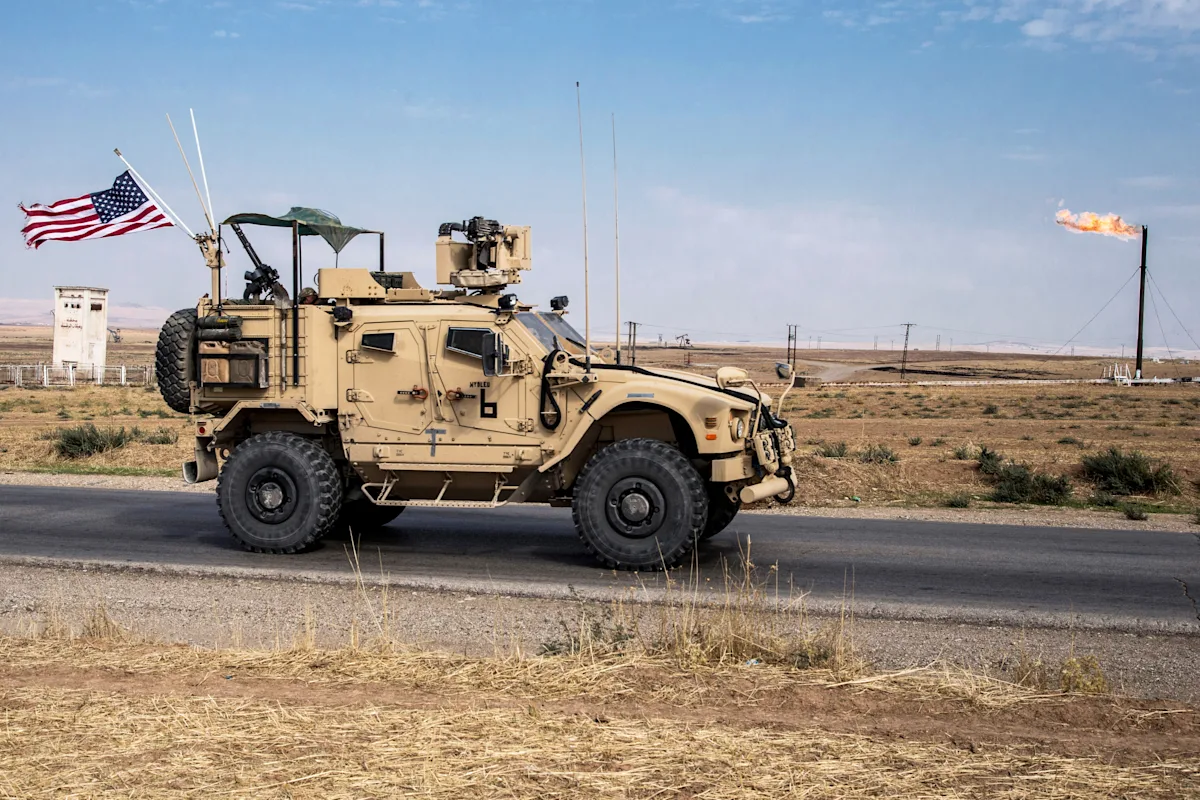
The United States has stationed troops in Syria for more than a decade, with a clear mission to fight the “Islamic State”, and about 900 troops are currently stationed there.
Before Assad’s ouster, Washington had no diplomatic relations with Damascus and the U.S. military did not cooperate directly with the Syrian army. Its main partner at the time was the Kurdish-led Syrian Democratic Forces in the country’s northeast.
Things have changed over the past year. Relations between U.S. President Donald Trump and the government of Syria’s interim president Ahmed Sala have warmed. Salad is the former leader of the Islamist insurgent group Tahrir al-Sham, which Washington has designated as a terrorist organization.
In November, Sala became the first Syrian president to visit Washington since independence in 1946. During the visit, Syria announced it was joining the global coalition against the Islamic State, joining 89 other countries committed to fighting the group.
U.S. officials have vowed to retaliate against the Islamic State attack but have not commented publicly on the fact that the gunman was a member of the Syrian security forces.
Critics of Syria’s new authorities point to Saturday’s attack as evidence that security forces are deeply penetrated by Islamic State and are an unreliable partner.
Moaz Mustafa, executive director of the Syria Emergency Task Force, said this was unfair. The Syria Emergency Task Force is an advocacy group working to build closer ties between Washington and Damascus.
Although both HTS and IS have Islamic roots, they are enemies and have frequently clashed over the past decade.
Mustafa said that among former members of HTS and its allied groups, “the fact is that even those with the most fundamentalist beliefs, the most conservative among the militants, harbor a strong hatred for ISIS.”
“The alliance between the United States and Syria is the most important partnership in the global fight against ISIS because only Syria has the expertise and experience to deal with this problem,” he said.