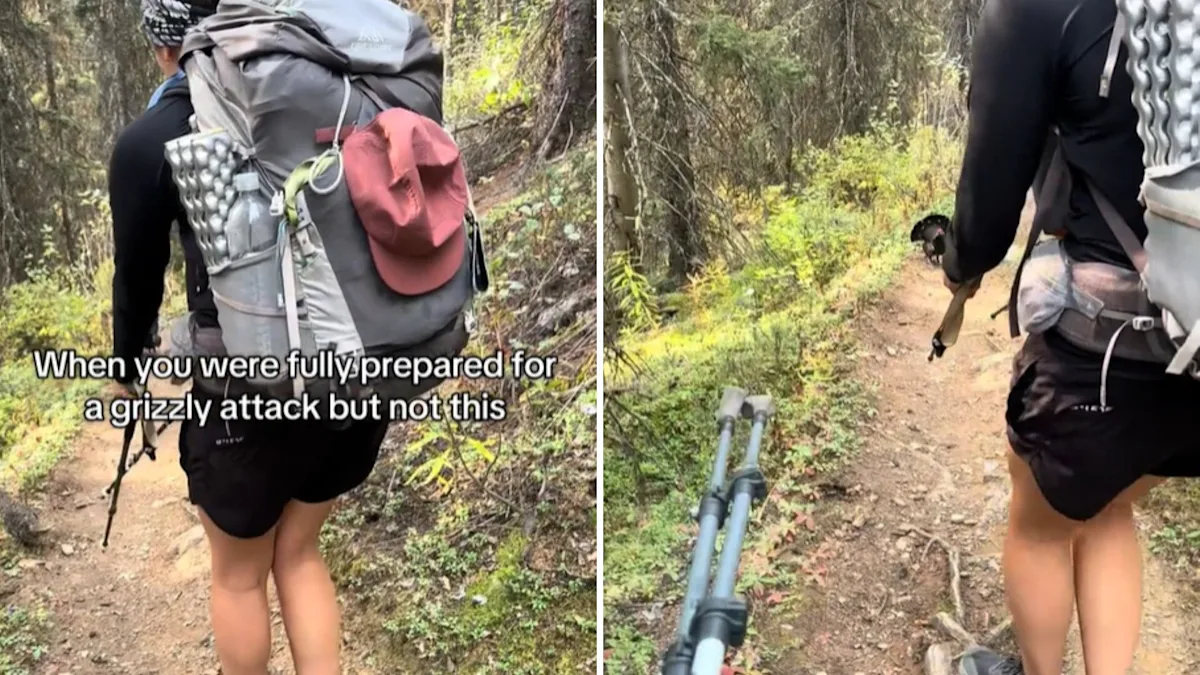
A forest hike turned out to be unexpectedly dramatic for TikTok user Taylor Chine (@taylorchine), who recently shared a short clip from trails in the Mount Assiniboine and Banff National Park regions in Canada. Video shows a hiker and photographer trying to get around a territorial grouse blocking the road.
What seemed like a normal hike quickly escalated when the bird came “out of nowhere,” flapping its wings and chasing hikers off a narrow forest trail, and the moment was captured on camera.
The caption joked that hikers were “well prepared for a grizzly bear attack, but not this time” as they tried to politely ask the bird, known as “Mr.”, to allow them to pass.
what happened?
Chine’s TikTok shows hikers carefully trying to lure grouse away from the trail while maintaining a respectful distance. Instead, the bird made the first move, swooping down on them with its wings.
Such encounters are not unheard of for hikers in the Canadian Rockies. Grouse may become aggressive or defensive when nesting or when startled by sudden movement. In this case, the bird’s quick and bold approach forced the hiker to retreat as it held its ground on the trail.
While the tone of the moment is light-hearted, it also highlights how wildlife behavior can catch even the most prepared hikers off guard—often those who expect larger or more widely discussed animals to pose a greater threat.
Why is this encounter important?
Unusual or heightened wildlife interactions like this may be partly related to broader environmental stresses. As human populations grow and outdoor recreation expands deeper into wild spaces, animals come into closer and sometimes tense contact with humans.
Habitat loss and changes in food availability due to rising global temperatures may further exacerbate these overlaps, prompting wildlife to act more defensively or wander into areas with high human traffic.
Protecting healthy ecosystems not only benefits animals; It helps make human-wildlife encounters more predictable and less confrontational. When habitats remain intact and species have sufficient resources, animals are more likely to remain dispersed and less likely to actively defend limited territories.
What measures are being taken?
National parks across Canada continue to promote responsible hiking practices, including staying on marked trails, providing ample space for wildlife, and avoiding sudden movements that could startle animals.
Visitors can help by carefully planning routes, understanding the behavior of local species, and supporting conservation efforts to protect large, connected habitats.
By maintaining resilient ecosystems and reducing environmental stress, communities can help ensure that encounters with wildlife while traveling remain extraordinary, rather than dangerous.
Get TCD’s free newsletter for simple tips to save more, reduce waste and make smarter choices, and earn up to $5,000 toward clean upgrades in TCD’s exclusive Rewards Club.