Trevor Hunnicutt
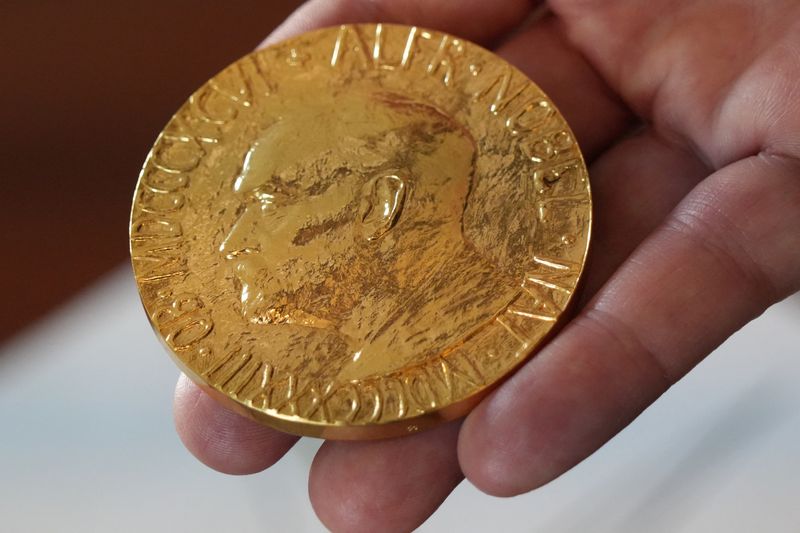
Dec 11 (Reuters) – U.S. President Donald Trump said he should win the Nobel Peace Prize after being involved in eight conflicts since taking office in January. But the issues that sparked the conflict remain unresolved, with conflict erupting again in some areas, including in the Democratic Republic of Congo and along the Cambodian-Thailand border.
Here are some of the international disputes Trump has intervened in:
Armenia and Azerbaijan
On August 8, Trump summoned the leaders of Armenia and Azerbaijan to sign a joint statement pledging to seek peaceful relations between the countries that have been at odds since the late 1980s.
“I got to know them through trade,” Trump later said in a radio interview. “I had some dealings with them and I said, ‘Why are you fighting?’ and I said, ‘If you’re going to fight, I’m not going to do a trade deal. That’s crazy.'”
The two countries have committed to a ceasefire in 2023. In March, the two countries said they had agreed on the text of a draft peace deal, but the agreement has not yet been signed.
A subsequent White House-brokered statement fell short of a formal peace treaty that would have created legally binding obligations for both sides. Questions remain, including whether the agreement requires Armenia to amend its constitution.
The leaders struck an economic deal with Washington that gives the United States development rights over a strategic transit corridor through southern Armenia. The Trump administration says this will allow for more energy exports. In documents released at the time, the corridor was named after Trump.
cambodia and thailand
Thailand and Cambodia held talks on Thursday, entering a fourth day of renewed border hostilities, with leaders from both countries awaiting word from Trump, who said he hoped to hold talks with them.
Thai fighter jets attacked Cambodia on Monday in an attempt to weaken its military capabilities, undermining a fragile ceasefire brokered by Trump earlier.
The U.S. president helped bring Thailand back to the negotiating table after long-simmering tensions between Thailand and Cambodia erupted into a five-day military conflict in July, the worst fighting between the two countries in more than a decade.
Two days after fighting broke out along the 200-kilometer (125-mile) border, Trump reached out to Thailand’s then-acting prime minister, Phumtham Wechayachai. Trump has suspended a tariff deal with both countries until the conflict is over.
In October, the U.S. president was in Malaysia to oversee the signing of a ceasefire agreement between the two countries. He also imposed a 19% tariff on exports from both countries to the United States, lower than the tariffs he initially set.
Israel, Iran and the Palestinian Territories
Israel and the Palestinian militant group Hamas agreed in October to the first phase of a Trump-brokered hostage and ceasefire deal.
The deal marks a big step forward in efforts to end the two-year war in Gaza, which has killed more than 67,000 Palestinians. Under the agreement, Hamas handed over hostages it held in the deadly attack that launched the attack. However, both sides have repeatedly accused the other of violating the armistice.
The two sides still have deep differences on major issues such as the disarmament of Hamas, post-war governance of Gaza, and the composition and tasks of the enclave’s international security forces.
The US president has also been working to expand the Abraham Accords, an initiative he launched during his first term to normalize diplomatic relations between Israel and Arab countries.
Trump initially sought to negotiate with Iran over its nuclear program. Israel launched an air war against Iran on June 13 and urged Trump to join it. He did so on June 22, bombing Iran’s nuclear facilities. He later urged Israel and Iran to join a Qatar-brokered ceasefire.
The situation remains serious and unstable. Iran continues to resist U.S. demands that it stop enriching uranium for its nuclear program. Israel says it will attack Iran again if it feels threatened.
Rwanda and the Democratic Republic of the Congo
The latest developments from the Rwandan-backed rebel group M23, which has launched a blitz offensive this year and now occupy more territory than ever in eastern Democratic Republic of Congo, have raised concerns about the fighting spreading further into the region.
Under pressure from Trump, Rwanda and Congo signed a U.S.-brokered peace deal on June 27, but it has yet to be implemented.
On December 4, Trump led Congolese and Rwandan leaders to attend an event in Washington at the Institute of Peace, which his administration unofficially renamed in honor of the US president. There, they signed more documents confirming their commitment to Trump’s peace plan.
But the fight continues. Congolese President Felix Tshisekedi told lawmakers on Monday that Rwanda had violated its commitments. Rwanda has long denied supporting the M23 movement, but UN experts and Congolese leaders disagree. Qatar has facilitated separate talks between Congo and the M23 movement.
The rebellion is the latest episode in a decades-long conflict with roots in the 1994 Rwandan genocide.
Trump warned of “very severe penalties, financial or otherwise” for violating the deal. The United States is seeking access to Congo’s vast trove of vital minerals as it battles with China for control of natural resources.
india and pakistan
U.S. officials fear the conflict between nuclear-armed India and Pakistan could spiral out of control after an attack in India in May that Delhi blamed on Islamabad.
U.S. Secretary of State Rubio and Vice President Vance consulted with Trump and urged Indian and Pakistani officials to de-escalate the situation.
After four days of fighting, a ceasefire was declared on May 10. But it does little to address the issues that divided India and Pakistan, which have fought three major wars since independence from Britain in 1947.
Days after the ceasefire, Trump said he was using the threat of cutting trade with the countries to secure a deal. India questions whether U.S. pressure led to the truce and trade was a factor.
egypt and ethiopia
Egypt and Ethiopia have a long-standing dispute over the Grand Ethiopian Renaissance Dam, which Cairo considers a national security issue and fears it will threaten the Nile’s water supply.
“We’re working on it, but it’s going to be solved,” Trump said in July.
White House press secretary Carolyn Leavitt later added Egypt and Ethiopia to the president’s list of conflicts that are “now over.”
It’s unclear what Trump is doing on the issue. In public comments, he has largely echoed Cairo’s concerns. Ethiopia has disputed some of Trump’s comments.
Ethiopian Prime Minister Abiy Ahmed opened the dam in September despite objections from Sudan and Egypt. Egyptian President Abdel Fattah el-Sisi has vowed to protect his country’s interests.
Serbia and Kosovo
Relations between Kosovo and Serbia remain tense nearly five years after Trump struck a deal with them during his first term to improve economic ties.
Trump said in June, without providing evidence, that he “stopped” the war between the two countries during his first term and “I’m going to take it up again” in his second term.
Kosovo declared independence in 2008, nearly a decade after NATO bombed Serb forces to stop the killings and deportations of Albanians in the region during the 1998-1999 counterinsurgency war.
But Serbia still regards Kosovo as an integral part of its territory. These countries have not signed any peace agreement.
Kosovo Prime Minister Albin Kurti has sought to extend government control into the north, where some 50,000 Serbs live, many of whom refuse to recognize Kosovo’s independence.
Kosovo President Vjosa Osmani said in July that Trump had prevented further escalation in the region “over the past few weeks.” She did not elaborate, and Serbian President Aleksandar Vucic denied any escalation was imminent.
Russia and Ukraine
Trump said during his 2024 presidential campaign that he could solve the war in Ukraine in a day, but has so far been unable to end the nearly four-year conflict that analysts say has killed more than 1 million people.
Trump said on August 18: “I thought this was going to be one of the easier things, but actually it’s one of the hardest things.”
Trump’s views on how best to achieve peace have shifted from calling for a ceasefire to suggesting a deal can be reached while fighting continues.
In October he imposed sanctions on Russia’s two largest oil companies.
Most recently, Trump has tried to force Ukrainian President Volodymyr Zelensky to accept a deal to end a war that European leaders fear will benefit Moscow and destabilize the continent.
South Korea and North Korea
Trump said he hopes to meet with North Korean leader Kim Jong Un to once again push for peace.
“We will come back and at some point in the near future we will meet with North Korea,” Trump told reporters during a visit to South Korea in October.
Trump and Kim Jong Un held three summits during Trump’s first term from 2017 to 2021. They also exchanged several letters that Trump called “beautiful” before an unprecedented diplomatic effort collapsed over U.S. demands that Kim give up his nuclear weapons.
In the years since, North Korea has advanced with more and larger ballistic missiles, expanded its nuclear weapons infrastructure and gained new support from its neighbors. During his second term, Trump recognized North Korea as a “nuclear power.”
Kim Jong Un said in September that there was no reason to avoid talks with Washington if it dropped demands that North Korea give up its nuclear weapons.
(Reporting by Trevor Hunnicutt in Washington; Additional reporting by Fatos Bytyci and Susan Heavey; Editing by Colleen Jenkins, Ross Colvin and Daniel Wallis)