


Spy planes are the unsung legends of aviation, never the loudest, but often the most important. While most people rave about fighter jets and bombers, these aircraft fly under the radar (literally and figuratively), collecting the kind of intelligence that shifts the tides of wars and shapes entire foreign policies.
Many of them fly higher, longer, and more dangerously than most other planes, all while staying hidden from the spotlight. But make no mistake, without them, many of the biggest decisions in history wouldn’t have been possible. From Cold War classics to cutting-edge drones, the skies have seen some truly legendary surveillance birds. So, we set out to spotlight the most iconic, game-changing spy planes that left a lasting impact. But don’t freak out if you see one of these in person, because if you can see it, you’re not the target…
How We Picked These Aerial Ghosts


Image Credit: 9th Reconnaissance Wing Public Affairs – Public Domain/Wiki Commons.
To choose the 13 greatest spy planes (that we know about, wink wink, government), we looked at global recognition, mission legacy, and the unique ways each aircraft changed the game. we focused on what makes each plane special in the eyes of the public and military historians alike.
Whether it was their jaw-dropping stealth, daring Cold War missions, or the fact that they’re still flying decades later, every plane on this list earned its spot by being legendary in its own right.
We also made sure the picks were familiar and beloved, names that would ring a bell with aviation buffs, veterans, and curious readers who remember these birds from history books or news headlines. Each entry tells a story that goes beyond the blueprints, because at the end of the day, a great spy plane is remembered not just for how it flew, but what it revealed.
Lockheed U-2 “Dragon Lady”

Image Credit: United States Department of the Air Force – Public Domain/Wiki Commons.
No, this has nothing to do with the band. The U-2 is the queen of high-altitude snooping. It became famous during the Cold War when one was shot down over Soviet territory in 1960. Despite that, it’s still in service today, yes, you read that right. The U-2 flies so high it needs a spacesuit, and pilots train like astronauts.
Its sensors can capture extremely detailed imagery from very high altitude, making it a nightmare for anyone trying to hide something. It’s also a bit of a diva; landing one is so tricky it needs a chase car to guide it in. But that’s the price of greatness. For over six decades, the Dragon Lady has proven that slow and steady can still beat stealth and speed.
Lockheed SR-71 Blackbird

Image Credit: NASA – Public Domain/Wiki Commons.
The SR-71 outran everything. Nicknamed the Blackbird, it looked like something from the future or even a video game, even back in the ’60s. No operational, crewed, air-breathing aircraft matched its combination of sustained speed and altitude while snapping photos of enemy bases mid-flight. If someone spotted it, it didn’t matter, it would be gone in seconds. I wonder how many ‘UFO sightings’ this thing is responsible for.
They never succeeded in shooting one down. It leaked fuel on the runway but sealed tight at speed, and everyone just accepted that. Retired in the ’90s, it still holds speed records that haven’t been touched. Even today, it’s a fan favorite and aviation icon.
Boeing RC-135

Image Credit: United States Air Force – Public Domain/Wiki Commons.
The RC-135 is the flying ear of the U.S. military. It doesn’t sneak around like a ninja, it parks nearby and listens. This modified airliner is packed with sensors that intercepts and analyzes electronic signals, especially radar emissions and military communications, across the electromagnetic spectrum. You’ll spot it near conflict zones, especially when tensions rise.
It’s played major roles in the Gulf War, the Balkans, and the Middle East. Russia and China both hate seeing it nearby, which tells you it’s doing something right. Despite its bulky shape, it’s one of the most feared planes in the sky. Sometimes, just being there is enough.
Northrop Grumman RQ-4 Global Hawk

Image Credit: Bobbi Zapka – Public Domain/Wiki Commons.
If the U-2 is the wise old owl, the Global Hawk is the silent drone that never blinks. This unmanned eye-in-the-sky can fly for over a day straight without refueling. It’s the perfect tool for modern surveillance, quiet, tireless, and able to cover thousands of miles. It’s been used everywhere from Afghanistan to hurricane zones, making it a versatile scout.
Unlike human pilots, it doesn’t get tired or nervous. It can monitor a battlefield from 60,000 feet, day or night, rain or shine. It’s not flashy, but that’s the point, it watches while no one watches it. That does make it sound a bit creepy, though, but you’re not in any danger (unless you’re on the other side of enemy lines).
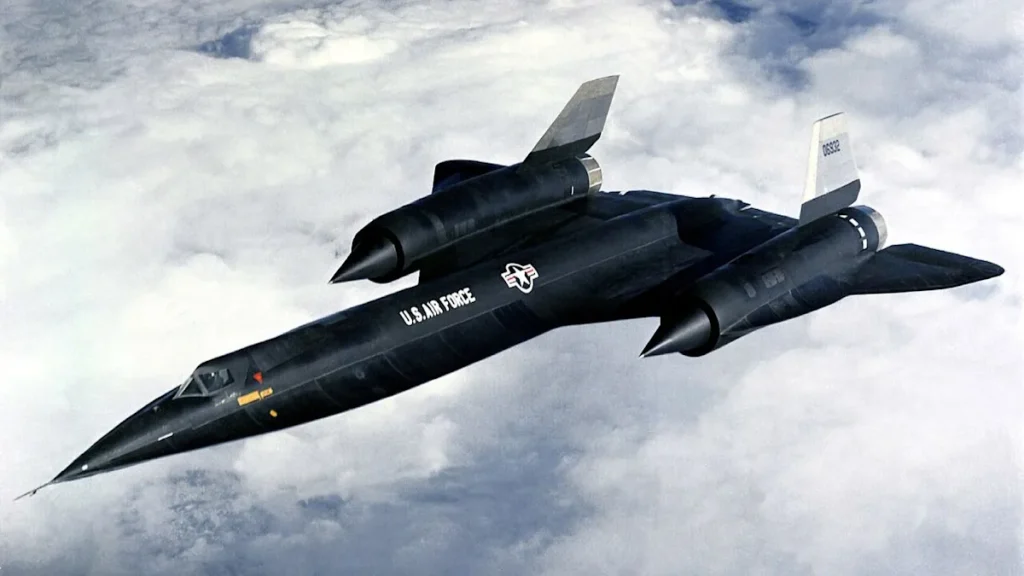
Lockheed A-12

Image Credit: United States Air Force – Public Domain/Wiki Commons.
Before the SR-71, there was the A-12, a CIA project so secret even pilots couldn’t talk about it (don’t worry, it’s been declassified, you aren’t going to be put on a government watch list for learning about it). It was the Blackbird’s faster, sleeker older sibling and flew operational missions over North Vietnam and North Korea, with some mission coverage also extending over neighboring areas. Unlike its Air Force counterpart, the A-12 was used strictly for CIA operations. It had just one seat and zero weapons, only cameras and courage.
Most Americans didn’t even know it existed until the ’90s. It helped define stealth before the term became mainstream. The A-12 was the prototype for legends, and it served in the shadows with chilling precision.
Lockheed EP-3 Aries

Image Credit: SDASM Archives – Public Domain/Wiki Commons.
This is the Navy’s flying spy van. Built from the trusty P-3 Orion, the EP-3 Aries is stuffed with eavesdropping gear. It listens to enemy radar, tracks ships, and hoovers up radio chatter. In 2001, one collided with a Chinese J-8II interceptor in 2001, triggering a major international incident.
That showed just how important it was, and how far others would go to stop it. Its long legs let it patrol for hours over the Pacific or the Middle East. It’s not fast, but it doesn’t need to be, it lurks just outside trouble and records everything. If there’s a secret worth hearing, the EP-3 probably already knows it.
Ryan Model 147 “Lightning Bug”

Image Credit: United States Air Force – Public Domain/Wiki Commons.
Before drones had cool names, there was the Lightning Bug. It was a small, unmanned reconnaissance plane launched from other aircraft during the Vietnam War. These little bugs flew into hostile skies when it was too dangerous for human pilots. They snapped photos, recorded radar signals, and transmitted data back to base.
It was one of the first successful U.S. spy drones. Though simple by today’s standards, it paved the way for everything that followed. Some got shot down, but many made it back with intel that changed missions. It was quiet, clever, and just risky enough to work.
Dassault Mirage IV

Image Credit: Rob Schleiffert – CC BY-SA 2.0/Wiki Commons.
France’s strategic bomber that also carried out high-speed reconnaissance missions was this stylish jet that doubled as a nuclear bomber. The Mirage IV was fearless. While its primary role was to carry nuclear weapons, it also did high-speed reconnaissance runs over Europe and Africa. Its sleek design and bold missions earned it a legendary status in French aviation.
It helped France stay in the intelligence game independently, without relying on allies. Though retired in the 2000s, it remains a symbol of Gallic grit. When your spy plane looks this good, who needs stealth?
Beechcraft RC-12 Guardrail

Image Credit: US Air Force – Public Domain/Wiki Commons.
This one’s the quiet operator of the Army’s surveillance game. It doesn’t look like much, just a small twin-prop plane, but it’s a master of listening in. The RC-12 has flown countless missions in Iraq and Afghanistan, tracking enemy movements and intercepting communications. It’s low-profile but crucial to battlefield awareness.
It doesn’t get movie cameos, but troops on the ground depend on the info it brings back. Think of it as the military’s mobile wiretap, flying in loops above the action. Sometimes, small and smart beats big and fast.
Mikoyan-Gurevich MiG-25R “Foxbat”

Image Credit: Leonid Faerberg – GFDL 1.2/Wiki Commons.
We bet you can’t say that five times fast. Yes, the Soviets had spy planes too, and the MiG-25R was their flying beast. While the MiG-25 is better known as an interceptor, the recon version was used to buzz borders and photograph NATO facilities. It could outrun most Western interceptors in straight-line speed during its prime. Its flybys were often done with zero subtlety, a “look at me” move that doubled as a show of force. It was fast, brash, and designed to scare.
Despite its size and simplicity, it got the job done, and that’s why it became infamous in the West. It proved that sometimes brute speed could substitute for stealth.
General Atomics MQ-9 Reaper

Image Credit: Shutterstock.
The Reaper is best known for its strikes, but its eyes are just as valuable as its claws. It’s equipped with cameras that can scan entire towns and follow cars for hours. In places like Syria and Iraq, it’s been a persistent watcher, always overhead. It helped shift the U.S. military toward a drone-heavy future.
It can hover, circle, and observe while feeding real-time video back to command centers. It’s like a floating surveillance camera that never sleeps. People hear “drone” and think missile, but its real strength is combining persistent surveillance with strike capability.
Ilyushin Il-20M “Coot-A”

Image Credit: Papas Dos – CC BY 2.0/Wiki Commons.
The Ilyushin Il-20M is Russia’s flying intelligence van, big, slow, packed with gadgets, and surprisingly effective. Based on the old Il-18 passenger plane, the Il-20M was rebuilt to be a surveillance powerhouse, crammed with side-looking radar, signal sniffers, and powerful cameras. It first took flight during the Cold War and never stopped working. Decades later, it’s still in use over Ukraine, Syria, and anywhere else Russia wants a quiet eye in the sky.
What makes it special isn’t speed or stealth, it’s the ability to hoover up intel from long standoff distances, all while looking like a relic from another era. NATO pilots who’ve seen it call it “Coot-A,” but no one laughs when it shows up near a front line. It’s the kind of plane that never tries to hide, because it doesn’t have to. It’s been called outdated, but it keeps proving it can spy just as well as the newer kids on the block. In Russia’s arsenal, the Il-20M isn’t glamorous, but it’s always listening.
Raytheon Sentinel R1

Image Credit: Jerry Gunner – CC BY 2.0/Wiki Commons.
The Raytheon Sentinel R1 was Britain’s silent guardian in the skies, unassuming on the outside, but razor-sharp on the inside. Based on the Bombardier Global Express business jet, this sleek aircraft didn’t carry bombs or missiles, it carried some of the most advanced radar systems the UK ever put in the air.
It made its mark in Afghanistan, Libya, and the Middle East, flying long, quiet missions that delivered real-time intelligence straight to commanders on the ground. What made the Sentinel special wasn’t just what it saw, it was how fast and precisely it could pass that info along. Ground targets, troop movements, even potential ambushes were picked up and shared before enemies knew they’d been spotted.
It looked like a private jet, but it worked like a spy with a photographic memory. The plane retired in 2021, but its legacy lives on in how NATO does surveillance today. The Sentinel didn’t need headlines, it let its data do the talking.
Silent Wings, Loud Impact

Image Credit: Staff Sgt. Robert M. Trujillo – CC0/Wiki Commons.
These 13 aircraft prove that the quietest tools can deliver the loudest results. From dodging missiles at Mach speeds to silently circling battlefields for hours, they’ve done the risky work that history tends to overlook.
They flew for the truth, not the fame. So the next time you look up and see a contrail cutting through the sky, just remember, someone up there might be watching, not to be seen, but to make sure we see everything.
Like our content? Follow us for more.