The term high-end SUV often conjures up images of complex engineering, specialist parts and high dealer service fees. For the purposes of this article, a premium SUV is defined as a new vehicle that offers near-luxury or high-end features and styling.
When we say a car is “astonishingly low-maintenance,” we mean that its ownership costs are higher than those of mainstream economy cars, but significantly lower than those of its European or foreign rivals.
Finding the right used high-end SUV means knowing which models offer better value without paying high repair bills. These ten options are known for providing easy maintenance and reliable performance.
Lexus RX 350 (third generation, 2010-2015)

Image source: Lexus.
The RX 350 is the gold standard for blending luxury features with renowned reliability. It delivers a smooth ride and an upscale cabin without relying on overly complex specialist systems that increase maintenance costs. Used models are widely available, and clean models are often listed in the mid-teens to high teens depending on mileage, condition, and region.
The reason for its low cost is its engineering: The V6 engine and automatic transmission are shared with many mainstream Toyota products, which means parts are easily available and mechanical work can be handled by almost any trustworthy mechanic, not just specialty dealers.
Acura MDX (2nd generation, 2007-2013)

Photo credit: Acura.
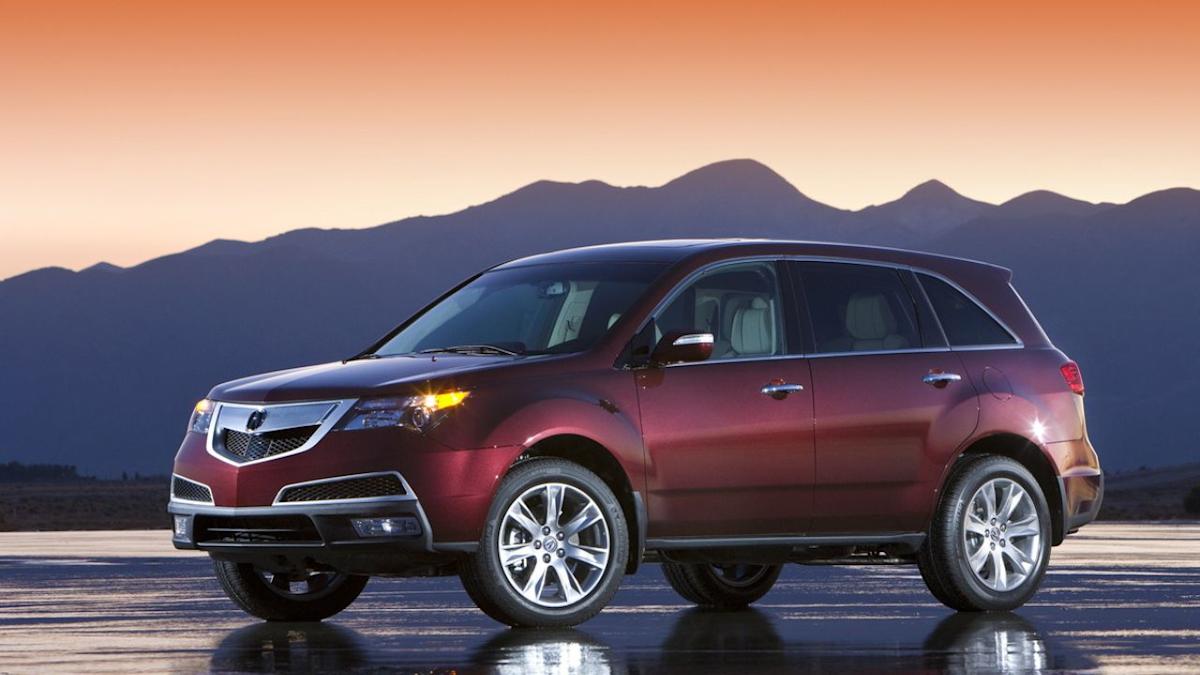
When new, the MDX offered superior performance and an advanced all-wheel-drive system that rivaled its German rivals. It’s powered by Honda’s powerful 3.7L V6 engine, which is highly regarded for its durability after maintenance, but any high-mileage example is likely to develop wear and age-related issues. This generation typically ranges in age from mid-teens to mid-teens, depending on mileage and condition.
Routine maintenance is moderate for a vehicle of this size, but major overhauls are minimal. The simple fact that it shares engineering DNA with the Honda Pilot reduces the cost of replacement parts, avoiding the huge expense associated with custom European engineering.
Infiniti FX35/QX70 (2009–2017)

Image source: Infiniti.
The crossover, later renamed the QX70, stood out for its unique sporty styling and driver engagement. It uses Nissan’s widely used VQ series V6 (VQ35HR in FX35), a well-proven design that has been in Nissan’s lineup for many years and significantly simplifies maintenance. The model has gained a huge following among enthusiasts with its unique design and proven powertrain.
Its mechanical durability means even high-mileage versions can be found for quality crossovers at relatively affordable prices, and VQ engines are generally reliable, but age/maintenance history still matters. This makes maintenance costs higher than on mainstream cars, but nowhere near as high as in the exotic car realm.
Porsche Cayenne (first generation, V8 model)

Image source: Porsche.
The first-generation Porsche Cayenne V8 model offered superior performance and prestige without the high cost of ownership common to high-end German SUVs, provided buyers could have realistic expectations. While maintenance is more complex than on Japanese rivals, most routine servicing focuses on standard wear parts such as ignition coils, spark plugs and suspension components rather than exotic or one-off parts. Early V8 models were known for problems with plastic coolant pipes that could fail over time, but newer metal replacements permanently fixed the issue.
Once these known weaknesses are addressed, the V8 Cayenne engine itself is generally solid and capable of high mileage. For shoppers willing to hire a knowledgeable independent expert rather than rely solely on dealer service, the Cayenne delivers true Porsche performance and around-the-clock availability with maintenance costs that are reasonable for the class rather than prohibitively expensive.
Lexus GX 470/GX 460 (GX 470, 2003–2009)

Image source: Lexus.
The GX 470 is based on the Toyota Land Cruiser Prado (J120) architecture and is closely related to the contemporary 4Runner, which underpins its excellent long-term reliability. Its 4.7-liter V8 engine is known to last hundreds of thousands of miles with only basic maintenance, a major factor in its low running costs. This generation of models has maintained strong market value and is often priced higher than many of its rivals, with clean examples often selling in the high teens.
Owners should budget for regular timing belt repairs, usually at around 90,000 miles, which is significant work but well below the cost of catastrophic engine failure experienced by some sophisticated European rivals.
Lincoln Navigator (third generation, 2007-2014)

Image credit: MercurySable99 – Own work, CC BY-SA 4.0/Wiki Commons.
The Navigator offers great comfort and luxury and is serviced using off-the-shelf, affordable truck parts. It uses Ford’s 5.4-liter three-valve Triton V8 engine, which is widely supported but has known issues such as cam phaser noise and spark plug repair complications.
This generation has steadily rolled out and is now considered a high-quality, value-focused alternative to high-end European full-size SUVs. Prices for used cars are very attractive, with many versions often priced well within the range of a full-size luxury SUV.
Volvo XC90 (first generation, 2003-2014)

Image source: Volvo.
Sales of the first-generation XC90 were initially popular and then declined, but it attracted a cult following for its safety and functional design. Common five- and six-cylinder engines are durable, but ownership costs vary based on year, engine selection and maintenance history. Used examples offer great value and are very affordable depending on condition and vintage.
It’s worth noting that less common V8 models and early six-cylinder engines had internal oil issues that required more scrutiny. Although transmission issues are well documented on first-generation models, sticking with well-maintained examples and avoiding known problem years helps make service costs more predictable.
Cadillac Escalade (third generation, 2007-2014)

Image credit: IFCAR – Own work, Public Domain/Wiki Commons.
The Escalade is a well-known high-end passenger car based on General Motors’ rugged, full-size truck frame. For something this big, it requires ordinary maintenance — thanks to using the same V8 engine and most key components as the Silverado and Tahoe. While the interior feels luxurious, its basic mechanicals are the same as GM’s full-size truck lineup.
Optional Magnetic Ride Control adds expense, as the electronically controlled dampers are expensive to replace, but the engine setup remains basic and solid. Prices on the used market vary widely; cars with higher mileage sell for just over a hundred thousand dollars, while better-maintained cars sell for much more.
Mercedes-Benz ML 350 (second generation, W164)

Image credit: M 93 – Selfie, Attribution/Wikimedia Commons.
While repairing a Mercedes isn’t usually cheap, a 2006 to 2011 W164 ML 350 tends to be cheaper. The M272 V6 can be built to last over time, but buyers should be aware of known problems such as oil leaks on some engines and early wear of the balance shaft or idler gear.
In terms of performance, it’s in line with other European models, and while more sophisticated than most Japanese rivals, it’s not as tech-rich as newer luxury SUVs. Because it avoids some of the new complexities, repairs are more manageable than on later Mercedes models. You’ll typically find used products ranging in price from $8,000 to $16,000.
Still, drivers should be aware of the possibility of a dripping oil cooler gasket—an expected problem that requires careful repair, but not fatal consequences. Addressing minor faults early can prevent your car from experiencing serious, costly breakdowns down the road.
Toyota Land Cruiser (200 Series, 2008-2015)

Image source: Toyota.
The Toyota Land Cruiser occupies a unique position in the world of premium SUVs, offering true luxury and legendary durability. While the car was expensive when new, its reputation for reliability and over-engineering made it surprisingly reasonable to maintain compared with similarly sized European luxury SUVs. Under the hood is Toyota’s 5.7-liter naturally aspirated V8 engine, known for its longevity rather than cutting-edge complexity.
Despite its premium interior and advanced all-wheel-drive system, the Land Cruiser relies on proven mechanical components shared across Toyota’s global truck range. This means parts availability is excellent and long-term ownership costs are more predictable than competing luxury off-roaders. Routine maintenance and suspension wear are the major expenses, not catastrophic driveline failure.
On the used market, early 200 Series examples often represent strong value given their original price and features. For buyers who want true luxury, true off-road capability and a platform capable of driving hundreds of thousands of miles, the Land Cruiser offers a level of reliability unmatched by premium SUVs at any price point.
Smart money in the second-hand market

Image source: Lexus.
These SUVs can provide a premium driving experience without the worst-case ownership costs, especially when they share widely available parts, have predictable service schedules, and have known weaknesses that can be checked in advance. Even the “lower maintenance” options are not budget vehicles, so the smartest purchases are those with a maintenance history and proof that major issues have been fixed.