


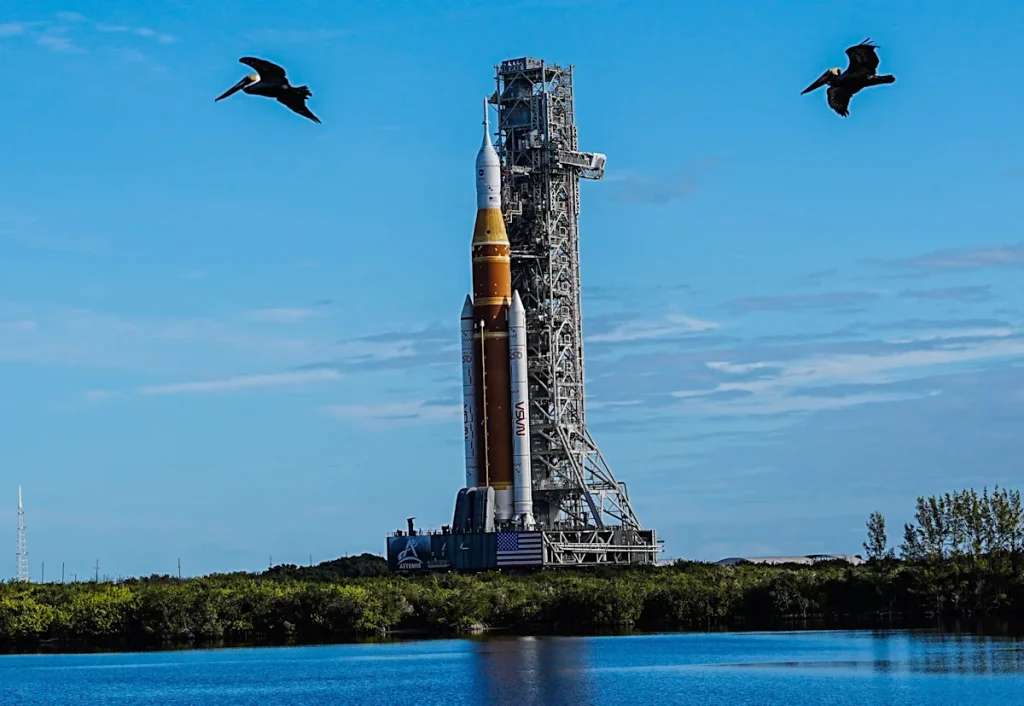
After a two-day delay caused by cold weather in Florida, a key rocket test that will help determine when NASA can launch its first crewed mission to the moon in more than five decades appears to be on track.
NASA has been preparing for a pre-launch demonstration, known as a “wet rehearsal,” of the massive Space Launch System, a rocket the agency is using to help propel three Americans and one Canadian on a 10-day trip around the moon.
The mission, known as Artemis 2, is the second in NASA’s multibillion-dollar lunar program, which aims to return humans to the moon for the first time since the Apollo era. When the rocket leaves the ground, the three men and one woman selected for the mission will become the first astronauts to venture close to the moon since 1972.
Here are the latest updates on the Artemis 2 rocket launch from Florida.
Spaceflight 2026: How Florida’s Space Coast will play a central role in the year ahead
When is NASA’s Artemis 2 rocket launch date?
NASA has yet to announce an official target launch date for Artemis 2, which has been pushed back by at least two days as cold weather in Florida forced the space agency to postpone a key fuel test. The mission could take off from Cape Canaveral, Florida, as early as Sunday, February 8 and as late as April 6.
What is the Space Launch System (SLS) rocket, Orion capsule?
Standing 322 feet tall, the SLS, built by Boeing and Northrop Grumman, is one of the largest active rockets in the world. The rocket was launched to the launch pad at Kennedy Space Center on January 17 with the Orion capsule on top that astronauts will ride in orbit.
NASA to conduct refueling tests and reviews before announcing mission date
No launch date will be promised until NASA conducts preflight testing called a wet rehearsal. Afterwards, mission engineers must also complete an analysis called a flight readiness review, which evaluates various factors, including the status of the spacecraft.
Pre-launch testing, expected to take place on February 2, will include a simulated countdown to launch and supplying the towering Space Launch System rocket with 700,000 gallons of cryogenic propellant that has been depleted.
Ahead of the wet rehearsal, teams on the ground continued to prepare the spacecraft, including powering the rocket’s core stage, which will be loaded with liquid oxygen and liquid hydrogen during the test.
The Orion capsule has been left powered on for several days, and its heaters have been configured for Florida’s cooler temperatures. In its latest blog post, NASA said engineers will begin charging the vehicle’s batteries and core stages.
When and How to Watch Wet Rehearsals at Kennedy Space Center in Florida
Wetsuit rehearsals are scheduled to take place from approximately 9 p.m. Monday, February 2, to 1 a.m. Tuesday, February 3, according to NASA.
The agency is responsible for a 24/7 vertical live broadcast of the SLS rocket from the launch pad and said it would provide a separate feed during the refueling test. During the testing period, the Artemis blog will also be updated in real time.
Who will participate in the Artemis 2 mission? Astronauts enter quarantine


The Artemis 2 crew (from left: mission specialist Jeremy Hansen, mission specialist Christina Koch, pilot Victor Glover and commander Reed Wiseman) answer questions during a press conference as their Space Launch System rocket is transported to launch pad 39B on January 17, 2026. Artemis 2 is tentatively scheduled to launch in early February for a lunar mission. Craig Bailey/Florida Today via USA TODAY Network
Meanwhile, the Artemis 2 crew – NASA astronauts Reed Wiseman, Victor Glover and Christina Koch, and the Canadian Space Agency’s Jeremy Hansen – have entered quarantine at the Johnson Space Center in Houston. They will fly to NASA’s Kennedy Space Center in Florida about six days before launch.
Quarantine is protocol before any manned spaceflight to ensure that astronauts do not contract diseases that could delay the mission.
Artemis 2 won’t land on the moon, but it will orbit it
The astronauts will not land, but will test systems and hardware during the 10-day trip around the moon for future expeditions to the lunar surface. The Orion capsule (manufactured by Lockheed Martin) that the crew will fly will fly some 4,700 miles past the far side of the moon, taking its passengers to the farthest point in space before returning to Earth.
The mission comes more than three years after Artemis 1 launched from the Kennedy Space Center on November 16, 2022, and in its first test, the Orion capsule performed a lunar orbit mission without a crew.
The moon landing will take place during Artemis 3, and President Donald Trump has said he hopes to achieve it before the end of his second term.
Why is NASA interested in the moon? What you need to know about Artemis
NASA’s Artemis program is the agency’s ambitious plan to return Americans to the lunar surface for the first time since the end of the Apollo era in 1972.
Over the next few years, NASA’s Artemis program aims to launch a series of crewed missions to establish human settlements and establish a sustained human presence at the lunar south pole. There the region’s abundant water ice could be extracted and used for drinking, breathing and as a source of hydrogen and oxygen for rocket fuel.
From there, the lunar settlement will serve as a base of operations for the first manned mission to Mars.
Eric Lagatta is Space Connect reporter for the USA TODAY Network. Contact him at elagatta@gannett.com
This article originally appeared on Florida Today: Artemis rocket launch test set after cold weather delays in Florida