


Utah’s settlers made the desert bloom like a rose, and today’s residents are determined to keep the roses hydrated.
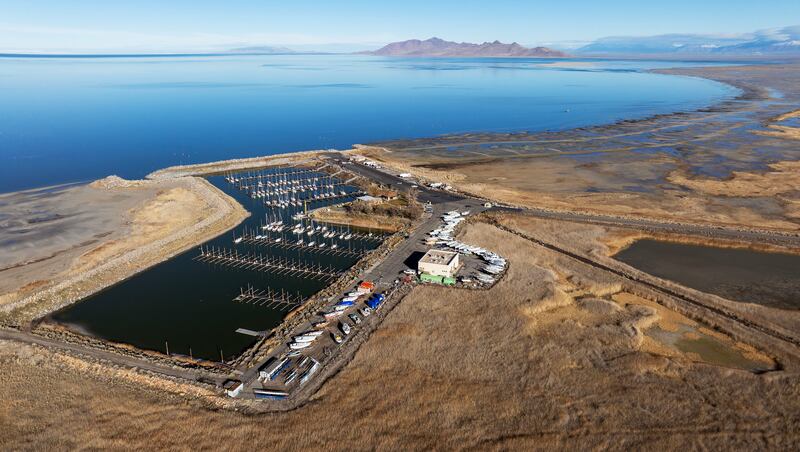
A new Deseret News/Hinckley Institute of Politics poll conducted by Morning Consult finds that Utahns are generally concerned about water use and the retreat of the shores of the Great Salt Lake.
While reservoirs across the state are currently at 68% full (slightly above the median for this time of year), Utah is often mired in drought. The state has experienced some degree of drought in 22 of the past 25 years.
Lawmakers have been grappling with the problem for decades, with various water-focused bills popping up in the 2026 legislative session. Data centers now have to report their usage, farmers can sell water to the Great Salt Lake, and state agencies are now required to turn off sprinklers when it rains.
The poll provides some insight into how state residents want their government to address the issue.
When asked about the best way to get Utahns to use less water, more than half of state voters (58%) prefer state solutions that encourage water-efficient landscaping, while 22% think the state should impose limits and penalties on cosmetic water use, such as watering lawns.


DN-water measurement 1
Government workers are the most likely group to support incentive-based solutions (71%), while the unemployed are the most likely (28%) to support punitive restrictions.
Additionally, 81% of Utahns are somewhat or very worried about the water levels in the Great Salt Lake, 13% are not too worried, and only 2% are not worried at all.


DN-water measurement 2
Great Salt Lake commissioners say 261 billion gallons (800,000 acre-feet) of water would need to be added to bring the lake out of “severe adverse impact” status.
Adults living in suburban areas are more concerned about lake levels than adults in urban or rural communities.
How can Utahns change their behavior to protect water resources?
While about 80% of Utahns said they had changed their behavior to conserve water, the only action most reported taking was to water their lawns less.
Surveys show that as annual income increases, individuals are more likely to water their lawns less. People who make more than $100,000 a year are more likely than those who make less than $50,000 a year to report watering their lawns less.


DN-Water Question 3
Meanwhile, Gen Xers and baby boomers are equally likely (68%) to reduce lawn watering, but this likelihood declines with age. Maybe Gen Z doesn’t have a lawn to water.
Overall, 47% of Utahns say they wash their cars less frequently to conserve water. The share is highest among Democratic men, 70% of whom say they wash their cars less frequently to conserve water.
Other practices investigated include water for sanitation.
Democratic men (62%) are more likely than Democratic women (49%) and all Republicans to say they take shorter showers. But overall, women (46%) are more likely than men (41%) to take shorter showers.
About 1 in 5 Utahns say they flush their toilets less frequently to conserve water.
Democratic women are more likely (33%) to flush less than others. Republican women (23%) and Republican men (20%) are more likely to do so than Democratic men (19%).
Unlike watering their lawns less, those making more than $100,000 a year were least likely to flush their toilets less.
The poll was conducted among 800 registered voters between March 6 and 10. The interviews were conducted online and the results have a margin of error of plus or minus 3 percentage points.