


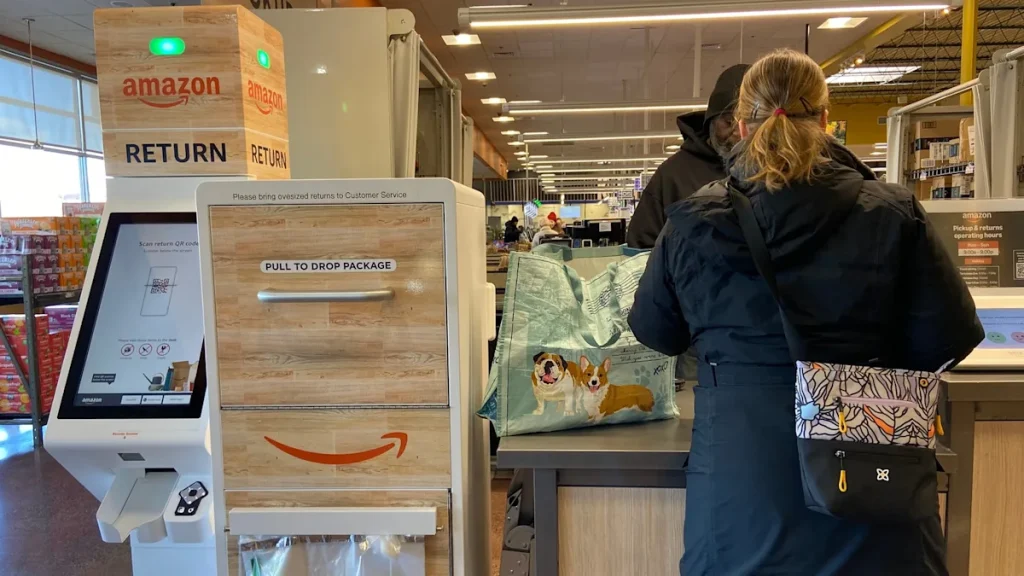
Amazon’s distribution network operates on a scale that is almost incomprehensible. The e-commerce giant ships up to 25 million packages every day, and during the holidays, that number can be even higher. But not all items stay at their destination. Many items were returned thanks to Amazon Prime benefits and the company’s notoriously generous return policy. The company also allows customers to return items at brick-and-mortar retail stores like Whole Foods Market.
BBC Earth reports that US customers return approximately 3.5 billion products every year, only 20% of which are actually defective. And, according to a New Yorker survey, the total value of returns in the United States alone is roughly estimated at around a trillion dollars. This is more than the gross domestic product of most countries.
So what happens to that shirt that doesn’t fit, or that expensive gadget that’s returned after a case of buyer’s remorse? Ideally, they should be inspected for damage or defects and then returned to stock with an open box discount or disposed of responsibly. But what actually happened was both strange and, perhaps, predictably, even more wasteful.
Investigating Amazon’s returns pipeline will lead you into an infinite black hole filled with endless amounts of unwanted merchandise and giant warehouses filled with wholesale mystery boxes, along with billions of pounds of landfill waste. While products do get reused in some cases, such as Amazon resale warehouses, they are the exception to the rule. Here’s what you should know before returning an Amazon purchase.
Read more: How to make your phone last longer than you think
Unfortunately, a large number of returns end up in landfills


Heavy equipment moves waste at a landfill – Mayy Contributor/Shutterstock
According to data from returns management company Optoro, the value of returns across all retailers will reach £8.4 billion in 2023. And not just damaged or defective items. In 2021, an ITV report revealed that Amazon had marked a weekly destruction quota of up to 200,000 items in just one warehouse. From some of the best headphones to books and even the occasional MacBook or iPad, these items are put into boxes labeled “destroy.” In comparison, fewer than 30,000 items were donated. Amazon said in a statement that the company destroyed a “very small amount” of the merchandise. To be fair, programs like Amazon Renewed refurbish and resell discounted products in some cases.
However, sending so much of Amazon’s stuff to landfills is sure to draw negative attention. Additionally, the waste caused by returns extends far beyond the product itself. Shipping them back through Amazon’s reverse logistics chain requires fuel and labor. It’s also very expensive at the scale Amazon handles returns. Amazon is increasingly resorting to a different solution: It simply tells unhappy shoppers to keep the products and refund them anyway. This means the task of throwing away items is shifted to the consumer. It’s a win-win for Amazon, as it avoids wasteful practices and saves money on landfill costs. With 14% of returns last year being fraudulent, Amazon prefers not to catalog the rocks people put in their iPhone boxes. As of 2025, it’s unclear what percentage of returns are destroyed, donated, or never requested for return.
Many Amazon returns are sold in bulk to liquidation warehouses

Container filled with loosely stacked cardboard boxes – LukeandKarla.Travel/Shutterstock
One of the strangest fates of Amazon returns is liquidation. Because many items cannot be repackaged by Amazon or the seller, they are sold to liquidation companies at a reduced price. These entities buy our e-commerce scraps and resell them in bulk, with the liquidation industry ballooning to $644 billion as of early 2022, according to CNBC. Simply search the web for “clearance centers near me” and several such locations may appear, depending on where you live. Visit one of them and you’ll find a giant warehouse filled with giant, unlabeled boxes, each filled with… stuff. They’re essentially mystery boxes, which means you could spend hundreds of dollars on one and find items worth thousands of dollars, or you might find a bunch of random junk that you don’t need and have no chance of reselling.
It’s impossible to say how much of what ended up in the clearinghouse was relocated. Pallets are often picked by dealers, flipping what they can and throwing away the rest. While cleanup is certainly better than heading straight to a mountain of trash, in many cases the cleanup will not necessarily save items from the landfill but will instead add an extra step to the process.
But believe it or not, Amazon is actually better Thanks to its vast data, logistics operations and business partnerships, the company provides access to restocking or relocating returned items. The economy was built to benefit consumers, who continued to demand a steady supply of cheap goods and easy returns, but it was not built to allocate surplus efficiently.
Want to stay up to date on the latest tech and automotive trends? Sign up for our free newsletter to get the latest headlines, expert guidance and how-to tips, one email at a time. You can also add us as your preferred search source on Google.
Read the original article on SlashGear.