


It’s normal for parents or anyone to have questions about vaccinations — but what happens if your pediatrician urges you to get a vaccine that’s under attack from the Trump administration?
That scenario is increasingly likely: America’s leading doctors’ group is locked in an unprecedented standoff with federal health officials, who are attacking a long-used, life-saving vaccine.
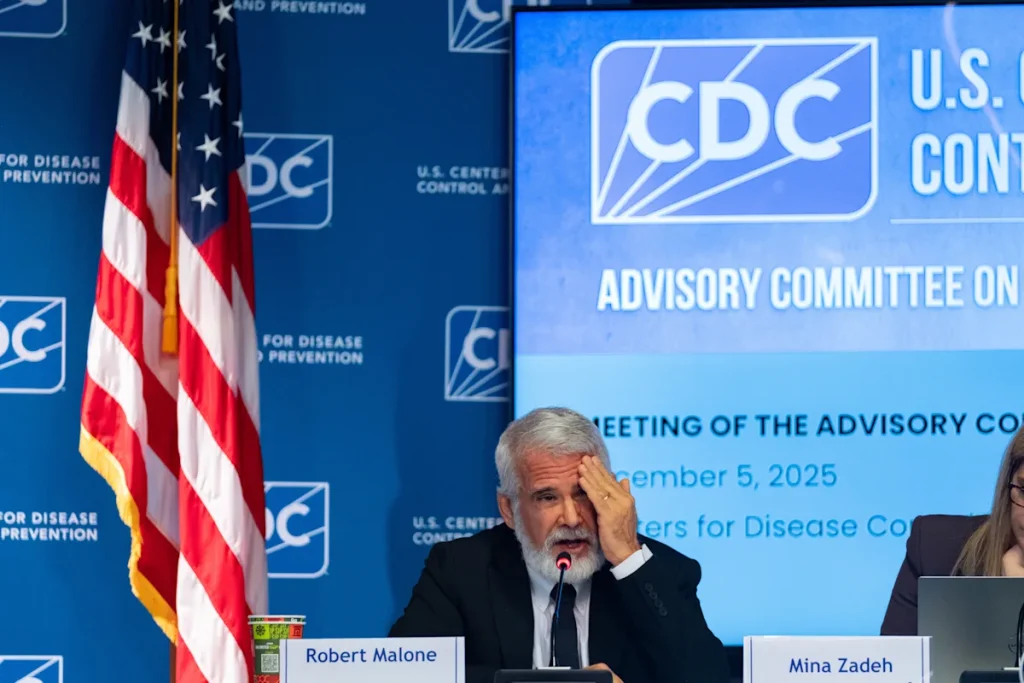
The rebellion among pediatricians, obstetricians, family physicians, infectious disease specialists and internists reached its peak when an advisory panel hand-picked by Health Secretary Robert F. Kennedy Jr. urged an end to routine hepatitis B vaccination of newborns. Hepatitis B is a virus that can cause liver failure or liver cancer.
The American Academy of Pediatrics and other doctor groups vowed Tuesday to continue recommending the vaccine, which they say saves lives, has helped drop infection rates among children dramatically and has been safely administered to tens of millions of children in the United States alone.
But that’s not the only difference. The Advisory Committee on Immunization Practices is now looking at possible changes to the entire childhood vaccination schedule, raising questions about some ingredients and the doses given to teenagers.
The American Academy of Pediatrics has pushed back, issuing its own recommendations for teens. Other medical groups — plus some coalitions of city and state public health departments — are also issuing their own recommendations for certain vaccines, which largely mirror federal guidance through 2025.
“We owe our patients a consistent message based on evidence and lived experience, not a biased message based on political necessity,” Dr. Ronald Nahas, president of the Infectious Diseases Society of America, told reporters on Tuesday.
But Nahas acknowledged that confusion among consumers is inevitable, recalling a relative who called her last weekend seeking advice about vaccinating her new grandson against hepatitis B.
“Most Americans don’t have a Cousin Ronnie to call. They’re alone, full of fear and mistrust,” he said, urging parents to talk to their doctors about the vaccine.
New guidelines without new data worry doctors
Hepatitis B is not the only vaccine challenge. Kennedy’s health department recently changed the Centers for Disease Control and Prevention’s webpage to refute long-standing scientific conclusions that vaccines do not cause autism. Federal agencies are also taking action to limit COVID-19 vaccinations this fall and are planning policy changes to limit future flu and coronavirus vaccinations.
But when it comes to vaccine recommendations, “ACIP has been the gold standard for decades,” said Dr. Jack Scott, an infectious disease physician and researcher at Stanford University.
He said the panel used to regularly invite experts in specific disease areas to conduct long-term reviews of the latest scientific and safety data, and the resulting recommendations were often adopted not just by the CDC but by the entire medical field.
Last week’s meeting of the Kennedy panel, which included vaccine skeptics, marked a radical departure. CDC experts are prohibited from providing data about hepatitis B, childhood vaccination schedules, or questions about vaccine ingredients. Few committee members have public health experience, and some expressed confusion about the panel’s proposals.
At one point, a doctor called to say the group had misrepresented her findings. The panel’s chairman wanted to know why an American child received three doses of hepatitis B vaccine when a single dose of yellow fever vaccine would have protected him during the trip to Africa. The hepatitis B vaccine is designed to protect children for life against the virus wherever they may encounter it, not just when traveling abroad. Other scientists point to years of careful research showing that a three-dose course can provide immunity for decades — evidence that a single dose simply cannot provide.
“If they get new data, I’m all for it — let’s take a look and have a conversation,” said Dr. Kelly Gerber, an infectious disease expert and dean of public health at George Washington University who is following the situation closely. “I haven’t seen any new data” so she won’t change her vaccine recommendations.
Committee members concluded that the risk of hepatitis B infection in most infants is very low and that early research on the safety of the injection in infants was insufficient.
Particularly unusual were statements from a lawyer who cast doubt on research demonstrating the benefits of multiple childhood vaccines and promoted discredited studies pointing to harm.
“I don’t think at any time in the committee’s history there has been a 90-minute uninterrupted presentation on this topic by anyone who wasn’t a doctor or a scientist or a public health expert, let alone someone who litigates vaccines for a living,” said Jason Schwartz, a vaccine policy expert at Yale University.
By abandoning the data and consensus among frontline doctors, ACIP is “actively destroying the credibility” that makes its recommendations so strong, Stanford’s Scott added. “Most parents will still defer to their pediatricians, and the American Academy of Pediatrics (AAP) is holding its own. But over time, these mixed messages are exactly what undermine confidence.”
Parents have choices – they need solid guidance
Trump administration health officials say it’s important to restore parental choice and avoid mandates. That’s the framework for the group’s hepatitis B recommendations – parents who really want it can have their children vaccinated later.
Dr. Aaron Millstone of the American Academy of Pediatrics said parents already have a choice. The government makes recommendations for the entire population, while families and their doctors develop options based on each person’s health needs.
But Yale’s Schwartz noted that many doctors haven’t — or can’t — conduct lengthy scientific reviews of vaccines and therefore rely on information from ACIP and the CDC.
He said they “rely on trusted expert voices to help navigate the complex landscape of vaccine evidence and how to best use it, even in the best of circumstances.”
Pediatricians and other physician groups and these multistate collaboratives aim to fill that role with their own guidelines, while acknowledging that it will be a difficult task.
For now, “ask your questions, raise your concerns and let’s talk about them,” said Dr. Sarah Nosal of the American Academy of Family Physicians, who urged anyone with questions about the vaccine to have an open dialogue with their doctor.
___
The Associated Press Health & Science Department receives support from the Howard Hughes Medical Institute’s Science & Education Media Group. The Associated Press is solely responsible for all content.