


President Donald Trump says U.S. companies will now have access to Venezuela’s vast oil reserves. But the country’s other goods have also caught his government’s attention.
Experts say Venezuela has unproven quantities of minerals, metals and potentially rare earth elements. These raw materials are essential to industries ranging from defense to technology, and the government has repeatedly stressed their importance to U.S. national security.
But experts say that while Washington may be eager to acquire key elements of Venezuela, it is a difficult task and will do little to strengthen U.S. supply chains.
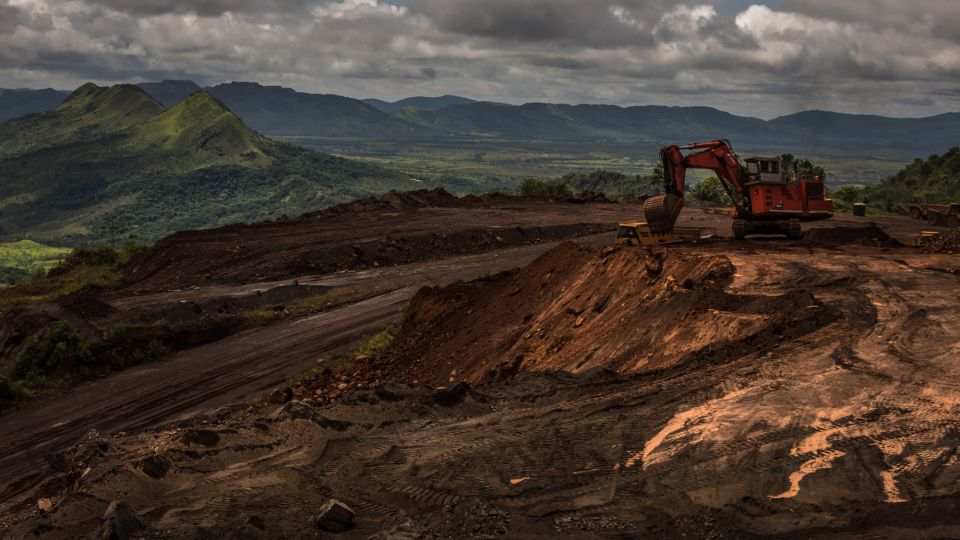
The magnitude and economic viability of Venezuela’s mineral resources are uncertain. Without continued security, companies also face significant risks mining in Venezuela.


Experts say many of these areas have guerrilla soldiers and armed groups engaged in illegal gold mining. Energy-intensive rare earth mining also harms the environment.
“There is a recognition within the administration that the country has broader natural resource value beyond oil,” said Reed Blackmore, research director at the Atlantic Council’s Global Energy Center.
“However, if we’re talking about the conditions under which we can mine these mineral resources and bring them to market, that’s a much more challenging story,” Blackmore said. “Frankly, even more challenging than the oil story.”
Even if U.S. companies try to mine Venezuela’s rare earths, getting them out of the ground is only part of the process. These materials are typically sent to China for refining.
According to the International Energy Agency, China will account for more than 90% of global rare earth refining by 2024. The country maintains a de facto monopoly in processing and refining materials due to decades of government subsidies, industry expansion and lax environmental regulations.
Rare earths have become a major sticking point in trade tensions between China and the United States. Last year, Beijing imposed some export controls on rare earths during the trade dispute, raising concerns about a lack of secure U.S. supply chains for these critical materials.
“China’s rare earth metal processing capabilities remain close to monolithic, and its industrial and geopolitical advantages cannot be achieved overnight,” said Joel Dodge, director of industrial policy and economic security at the Vanderbilt Policy Accelerator.
Critical Minerals and Rare Earth Elements
The U.S. Geological Survey has designated 60 “critical minerals” that are critical to the economy and national security.
These critical minerals include a variety of commodities, including aluminum, cobalt, copper, lead and nickel. The list also includes 15 rare earth elements such as cerium, dysprosium, neodymium and samarium. Rare earths refer to a group of 17 specific metallic elements.
These goods are important inputs into everyday technology such as phones, batteries and television screens, as well as military and defense equipment such as lasers, fighter jets and missiles.
“Rare earths” is a misnomer because these elements are relatively ubiquitous in the Earth’s crust, said Julie Klinger, a geographer and associate professor at the University of Wisconsin-Madison. But extracting and refining them is the hard part.
In recent years, U.S. lawmakers have been concerned about the country’s reliance on imports for these key elements. The United States has been working to develop domestic rare earth mining and refining, but project timelines could take years or even decades.
The U.S. Geological Survey does not include Venezuela on its list of rare earth element countries (which includes China, the United States, Brazil and Greenland, among others).
Experts say the twenty-five-year rule of Venezuelan Presidents Chavez and Nicolas Maduro has created an information gap about the scale of the country’s resources.
Still, experts believe Venezuela has some reserves of minerals such as coltan, from which the metals tantalum and niobium are derived, and bauxite, which may contain aluminum and gallium. Tantalum, niobium, aluminum and gallium are all considered critical minerals by the U.S. Geological Survey.
In 2009, Chavez touted the country’s natural resources, including “blue gold” (coltan’s nickname). According to Reuters, Chavez said that year that the country had discovered large reserves of coltan.
In 2016, Maduro established the Orinoco Mining District, a large area of Venezuela designated for mineral exploration and production. But the area has been plagued by illegal mining.
“While the country has vast mineral resources, it is crippled by factors such as poor geological data, a low-skilled workforce, organized crime, lack of investment and an unstable policy environment,” Bloomberg New Energy Finance metals and mining analyst Sung Choi said in a report.
“Despite its current geological potential, Venezuela is unlikely to play any meaningful role in critical minerals for at least the next decade,” Cui said.
For more CNN news and newsletters, create an account at CNN.com