


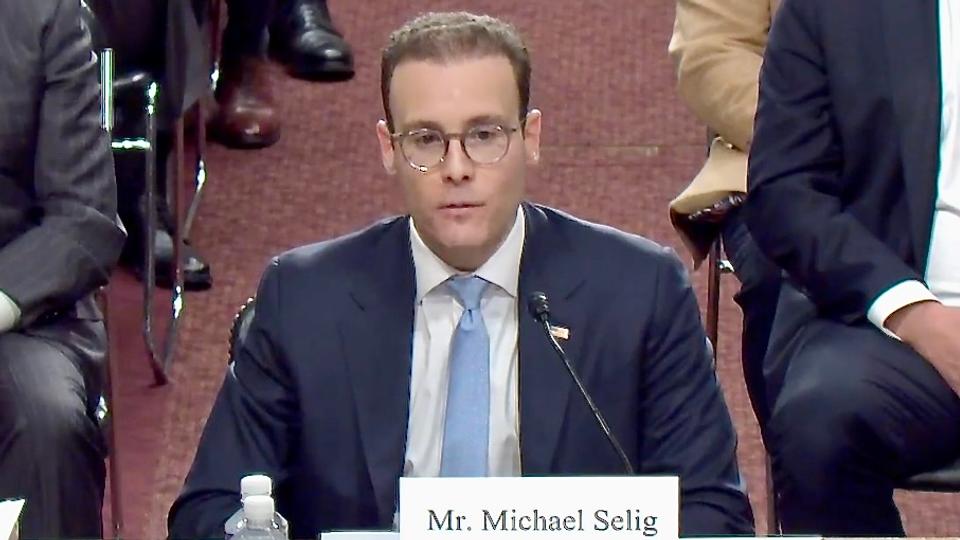
As President Donald Trump winds down the opening year of his second administration, he has finally secured a permanent appointment to run two of the nation’s most important cryptocurrency regulators — Mike Selig as chairman of the Commodity Futures Trading Commission and Travis Hill as chairman of the Federal Deposit Insurance Corporation.
The CFTC is expected to become the primary regulator of cryptocurrency activity in the United States, especially if Congress completes its legislative work to grant more specific cryptocurrency powers to the derivatives regulator. On Thursday, the Senate voted 53 to 43 to approve dozens of nominees including Selig and Hill. Once sworn in, Selig will succeed acting chairwoman Caroline Pham, who has led a series of pro-cryptocurrency policy initiatives while she awaits a permanent replacement at the agency.
Pham has long planned to join U.S. crypto infrastructure services provider MoonPay as chief legal officer and chief administrative officer after leaving the agency, as CoinDesk reported last month.
When Selig — who had been an official at the SEC setting cryptocurrency policy — took over, some of the digital asset tasks already underway in the CFTC’s so-called “crypto sprint” included a push to include stablecoins in tokenized collateral and rulemaking to incorporate blockchain technology into regulatory language across the agency. The agency also encouraged regulated platforms to start issuing spot leveraged crypto products, and Bitnomial was the first to take action and pursue such products.
One of the complicating factors for Selig as he dives into cryptocurrency work is that the CFTC’s five-member commission has been allowed to shrink to one member. Pham said she plans to leave Selig as soon as he arrives, which would make him the sole member of the committee. While this makes it less difficult for him to formulate policy, it may leave some uncertainty in terms of legal vulnerability to the challenge of whether the policy is the right one to make.
He also comes as Congress continues work on a major bill that seeks to overhaul the agency’s powers, giving it clear authority over spot trading in a wider range of cryptocurrencies. Such legislation passed the House this year but is now pending in the Senate, where the Senate Banking Committee may still hold a markup hearing on the effort before the end of the month, according to close observers of the negotiations.
The FDIC will regulate stablecoin issuers and have a significant impact on banking in the cryptocurrency industry, and Hill is already running the agency as acting chairman. In this role, he adopted a crypto-friendly stance.
“We are undoing the policies of the last several years,” he told lawmakers at a House Financial Services Committee hearing on Dec. 2, referring to the Biden administration-era position that saw bank regulators tell bankers they needed approval from government regulators before engaging in new cryptocurrency activity. “Banks should manage safety and soundness risks, but there is no prohibition on servicing these industries.”
Hill has also taken a leading role in addressing the crypto industry’s complaints about so-called “de-banking,” in which banks cut ties with crypto businesses and their executives, which industry insiders and many of their Republican congressional allies say are encouraged by regulatory policies.
The lack of permanent leadership at the CFTC and FDIC remains two of the most glaring gaps in the Trump administration’s cryptocurrency regulation. In addition to leadership at the Treasury Department, he has placed staff at the Securities and Exchange Commission and the Office of the Comptroller of the Currency. Trump has been reducing the power of the Federal Reserve Board, which he nominated as vice chair of supervision, Michelle Bowman, to take over in June. However, he is still waiting to succeed Chairman Jerome Powell when his term expires next year.
Senate Republicans have taken an unusual, mass confirmation approach to Trump’s federal nominees. In the resolution approving both officials, 97 confirmation questions were attached to the same document, sidestepping the traditional confirmation process in which the Senate evaluates each nominee individually.
READ MORE: Trump’s CFTC pick Mike Selig clears road to confirmation vote