


Better to stay warm and off the road than Ezra
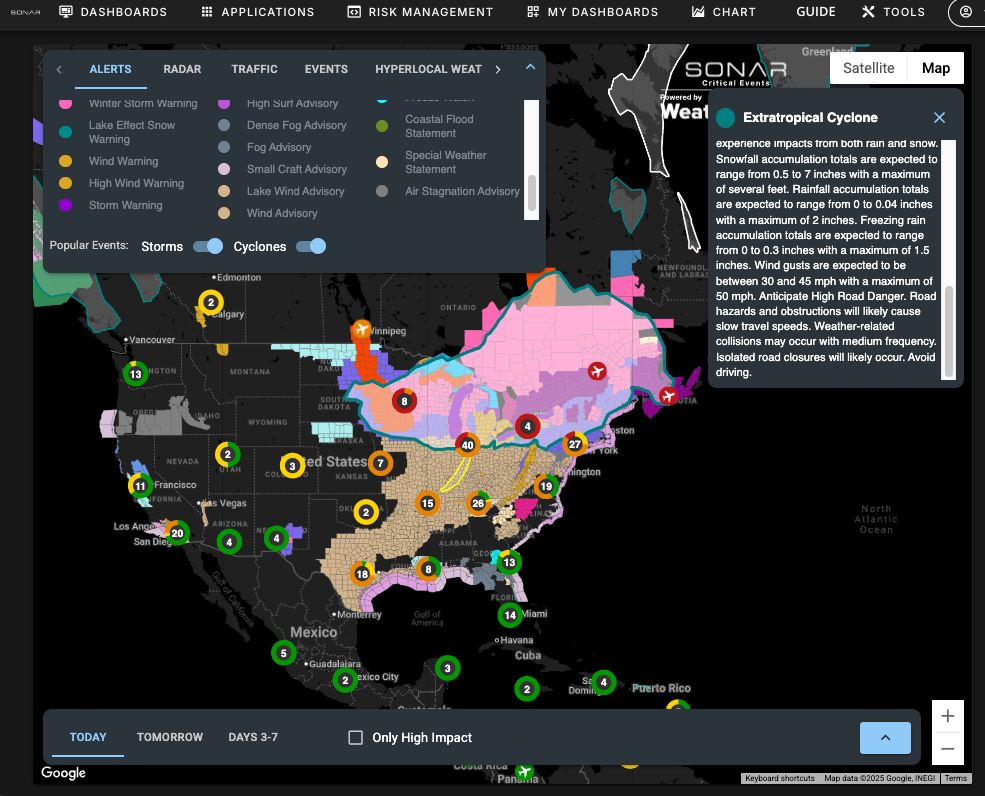
As Winter Storm Ezra intensifies across the central and eastern United States, the trucking industry faces a serious threat from high winds that could blow over trailers, disrupt operations and endanger drivers. The storm began to escalate on Sunday, unleashing wind gusts in excess of 50 mph in parts of the upper Midwest and extending east of Interstate 35, according to real-time data from SONAR Critical Events. SONAR is actively monitoring the situation, providing critical insights to assess and mitigate the storm’s impact on freight markets as conditions worsen.
High winds turn tow trucks into hazard, drivers urged to stay home
SONAR Critical Events has issued a wind warning for areas east of I-35, with gusts in excess of 50 mph reported in the upper Midwest. The platform is tracking extratropical cyclones that will affect the United States and Canada from 2:00 a.m. ET on December 29 to 3:00 a.m. ET on December 30, providing data for freight operators to prepare for potential market disruptions. Winds exceeding 40 mph pose a serious risk of turning truck trailers into kite-like structures that can easily roll over, especially on the traffic-heavy highways of the Midwest.
This hazard not only threatens freight, but also threatens the safety of drivers and other road users. SONAR’s data highlights “hazardous highway” conditions in states such as Pennsylvania, Illinois, Ohio, Michigan, Minnesota and the Northeast, as well as Canadian provinces such as Ontario and Quebec, which have seen road blockages, crashes and closures. Truckers are strongly urged to stay home if possible to avoid these life-threatening risks when the storm peaks on Monday.
SONAR Critical Incident: Monitoring the Impact of Wind on Freight Stability
SONAR’s real-time monitoring provides detailed wind forecasts to help the trucking industry prepare. The latest updates include:
-
gust: Wind speeds ranged from 30 mph to 45 mph, with peaks reaching 50 mph, particularly in the upper Midwest, where gusts in Michigan’s Upper Peninsula have exceeded 65 km/h (40 mph).
-
Areas of influence: SONAR is evaluating potential delays and cost increases, and states east of I-35, including the Great Lakes region and the Northeast, are being closely watched.
-
Market impact: The combination of strong winds and blowing snow reduces visibility and increases the likelihood of trailer rollovers, potentially increasing insurance costs and shipping delays.
SONAR’s advanced mapping tools enable logistics managers to identify high-risk lanes where staying off the road is the safest option. The platform recommends avoiding driving, which is consistent with efforts to protect drivers and stabilize freight operations during the worst of the storm.
Industry response and preparedness
The rapid intensification of Winter Storm Ezra has put SONAR on high alert and stepped up its partnership with WeatherOptics to provide hyperlocal wind insights to help operators adjust schedules and mitigate market instability. SONAR is also tracking lake-effect snow from these winds, which could reach 60 centimeters (24 inches) on the south shore of Lake Superior, which could further disrupt cross-border freight from Canada. The emphasis remains on keeping trailers upright and drivers are encouraged to stay home if their route falls within these danger zones.
Looking Ahead: SONAR’s ongoing analysis through Tuesday
SONAR predicts the storm’s wind-driven effects, including trailer rollover risk, will continue into Tuesday as the arctic air mass that fuels Ezra interacts with warmer southern air. The platform is continuously analyzing high road hazard conditions and potential freight delays affecting tens of millions of people from the Plains to the Northeast.
Logistics managers should use SONAR critical events to update and prepare for extended transit times on east-west routes where crosswinds are most severe. The clear message to truck drivers: stay home if possible to avoid the devastating impact of trailers being blown over by gusty winds. This real-time intelligence is critical to optimizing the resiliency of freight markets.
FreightWaves will continue to track the progress of Winter Storm Ezra, relying on SONAR monitoring to inform the industry. With high winds having the potential to overturn trailers in the eastern United States, safety and strategic planning are crucial. Stay tuned for further developments as the storm unfolds.
The post Truckers east of Interstate 35 advised to stay home appeared first on FreightWaves.