


Future and its affiliate partners may earn a commission when you purchase through links on our articles.


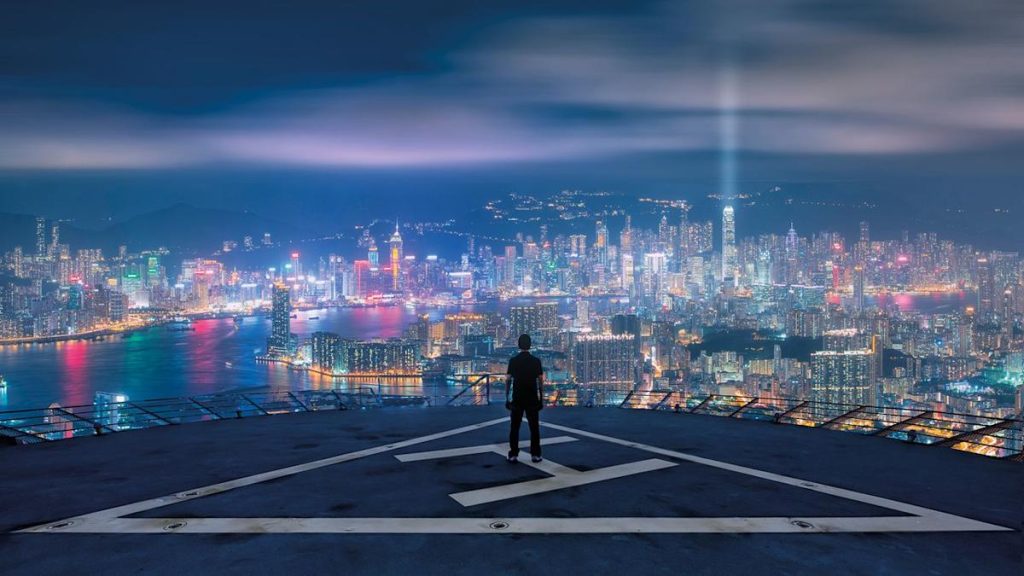
As a big fan of the cyberpunk movie genre, especially the Blade Runner movie (1984), I wanted to create a tribute image. ” said photographer Daniel Cheong. | Image source: Daniel Cheong
“In my opinion, Hong Kong’s scenery is the closest to the Los Angeles depicted in Blade Runner,” says award-winning photographer Daniel Cheong.
To capture this cinematic, futuristic aesthetic, he took his professional full-frame DSLR camera and tripod to a helipad to capture Hong Kong’s nightscape, paying homage to the film’s iconic style.
Photographing cityscapes at night is a significant technical challenge—even professional cameras can struggle with automatic exposure. Extreme contrasts between light, shadow, and dark skies often confuse metering systems.
That’s where Cheong’s expertise in exposure mixing comes in. This advanced technique preserves highlight and shadow detail, maximizing the impact of the entire frame – Cheong explains how he shot two images using two different lenses and exposures, and how he blended them all seamlessly.
Blade Runner Hong Kong – technical details

The Nikon D800 was released in 2012 and retailed for just under $3,000 | Credit: Future
Equipment information
Camera: Nikon D800
Lens: Nikon 14-24mm f/2.8 + 70-200mm f/2.8 VR II
Accessories: tripod
Exposure details
Helipad: 1/10 sec, f/8, ISO 1250
City: 1/20 sec, f/8, ISO 100
Pro Analysis – Why This Lens Works
Match perspective
As with any composite image, it is crucial to ensure that all component features share the same perspective. While it’s easier to shoot all images at the same focal length, this may not always be possible if gathering assets shot individually, so use zoom to resize each object accordingly.
“The most tedious task was cutting out the helipad in the original footage, especially at the edge of the helipad where there are all the openings,” says Cheong.
color grading
“I liked the sci-fi vibe of this image, but I needed to give it a cyberpunk color grade.” For many nighttime cityscapes, especially cinematic images for movie posters and ads, warm tones in the highlights and cool blues in the shadows are a common choice. First, style the base image, then adapt all elements to this style to maintain continuity.
wide dynamic range
“Generally, for my cityscapes, I always shoot multiple exposures at different shutter speeds and then combine them in Photoshop using digital blending. This allows me to create images with high dynamic range,” says Cheong. Treat each element individually and then apply a global process to the final composite.
Contrasting texture (motion)
As with any static subject, cities are the embodiment of timelessness, and adding a sense of movement creates a pleasing contrast. Here, moving clouds add to the cinematic narrative created by Zhang.
He added a blur effect to the sky to simulate a long exposure, and introduced a fog effect to add a dramatic sci-fi effect, as well as a contrast between hard and soft textures.
You might like…
Browse the best DSLR cameras, the best mirrorless cameras, and the best low-light cameras for low-light photography.