


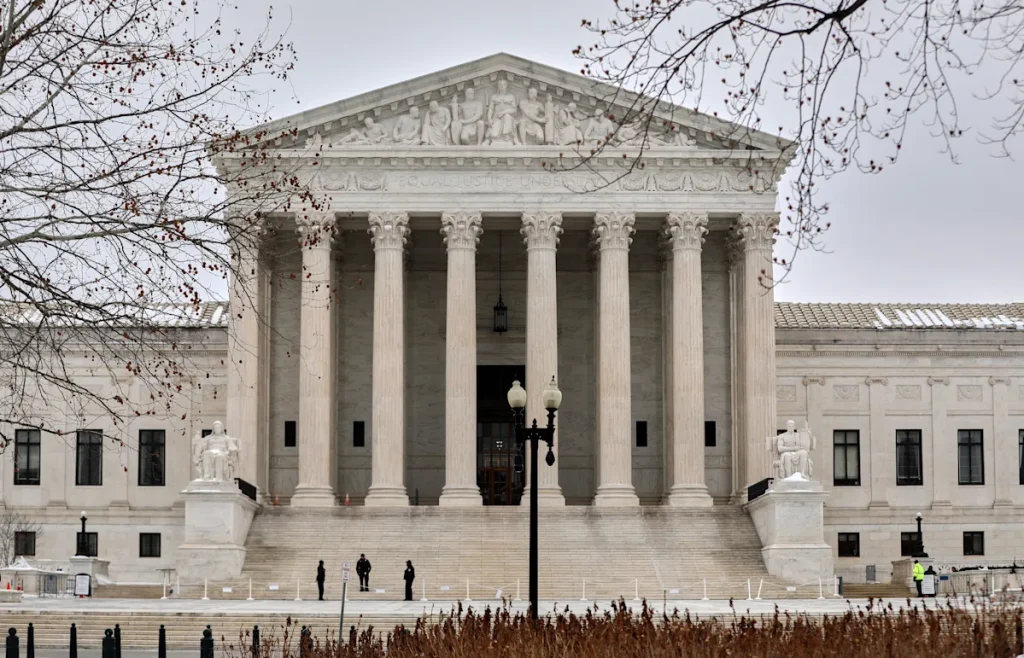
WASHINGTON (AP) — Supreme Court Justices Ketanji Brown Jackson and Brett Kavanaugh shared the stage Monday to argue over multiple emergency orders issued by the court to allow President Donald Trump to advance key parts of his agenda.
The backdrop is an extraordinary one, with a federal courtroom packed with luminaries from the legal profession, including federal judges named by Trump after he blocked some of the president’s immigration crackdown.
Kavanaugh, 61, and Jackson, 55, sat several feet apart in the courtroom where both were hearing cases on the federal appeals court in Washington. They were separated only by a federal judge, who asked both of them questions. This is the annual lecture honoring former federal judge and prosecutor Thomas A. Flannery.
Trump appointed Kavanaugh to the high court in 2018. Jackson was promoted from the appeals court in 2022 and was appointed by President Joe Biden.
The issue on the urgent appeal is whether the policy being challenged in court should be allowed to take effect while a legal case that could last years continues.
Jackson, who has often opposed emergency orders, said Kavanaugh and other conservatives who repeatedly sided with Trump last year have not served the court or the country well.
“The administration is enacting new policy … and then insisting that the new policy take effect immediately before a challenge is decided. There’s a real unfortunate problem with the increased willingness of the courts to get involved in emergency cases,” Jackson said to loud applause.
She said courts “created a distortion” of the legal process by intervening at an early stage in cases and predicting outcomes before arguments were fully developed.
Kavanaugh said the Justice Department’s rush to bring cases to the Supreme Court was not unique to the Trump administration, explaining that as it became increasingly difficult for Congress to enact legislation, the administration “pushed the envelope of regulations. Some were legal, some were not.”
He said some critics of recent orders did not object when judges allowed challenged Biden administration policies to take effect even as court cases were pending.
Many of the judges in attendance have been involved in high-profile challenges to government policies, including U.S. District Judge James Boasberg. He clashed with the administration over the deportation flight to El Salvador’s notorious prison, prompting Trump to call for Boasberg’s impeachment.
Also present was U.S. District Judge Royce Lamberth, who ruled two days earlier that Kari Lake, Trump’s pick to lead the U.S. global media organization, did not have the legal authority to take the actions she took to largely dismantle Voice of America.
Neither Jackson nor Kavanaugh mentioned the judge by name. But Jackson reiterated the complaints she and other liberal justices made in their dissents.
“Should the Supreme Court oversee lower courts when they hear and decide issues?” she asked.
Kavanaugh joined an opinion criticizing lower court judges for ignoring the Supreme Court’s ruling, saying the issues faced by judges are often complex and the cases are nearing their conclusion.
“None of us like this,” he said.