


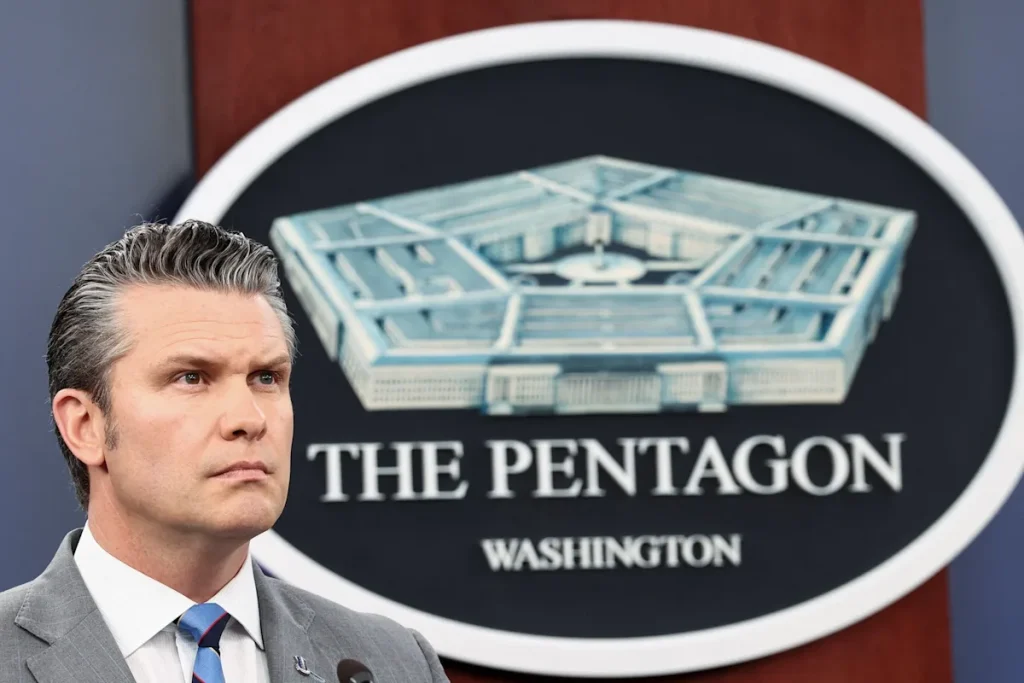
A group of Senate Democrats are pressuring the Pentagon over its failure to protect U.S. troops from retaliatory attacks by Iran. Sens. Elizabeth Warren of Massachusetts, Mark Kelly of Arizona and Kirsten Gillibrand of New York, members of the Senate Armed Services Committee, said in a letter to Defense Secretary Pete Hegers that the Pentagon failed to take “basic precautions” ahead of expected Iranian retaliation after the United States and Israel launched war against the Iranian regime in late February.
The three named the first American casualties in the conflict, six soldiers in Kuwait, which exposed Iran’s ability to use attack drones to target and strike American service members. The senators argued that the U.S. approach was marred by a lack of “plans to prevent harm that could be caused by foreseeable attacks, such as retaliation with drone strikes.” ABC News reported that the Kuwaiti facility targeted by an Iranian drone was largely undefended and surrounded by a six-foot-tall concrete wall, details that lawmakers used to highlight what they see as widespread failings in defending against attacks.


Kevin Lamarck/Reuters – Photo: Defense Secretary Pete Hegseth speaks during a briefing on the war with Iran at the Pentagon in Washington, April 24, 2026, during the ceasefire between the United States and Iran.
“We are concerned that this is part of a larger pattern of this administration’s failure to protect Americans in the region from Iranian retaliation,” they wrote.
Warren said in a statement to ABC News that Hegseth “must be held accountable.”
“Hegers’ leadership has been betrayal after betrayal,” she said.
ABC News has reached out to the Department of Defense for comment.
For decades, U.S. military operations in the Middle East have been conducted in buildings converted from shipping containers or structures similar to mobile trailers on the ground.
The building where six soldiers were killed was actually a large trailer. The concrete walls surrounding Kuwaiti Army installations are typical of construction during the Global War on Terror and were designed to stop bullets, rockets, mortars and ground explosions, but cannot protect against direct aerial strikes from drones.


Planet Labs PBC – Photo: Damage to buildings at Kuwait military base housing U.S. troops.
Hegseth said that after the drone attack on March 1, the United States was ready for counter-drone operations to deal with this threat.
“We’ve pushed every counter [drone] “That doesn’t mean we can stop everything, but we ensure… the best possible defense,” Hegseth told reporters at the time.
Senators asked Hegseth to answer whether a six-foot-tall wall would be enough to protect troops or whether officials at the facility requested additional capacity before war broke out.
In recent years, Pentagon planners have sought to defend bases against drone attacks as they have become a decisive weapon in the war in Ukraine.
An internal Pentagon investigation in January found that a “significant portion of facilities” were not equipped to conduct counter-drone operations and that there were serious training gaps across the military.
After the Iran-backed Tower 22 attack in Jordan in January 2024, another internal investigation pointed to insufficient infrastructure to withstand air strikes, according to records reviewed by ABC News. Three U.S. troops were killed in that attack.


Department of Defense – Photo: Sgt. Declan Cody, Sgt. 1st Class Noah Titkins, Sgt. 1st Class Nicole Armor and Capt. Cody Hawk.
Senators are asking the Defense Secretary whether there are known issues with the installation’s early warning system that could have allowed troops to avoid impending danger. “Accounts from survivors and other officials briefed on the situation make it clear that the risks to service members in the area were known,” the senators wrote, citing news reports. “[B]But Defense Department leadership failed to take steps to prevent possible harm from Iranian retaliation,” they said.
Since the war began, the Pentagon has invested more than $300 billion in one-way attack drones and tools to defend Iran.
Thirteen U.S. service members were killed and about 400 injured in the conflict with Iran.