


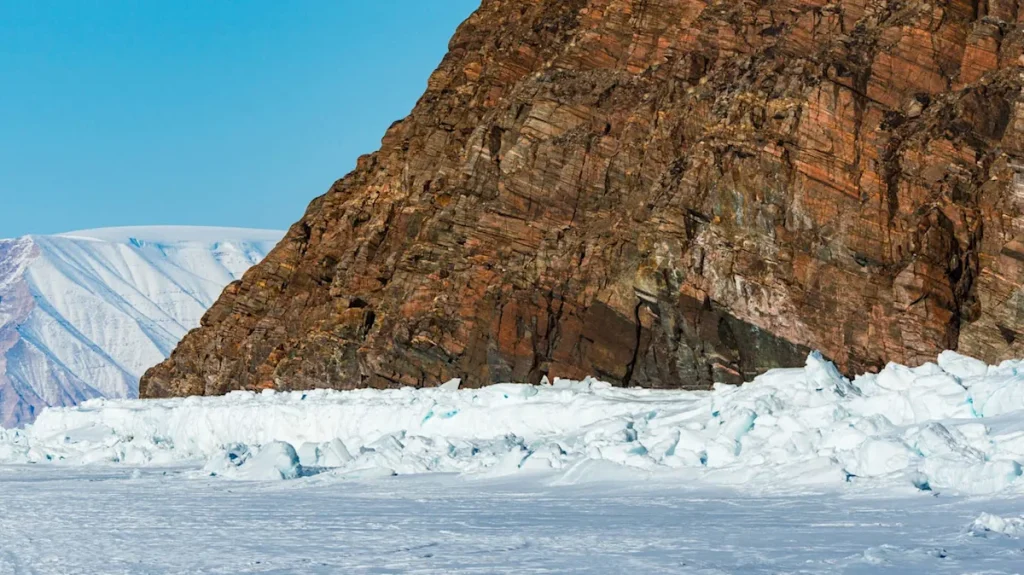
Scientists studying Greenland have discovered surprising changes in heat deep within the ice that could reshape experts’ understanding of future sea level rise.
What happened?
The discovery, made using advanced 3D models of Earth’s interior, highlights how unseen forces below the surface influence the behavior of ice sheets and the amount of water they can add to oceans.
A new study published in the Proceedings of the National Academy of Sciences maps temperature differences in the upper mantle beneath Greenland and northeastern Canada. Researchers used satellite data, seismic readings, gravity measurements and heat flow records to create detailed 3D models that show unexpectedly large fluctuations in underground temperatures.
The findings help trace Greenland’s path past the Icelandic hotspot, a vast region of heat rising from deep within the Earth. They also revealed how this lingering warmth affects the way the land bends and moves under the weight of the ice. Researchers say these subsurface temperature differences can change how quickly bedrock rebounds as ice melts, a process known as glacier isostatic adjustment.
“This study advances our understanding of the Earth’s interior structure beneath Greenland,” lead researcher Glenn Milne, a professor at the University of Ottawa, said in a press release.
Why is this discovery important?
Greenland’s ice sheet is already one of the largest contributors to global sea level rise, accounting for 20% of current sea level rise. While ice melt is caused by rising global temperatures linked to pollution from humans’ burning of coal, oil and natural gas, this study shows that what happens beneath the ice also plays an important role.
Rocks in hotspots beneath Greenland are warmer and softer, making the land more susceptible to deformation as the ice disappears, affecting how quickly the glaciers move and how much water flows into the ocean. This means that predictions of future sea levels could be off if underground heat and the structure of the Earth are not fully taken into account.
The ripple effects of sea level rise are not isolated extreme weather events, but rather an intensified pattern that can make storm surges and flooding more damaging, putting coastal communities, drinking water supplies and infrastructure at risk, especially for communities with fewer resources to adapt.
What measures are being taken?
Now, scientists will have better tools to more accurately predict future sea level rise, helping policymakers and planners prepare for the future. Improved Earth and ice models support the need for smarter coastal restoration strategies such as flood protection, wetland restoration and updated building codes.
Reducing pollution from non-renewable sources remains critical to slowing ice loss. Expanding renewable energy, powering homes and transportation, and supporting science-based policies can help limit future warming and the serious climate problems that come with it.
Get TCD’s free newsletter for simple tips to save more, reduce waste and make smarter choices, and earn up to $5,000 toward clean upgrades in TCD’s exclusive Rewards Club.