


DUBAI, United Arab Emirates (AP) — Saudi Arabia on Thursday called on UAE-backed southern Yemeni separatists to withdraw troops from two provinces they now control, a move that threatens to spark a confrontation within a fragile alliance that has been fighting Iran-backed Houthi rebels in the north of the country.
The statement from Saudi Arabia’s foreign ministry appeared aimed at building public pressure on the Southern Transitional Council, a Yemeni separatist force long backed by the United Arab Emirates. Saudi Arabia supports the internationally-backed Yemeni government’s National Shield Army in its fight against the Houthis.
The ministry said the separatists’ actions “have led to unwarranted escalations that harm the interests of all sectors of the Yemeni people, as well as the southern cause and coalition efforts.” “The Kingdom stresses the importance of cooperation among all factions and components in Yemen to exercise restraint and avoid any measures that could undermine security and stability.”
Meanwhile, the Houthis have buried four militants, including the group’s top missile and drone commander, who was presumed killed in the first round of U.S. airstrikes against the rebels in March.
ongoing negotiations
The Southern Transitional Council moved into Yemen’s Hadramawt and Al-Mahra governorates earlier this month. A Saudi statement said mediation efforts were underway to return the council’s forces to “previous positions outside the two provinces and to hand over camps in these areas to the National Shield Force.”
“These efforts remain ongoing,” the ministry said.
Local authorities in Hadramaut province expressed support for the Saudi statement and called on UAE-backed separatists to withdraw to positions outside the province.
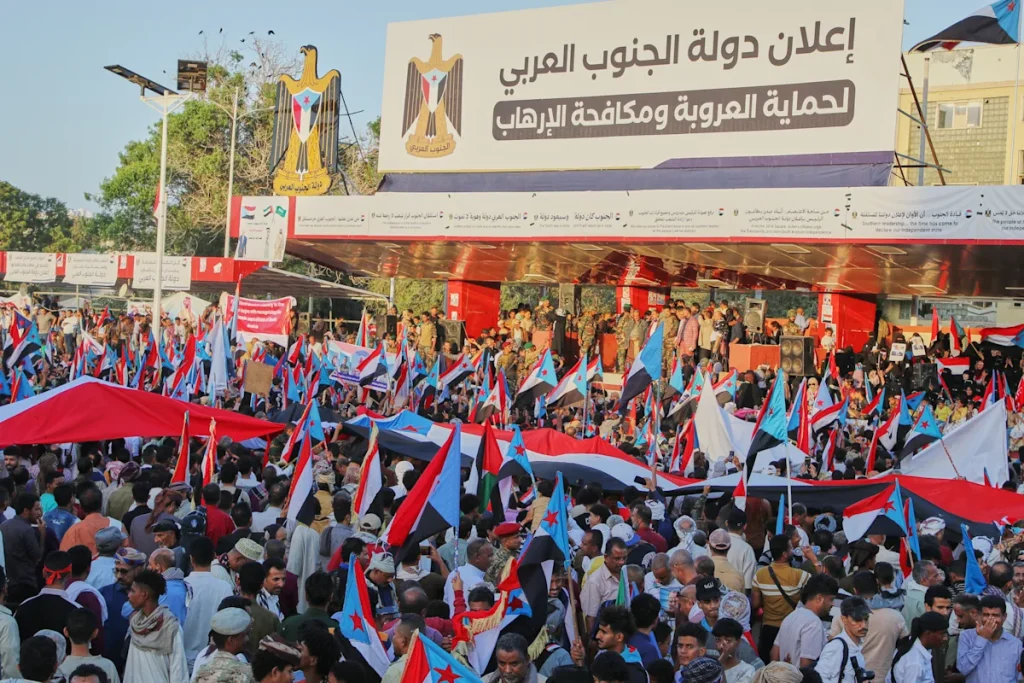
Those aligned with the Security Council increasingly fly the flag of South Yemen, which was an independent country from 1967 to 1990. Demonstrators rallied in the southern port city of Aden on Thursday in support of political forces calling for South Yemen to break away again.
Aden has been the seat of power for the internationally recognized government and forces opposing the Houthi rebels since the Yemeni capital Sanaa and much of the country’s north were seized by the Houthis in 2014.
Separatist actions have put pressure on relations between Saudi Arabia and the United Arab Emirates. The two countries have close ties and are both members of the OPEC oil cartel, but have also competed for influence and international business in recent years.
Violence has also escalated in Sudan, another Red Sea country where the country and the United Arab Emirates back opposing forces in an ongoing war.
further confusion
The Houthis captured Sanaa in September 2014 and forced the internationally recognized government into exile. Despite a U.N. arms embargo, Iranian-made weapons have been found on battlefields and in sea shipments to Yemen, but Iran denies arming the rebels.
In March 2015, a Saudi-led coalition, equipped with U.S. weapons and intelligence, entered the war on the side of the Yemeni government-in-exile. Years of fruitless fighting have pushed the Arab world’s poorest country to the brink of famine.
The war has killed more than 150,000 people, including militants and civilians, and caused one of the world’s worst humanitarian disasters, killing tens of thousands.
The Houthis have launched attacks on hundreds of ships in the Red Sea corridor over the war between Israel and Hamas, severely disrupting regional shipping.
While traffic has increased during the lull in recent attacks, many shippers continue to circumnavigate Africa via the Cape of Good Hope to avoid the Red Sea and Gulf of Aden.
Further chaos in Yemen could again involve the United States.
Washington launched an intense bombing campaign targeting the rebels earlier this year, but President Donald Trump halted the campaign ahead of a visit to the Middle East in October. The Biden administration has also carried out strikes against the Houthis, including using B-2 bombers to target underground bunkers used by the Houthis.
Crowds gathered at the funeral of four Houthi militants in Sana’a, where uniformed men carried a coffin draped in a Yemeni flag and topped with flowers.
The fallen fighters include Major General Zakaria Abdullah Yahya Hajjar, who analysts believe was the group’s drone and missile chief. U.S. forces reportedly launched an attack in Sana’a in March targeting Hajar, who was said to have received training from the Quds Force expeditionary unit of Iran’s paramilitary Revolutionary Guards.
The Houthis have provided no information on how or when he died. However, in a transcript of a discussion between senior U.S. officials on the messaging app Signal later published by The Atlantic, then-national security adviser Mike Waltz mentioned the initial March 15 attack on a Houthi missile commander.
“The first target – their senior missile guy – we have clear identification, he walked into his girlfriend’s building and now the building has collapsed,” Walz wrote at the time.
The Houthis have increasingly threatened Saudi Arabia and are holding dozens of staff at U.N. agencies and other aid groups as prisoners, claiming without evidence that they are spies — something the U.N. and other groups strongly deny.