


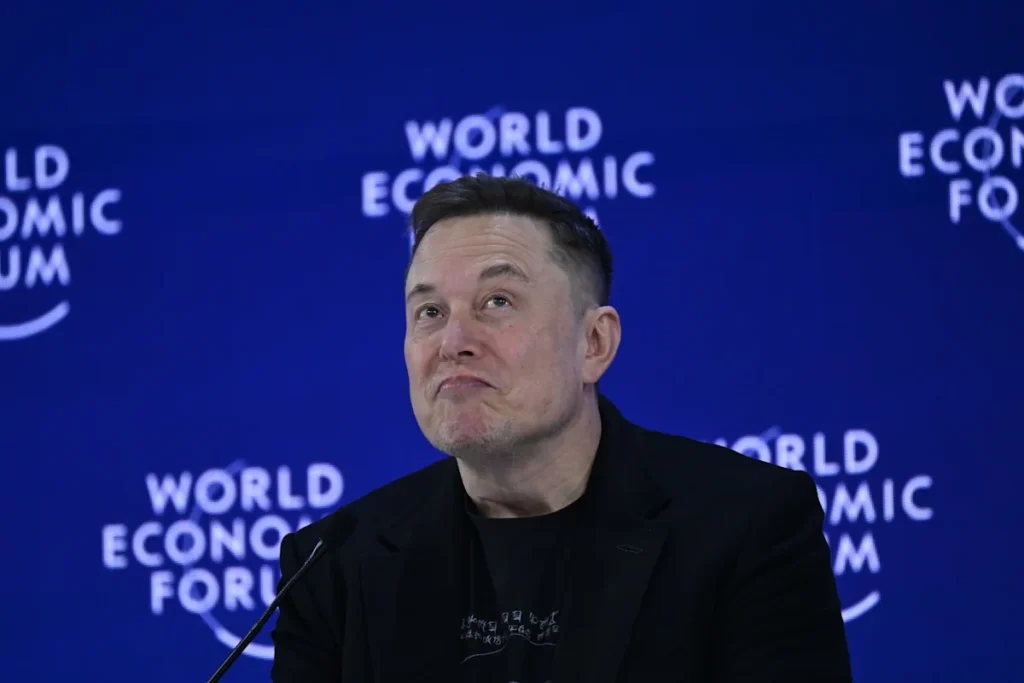
Somehow, Elon Musk managed to get pretty good attention out of Tesla’s fourth-quarter results, announced after the market closed on January 28, and the vision he detailed in the subsequent earnings call. Wall Street analysts generally praised the numbers as “good,” and investors didn’t appear to be overly disappointed, leading to a slight drop in the stock price at the open the next day.
Musk is a bit like a playwright who is allowed to write a failed piece and then write reviews – reviews so glowing that they make the audience forget about the mess they just experienced.
Specifically, the EV maker’s CEO pledged Big move to Cybercabs and Autonomous robots ready to let Tesla carry out ‘amazingly rich missions’ Once again successfully distracting people and money from the numbers, which look pretty bad when you dig deeper. Tesla reported GAAP net profit of $3.79 billion, down 75% from its peak of $15 billion in 2023. Why? EV revenue has plummeted 16% over the past two years, while overall operating expenses have soared 44%, undermining strong sales growth in services such as batteries and charging stations. The two franchises are too small to save the overall numbers because together they are only half the size of the EV side.
Tesla has also significantly added assets, particularly new factories and equipment, but the company is currently losing money. While earnings have fallen sharply over the past two years, the left side of its balance sheet has grown by $31 billion, or nearly 30%. The more capital intensive Tesla becomes, the less efficiently it deploys its capital.
What’s especially ominous is that a large portion of those slim profits come not from making and marketing cars and batteries, but from buying them by selling regulatory credits to other automakers to cover failure to meet emissions standards, particularly in California and the European Union. The project has been winding down, and Musk acknowledged that the bounty will eventually end. It is therefore instructive to examine Tesla’s revenue excluding this “non-core” project, and its past inability to count on future profits from Bitcoin sales.
In 2025, Tesla received $1.45 billion in after-tax credits, plus $69 million from the sale of digital assets, for a total of $1.51 billion. That accounted for almost 40% of its net profit of $3.79 billion. After deducting these non-operating items, Tesla’s “cornerstone” repeatable earnings are only $2.28 billion.
The wide gulf between Tesla’s valuation and its reported profits has long made it difficult to imagine how Musk could expand earnings fast enough to generate handsome returns for investors. Using these lower, more realistic core figures makes the challenge even greater. Tesla’s current market capitalization is US$1.44 trillion, and its adjusted price-to-earnings ratio is 632 times (US$1.44 trillion divided by US$2.28 billion). Palantir, a popular software provider in the intelligence community, is often considered overvalued at 353 times its valuation. But Palantir has no advantage over Tesla. With an 80% higher “core” multiple, Tesla easily beats Palantir because you get minimal profit on every dollar you pay for the stock.