


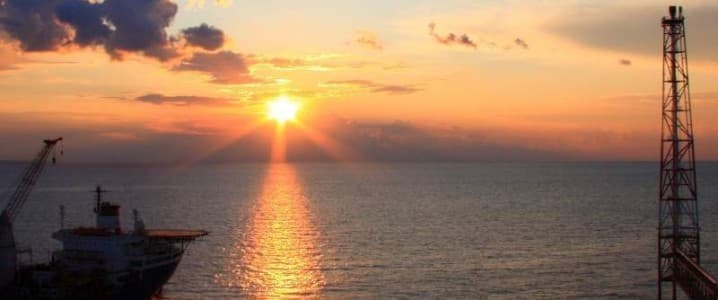
It is no exaggeration to say that what happened in Qatar today was an earthquake for global energy markets. On March 2, state-owned energy giant Qatar Energy, which is responsible for all LNG exports in the country, announced a complete halt to LNG production after Iranian drones attacked facilities in Ras Laffan Industrial City and Mesaied Industrial City. The impact of the shutdown will extend far beyond the short term.
These are not small processing units.
These are the core of Qatar’s LNG infrastructure, and their closure effectively removes about 20% of global LNG export capacity from the market.
Supply disruptions of this magnitude are rarely seen outside of war, siege, or widespread industrial disaster. This happens not because of maintenance or economic changes, but because of geopolitical conflicts. The consequences and potential knock-on effects are enormous.
Why Qatar is important
Qatar is more than just a producer. This is this The basis for most global natural gas flows outside Russia. In 2025, Qatar Energy transported nearly 81 million tons of LNG. These volumes help balance the market, especially in Asia and Europe. More than 80% of Qatar’s LNG is sold to Asian markets, including China, Japan, India and South Korea, and Europe is also an important buyer of long-term contracts.
Related: BlackRock, EQT to acquire AES Corp. in $33.4B deal
Almost all infrastructure is located in Ras Laffan, the world’s largest LNG export complex. Ras Laffan was built to process natural gas from the vast northern gas fields shared with Iran. Qatar has dominated the global LNG sector since the early 2010s, with single-source supplies unable to match those from the United States or Australia today, and countries around the world have priced and planned accordingly.
That’s why this is a real supply shock. The market has not only lost its marginal sources. It has lost a fundamental pillar of the LNG trade.
This goes beyond emotions and falls squarely into the realm of letting us influence fundamentals.
Prices and panic
The market’s immediate reaction to the closure announcement was brutal. This is also predictable. European wholesale natural gas prices surged more than 50%, their biggest one-day jump since war-era volatility in 2022. Futures prices were sharply higher across the board, reflecting a severe squeeze on available tonnage as buyers suddenly find themselves facing direct competition from substitute cargoes.
It’s not just LNG prices that are rising. Oil benchmarks also rose sharply, with Brent crude rising more than 8% shortly after the announcement as traders factored in a broader energy supply crunch and risks to crude flows in the Strait of Hormuz. The Strait of Hormuz is a chokepoint that has been effectively deserted due to hostilities.
Europe is particularly vulnerable. Natural gas inventories entering the off-season are below levels that give market participants confidence. Power companies and country buyers from Asia are less price sensitive and will now bid aggressively for every available cargo, driving up prices.
These higher gas prices will ultimately affect electricity costs, industrial production and inflation measures in large energy-importing economies. Households in markets using LNG, such as the UK and much of continental Europe, could see costs soar in the coming months if outages last long enough to impact contract repricing and winter replenishment strategies.
Regional influence of Leviathan, Ras Tanura and Hormuz
It gets worse when you shrink.
Israel has temporarily shut down its giant Leviathan gas field and other offshore assets under security orders related to the same conflict, limiting supplies to Egypt and Jordan. These areas are not as big as Qatar in a global sense, but they are certainly large and important. Earlier today, Saudi Arabia halted operations at the massive Ras Tanura refinery following a drone strike, disrupting the flow of crude and refined products.
All of this comes amid a larger crisis centered on the Strait of Hormuz, where shipping traffic has plummeted due to Iranian warnings and actual attacks on oil tankers. This waterway carries approximately 20% of the world’s daily oil. It also handles the majority of Qatar’s LNG exports. With traffic significantly reduced, even cargo that can be transported safely is stuck in ports.
Supply shocks rarely occur alone; when one part of the system is stressed under the geopolitical knife, the associated bottlenecks squeeze everything else. This is not a theoretical exercise. This can be seen in the real-time price movements of securities and volatility indices in the natural gas, oil, shipping markets, and even global exchanges.
What now?
If this outage turns out to be a brief, limited outage, buyers will bite the bullet and spend money on replacement shipments, perhaps even retrenching.
But will it be short?
Currently, LNG trains are still under threat. While this fact remains, it is unclear how long it will take Qatar Energy to restart them. Damage assessments are ongoing, and the conflict itself continues to destabilize maritime security across the Gulf. The assessment and remediation timeline is expected to be extended, especially if the strategic logic of the Iranian attack is to expand pressure on Gulf energy exporters.
This is an acceleration of structural risks for a market already jittery about LNG trade flows after years of Russia-related disruptions and demand imbalances. Qatar is expected to expand production capacity in a rather dramatic way by 2030 and hopes to roughly double it. Deviating from the edge of this growth path, even temporarily, would change the calculus of the future global LNG balance.
Several sources will try to fill in the gap. U.S. LNG exports hit record high. They are also bound by long-term contracts. Australia has ample capacity but is further from Europe’s main import routes. Spot market goods are limited in quantity and expensive.
None of this can be adjusted overnight.
Regional political and security risk premium
This event will embed a geopolitical risk premium in LNG pricing to an even greater extent than was the case at the height of the Russia-Ukraine crisis. More important than any one price, military action could knock major exporters offline and there would be little buyers can do about it.
Governments that rely on imported LNG will be forced to consider political hedging (strategic reserves, alternative supply alliances) or accelerate domestic production and alternative energy plans. Neither scenario will happen anytime soon, but both will reshape the natural gas market for years.
As a result, Qatar’s LNG production was suspended and global export capacity was instantly cut by a fifth. The short-term effects are immediate and include price spikes, competition for goods, and economic risks to importing economies.
The long-term effects are likely to be structural, including the reconfiguration of trade flows, geopolitical risk premiums in contracts, changes in investment strategies and new urgency to diversify supply.
The market will remember this moment.
Not just because of how high prices are, but also because of how fragile the global natural gas system has become.
By Julianne Geiger of Oilprice.com
More top reads from Oilprice.com
Oil Price Intelligence provides you with these signals before they become front page news. It’s the same expert analysis read by veteran traders and political consultants. Get it for free twice a week and you’ll always know why the market is moving before anyone else.
You get geopolitical intel, hidden inventory data, and market whispers affecting billions – and we’re giving you $389 of premium energy intelligence when you subscribe. Join over 400,000 readers today. Click here for immediate access.