


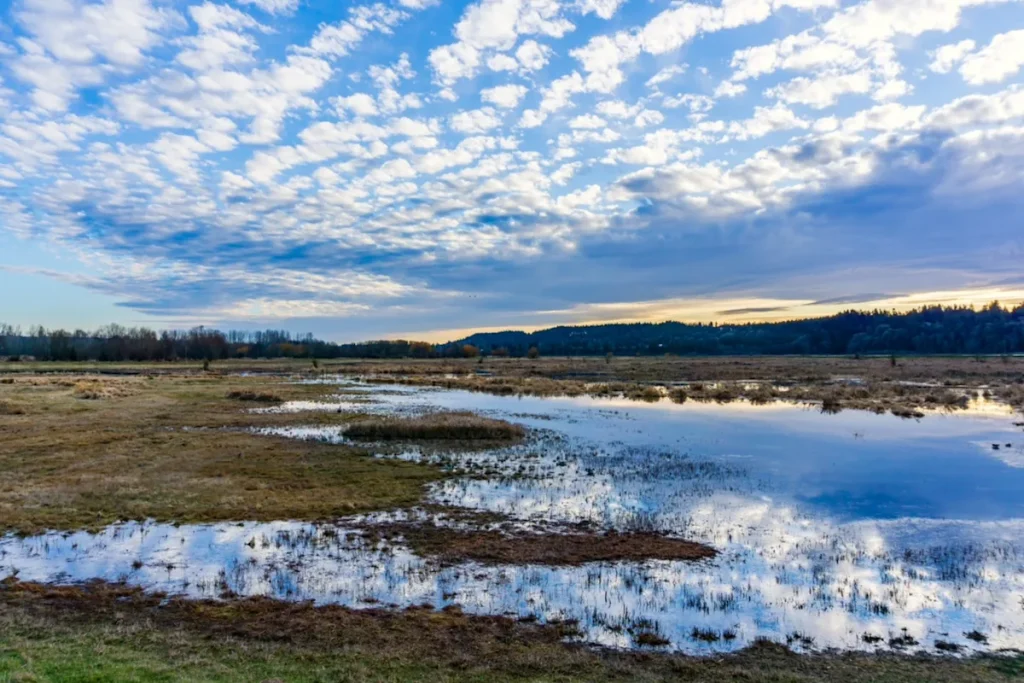
Owning property doesn’t necessarily mean you can do whatever you want with it. One homeowner saw firsthand the consequences of unauthorized construction on his property near Camas, Washington, ultimately harming the surrounding wetlands.
In a press release from the Washington State Department of Ecology, the department fined property owner Chad Williams a hefty $71,800 for damaging protected land and failing to restore and mitigate the damage.
The city approved Williams’ construction plans, but Williams also needed a permit from the Department of Ecology to begin construction — a critical step he overlooked, according to a news release. Without authorization from the department, he cleared vegetation from the wetland property and covered the wetland with dirt to build a house, driveway and outdoor store.
Wetlands are important natural buffers between large bodies of water and land. They prevent flooding and subsequent damage. According to the U.S. Environmental Protection Agency, wetlands are typically capable of absorbing and storing three acre-feet of floodwater per acre (three acres of land, one foot deep).
As the Delaware Department of Natural Resources and Environmental Control explains, wetlands also filter sediment and pollutants from the water and provide habitat and breeding grounds for important wildlife including birds, fish, shellfish and other organisms, according to the U.S. Environmental Protection Agency.
Modifying wetlands with coverings of dirt or physical structures can reduce the land’s ability to prevent and reduce flood damage. It also affects water quality, causes shoreline erosion, and destroys important wildlife habitat, according to the U.S. Geological Survey.
Watch now: Experts reveal the one message marketers keep getting wrong
Wetlands are important ecosystems that need to be protected from degradation and damage. Fernanda Samuel in Angola has been protecting the mangroves of her childhood since 2016. You can join her in protecting and restoring these important ecosystems across the country and around the globe by using your voice to urge governments to enact wetlands conservation policies and initiatives.
“Williams intentionally destroyed a known wetland on his property without a permit,” said Joenne McGerr, program manager for the agency’s Coastal and Environmental Assistance Program, according to the release.
After discovering the damage to the wetlands, the department worked with Williams to develop solutions to restore the land. The two parties signed an agreement in this regard.
“Unfortunately, despite multiple attempts to help him, he evaded and neglected his responsibilities,” McGeer said in the release.
“Williams has 30 days to pay the fine or appeal to the Washington Pollution Control Hearing Board,” the release reads.
Join our free newsletter for easy tips Save more and Reduce wasteand don’t miss this cool list of easy ways to help yourself while helping the planet.