


Kitchen and Yahoo may earn commission from links in this article. Pricing and availability subject to change.


Photo Credit: Alex Lepe; Food Styling: James Parker
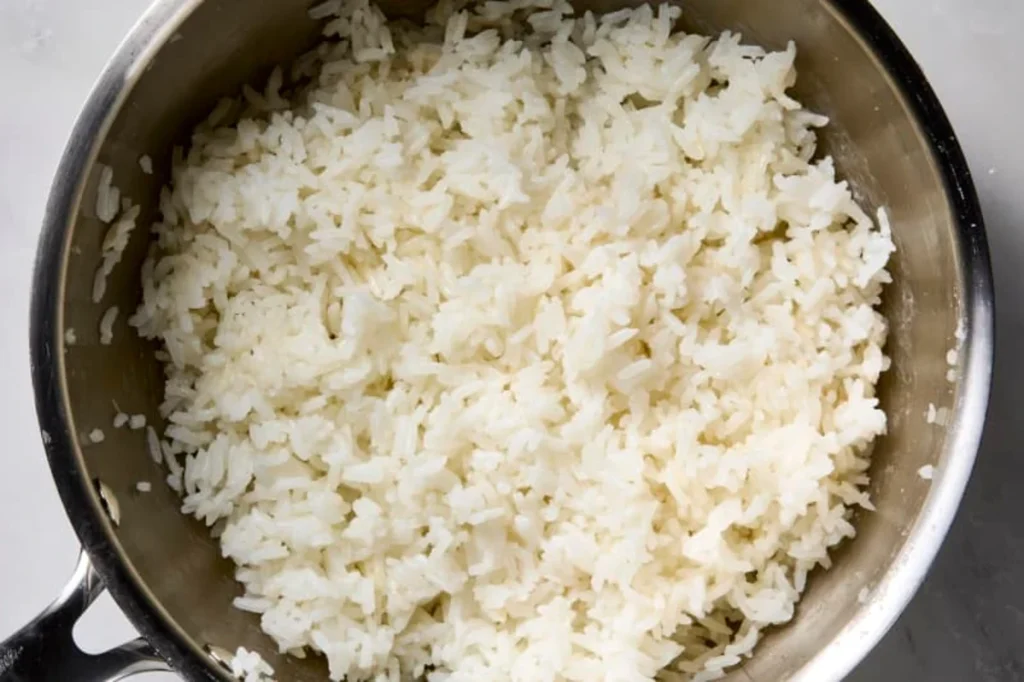
Since microplastics seem to be everywhere, it can be hard to keep up to date on what’s safe to cook with, store leftovers, or even eat. Now, another food is taking the spotlight that you might want to pay close attention to. In a recent Instagram video, Dr. Trisha Pasricha, MD, MPH, a gastroenterologist and author of a book on gut health, revealed four common foods that contain high amounts of microplastics, one of which is instant rice.
To learn more about these questions and the recommendations she outlines in the video, we reached out to Dr. Pasricha directly to get more answers. We also spoke with Phoebe Stapleton, PhD, ATC, associate professor of pharmacology and toxicology at Rutgers University, to get her perspective on how these microplastics affect the body. Here’s what they had to say.
What to know about microplastics in rice
In the video, Dr. Pasricha cites a 2021 study that said instant rice contains about four times the amount of microplastics than regular uncooked rice. Why? Much of this has to do with the packaging and processing of instant rice. “It’s precooked, dehydrated, and often packaged in plastic bags designed for microwave use. Each step brings more opportunities for contact with plastic,” Dr. Pasricha said. “The packaging itself is part of the problem, especially when you heat it,” she added, however, it’s important to note that the study was small and requires further investigation and replication.
Stapleton, who studies how toxic substances affect the body, noted that the various types of rice tested in the study were uncooked rice packaged in fabric, paper or plastic bags, and microwaveable rice packaged in plastic bags. She added that “the more processed a food is, the greater the potential for contamination with microplastics and nanoplastics,” so it makes sense that more processed instant rice would contain more microplastics than regular rice.
How microplastics affect the body
This is not controversial: Both Pasricha and Stapleton confirm that multiple studies have found evidence of microplastics entering our bodies. “Microplastics have been detected in human blood, lung tissue, liver, placenta, breast milk, and even the brain.” But it’s not all doom and gloom. “Most of the food we eat probably passes through the stool—the intestines do a pretty good job of clearing out larger particles,” Dr. Pasricha says. It’s the smaller particles (under 10 microns) that we need to be more careful about because “they may cross the intestinal barrier and accumulate in tissues.”
Scientists are still in the early stages of understanding its true impact. Some studies suggest that microplastics found in arteries increase the risk of cardiovascular disease, inflammation, hormone disruption and poor gut health. “It’s disturbing, but it shows association, not causation,” Dr. Pasricha said.
Stapleton similarly noted that “the scientific community is working very hard to determine the health effects of exposure to micro- and nanoplastics.” While they know microplastics are entering the body, “now we are working to understand the cellular mechanisms that allow them to enter the body, what these cellular interactions mean for each tissue from a health/disease perspective, and how we can get them out of the body.”
what can you do
The good news is you don’t have to give up rice. Dr. Pasricha even admitted that she eats a lot of rice and doesn’t plan on giving up anytime soon. The best thing you can do is wash your rice thoroughly before cooking, which can reduce contamination by up to 40%, according to research. Try not to eat instant rice and try not to cook with plastic. “Regular uncooked rice stored in paper, cloth or glass packaging is a cleaner option. The goal is reduction, not perfection,” said Dr. Pasricha.
Also, avoid reheating leftovers in plastic containers. “When I need to store or reheat something, I use glass containers. Easy wins and don’t let perfect be the enemy of good,” says Dr. Pasricha. She also recommends cutting back on ultra-processed foods in general, as “most experts believe these are the largest dietary sources of microplastics, whether from packaging or industrial processing.”
Stapleton also recommends other sustainable swaps to reduce exposure, such as using “refillable water bottles, metal utensils, wooden kitchen utensils or cutting boards, reusable products, less processed products, [and] Clothing made from non-polymeric fibers. These options also have the environmental advantage of reducing plastic disposal, which means trying to limit the production of micro- and nanoplastics in the future. ”
While this information is still new and more research is needed, there are still ways people can reduce their intake of microplastics. As Dr. Pasricha said, “I think we can all agree that the less microplastics that get into our bodies, the better.”
further reading
I have made hundreds of batches of cookies – this is hands down the best recipe
We tested 4 famous chocolate cake recipes and found the clear winner
$15 Amazon Find Finally Organized My Kitchen Drawers and Countertops
Sign up for The Kitchn’s daily newsletter to receive our best recipes, posts, and shopping tips in your inbox.